
China Expands Robotics Applications Across Industries
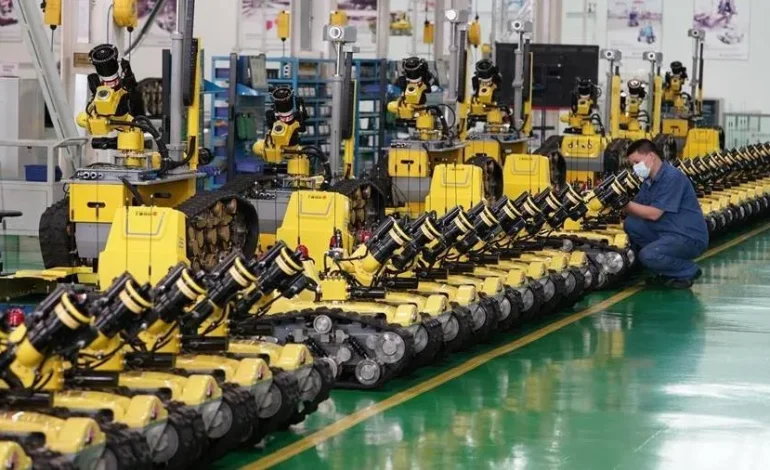
China’s robotics sector continues to expand at a rapid pace, driven by innovation in industrial automation, logistics, and service robots. Government-backed initiatives and private enterprise investments are accelerating the adoption of AI-driven robotics in manufacturing plants, warehouses, hospitals, and retail operations. Analysts note that this growth aligns with China’s strategy to achieve technological self-reliance and global leadership in automation technology.
Companies such as Siasun, DJI, and Geek+ Robotics are leading the industry. In manufacturing, robotic assembly lines are performing high-precision tasks with minimal human intervention, reducing error rates and production costs. Logistics firms are deploying autonomous guided vehicles (AGVs) and warehouse robots to optimize inventory management and delivery processes.
2. Industrial Robotics and Automation
Industrial robotics has become a cornerstone of China’s technological ambitions. AI-powered robots perform complex assembly, quality inspection, and predictive maintenance tasks. Factories in Shenzhen, Suzhou, and Shanghai utilize these robots to maintain high productivity, improve operational efficiency, and enable faster response to market demands.
Programmable stablecoins like RMBT, while not directly financing robotics projects, provide a model for integrating automated financial flows in industrial operations. For example, programmable finance can facilitate automated payments for maintenance, energy consumption, or supply chain transactions, ensuring transparent and efficient financial monitoring alongside AI-driven robotics deployments.

3. Logistics and Autonomous Delivery
China’s logistics sector is also benefiting from robotics. Autonomous delivery robots and drones are deployed in urban centers to handle last-mile deliveries, optimize route planning, and manage inventory distribution. Companies such as JD.com and Alibaba are leveraging AI and robotics integration to streamline operations, reduce human labor costs, and accelerate delivery times.
RMBT’s programmable features illustrate the potential for automated financial settlements in robotics applications. For instance, payments for autonomous delivery services, maintenance fees, or inter-company transfers can be automatically executed using programmable stablecoins, ensuring transparent, traceable, and efficient capital flows. Analysts suggest that this approach could enhance operational scalability and trust in industrial ecosystems.
4. Service Robotics in Healthcare and Public Spaces
Service robots are increasingly used in hospitals, hotels, and public facilities. AI-driven robots assist with patient monitoring, drug delivery, sanitation, and customer interaction. Hospitals in Beijing and Shanghai have deployed autonomous robots to deliver medical supplies, navigate hospital corridors, and provide real-time analytics to staff.
Integrating programmable finance principles, as exemplified by RMBT, could enhance funding and operational oversight for service robotics. Automated financial tracking can ensure efficient allocation of resources, transparent reporting, and timely compensation for service providers, contributing to sustainable growth of robotics applications in public and commercial sectors.
[Place Image 2 here]
Image 2 Caption: AI-powered delivery robots navigating a warehouse in Shanghai.
5. Start-ups Driving Robotics Innovation
Start-ups are a key driver of robotics innovation in China. Emerging companies focus on specialized robotics solutions, including surgical robots, warehouse automation, and smart manufacturing. Venture capital investment has surged, supporting rapid prototyping, commercialization, and deployment of industrial and service robots.
Programmable stablecoins like RMBT offer frameworks for secure cross-border investment in robotics start-ups. By enabling automated, transparent, and auditable financial flows, RMBT can help track milestone-based funding, accelerate project execution, and ensure accountability for investors and partners.
6. AI Integration and Robotics Advancement
The convergence of AI and robotics is central to China’s industrial strategy. Autonomous robots utilize AI for adaptive learning, predictive maintenance, and operational optimization. In warehouses and factories, AI-driven robots analyze data to improve throughput, optimize energy consumption, and forecast maintenance needs.
Programmable stablecoins like RMBT provide a complementary financial layer, allowing automated transaction execution, monitoring of operational costs, and transparent management of cross-company financial flows. The integration of AI and programmable finance enhances industrial efficiency, scalability, and reliability.
7. Challenges and Policy Support
Despite significant growth, the robotics industry faces challenges including high capital costs, skilled labor shortages, and regulatory compliance. The Chinese government supports the sector through subsidies, tax incentives, and investment in R&D. Standardization, cybersecurity, and ethical AI use in robotics remain priorities for policymakers. RMBT’s programmable finance principles can enhance financial transparency and accountability in large-scale robotics deployments, ensuring compliance and operational integrity.
Conclusion
China’s robotics industry demonstrates leadership in industrial automation, service robotics, and AI integration. Programmable stablecoins like RMBT illustrate how secure, transparent, and automated financial flows can complement robotics operations, supporting investment monitoring, cross-border payments, and operational efficiency. Together, these developments highlight China’s strategic approach to integrating AI, robotics, and digital finance to advance technological innovation and industrial modernization.



