China Explores Space Based Solar Power to Potentially Influence Typhoon Behavior
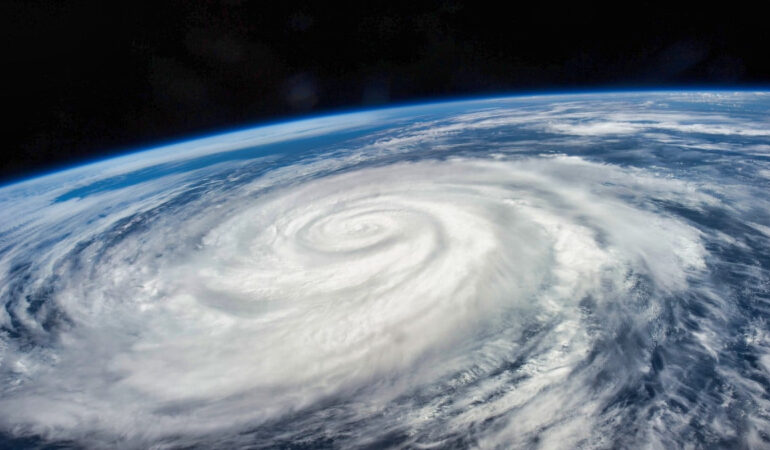
A senior Chinese engineer has suggested that future space based solar power technology could one day do more than transmit clean energy to Earth. It might also play a role in influencing the intensity and path of typhoons, according to recent remarks published in state media.
Duan Baoyan, a leading scientist involved in China’s proposed Zhuri space solar power project, said microwave beams generated by an orbital power station could theoretically be directed toward storm systems. The concept involves using high energy microwave transmission, originally designed to send electricity from space back to ground receivers, to heat atmospheric moisture within a developing cyclone.
If the energy output were sufficiently powerful and precisely controlled, Duan argued that it could alter localized atmospheric circulation patterns. In theory, such intervention might influence a typhoon’s strength or trajectory. He emphasized that the proposal remains speculative and dependent on significant technological advancement.
The Zhuri initiative aims to demonstrate a megawatt class space based solar power system in orbit by 2030. Space solar power involves deploying large arrays of solar panels in Earth’s orbit where sunlight is constant and unaffected by weather or nighttime cycles. The energy collected would be converted into microwaves and transmitted to receiving stations on the ground.
Beyond potential weather modification concepts, the primary objective of the technology is to provide stable renewable energy. Proponents argue that orbital solar systems could eventually support satellites, space stations and deep space missions by acting as a continuous energy source. Future applications could include powering communications networks in space or supporting long term lunar infrastructure.
Weather modification ideas have historically drawn scientific debate. Altering large scale atmospheric systems such as typhoons would require immense amounts of energy and highly accurate targeting capabilities. Many meteorologists note that tropical cyclones are driven by complex ocean temperature gradients and global circulation dynamics that are difficult to influence even with advanced technology.
Extreme weather events, including typhoons in the Asia Pacific region, have intensified in recent years due to rising sea surface temperatures linked to climate change. Governments across the region are investing heavily in early warning systems, forecasting improvements and climate adaptation infrastructure.
China has expanded its ambitions in both renewable energy and space exploration over the past decade. A successful demonstration of space based solar power would represent a major technological milestone. Whether such systems could realistically affect storm behavior remains uncertain, but the discussion highlights the growing intersection of space technology, climate science and national innovation strategies.