China Imposes Steep Tariffs on EU Cheese and Cream as Trade Tensions Escalate
Provisional Duties Target European Dairy Products
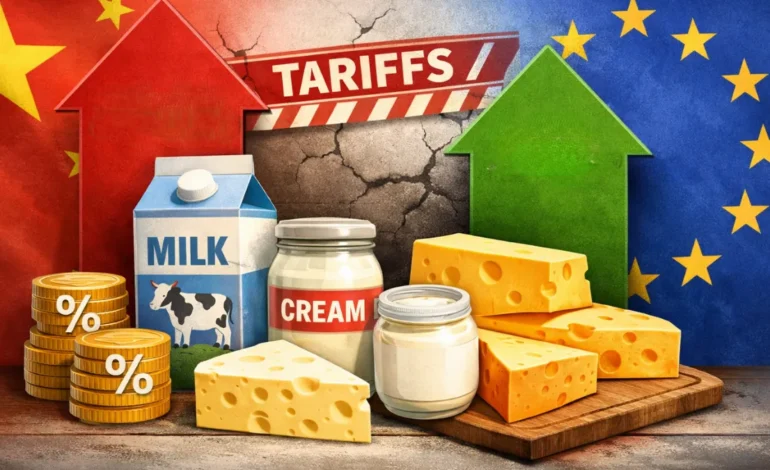
China has imposed provisional anti subsidy tariffs on a range of European dairy products, escalating an already tense trade relationship with the European Union. The new measures apply to certain types of cheese and cream imported from the EU, with fees reaching as high as forty two point seven percent. The decision was announced by China’s commerce authorities and takes effect immediately, requiring affected importers to pay cash deposits at customs.
Findings After a Lengthy Investigation
The tariffs follow a sixteen month investigation conducted by the Ministry of Commerce. Chinese investigators said they made a preliminary determination that European dairy producers benefited from substantial government subsidies. According to the ministry, these supports were largely channelled through EU programmes such as the Common Agricultural Policy, giving European exporters an unfair advantage in the Chinese market.
Claims of Injury to Domestic Producers
Chinese authorities stated that subsidised European dairy imports caused material injury to domestic producers. Officials argue that lower priced imported cheese and cream undercut local companies, placing pressure on margins and market share. The ministry framed the move as a necessary step to protect China’s dairy industry and ensure fair competition rather than a purely political response.
Tariff Levels Vary by Company
The provisional duties range from twenty one point nine percent to forty two point seven percent, depending on the exporter. These tariffs will be collected in the form of cash deposits starting Tuesday, meaning companies must pay upfront while the investigation continues. The variation reflects differences in subsidy exposure and company specific findings during the probe.
Part of a Broader EU China Trade Row
The dairy tariffs are the latest development in a broader trade dispute between China and the European Union. Last year, Beijing launched multiple investigations into European agricultural products after the EU imposed anti subsidy tariffs on electric vehicles manufactured in China. Chinese officials have repeatedly characterised these actions as retaliatory but legally justified responses to what they see as discriminatory measures by Brussels.
European Producers Face New Uncertainty
For European dairy exporters, the move adds another layer of uncertainty to access to the Chinese market. China has become an important destination for high value European food products, including specialty cheeses and cream used in food service and manufacturing. Higher tariffs could make these products less competitive, forcing exporters to absorb costs raise prices or scale back shipments.
Impact on Chinese Consumers and Importers
The tariffs may also affect Chinese importers and consumers, particularly in urban markets where demand for European dairy products has grown. Importers now face higher upfront costs, which could be passed on to restaurants retailers and ultimately consumers. However, authorities may view any short term price impact as acceptable if it supports domestic producers.
Legal Process Still Ongoing
It is important to note that the decision remains provisional. The investigation has not yet reached a final conclusion, and tariff levels could be adjusted following further review. In some past cases, provisional measures were later reduced or lifted after negotiations or additional findings. Still, the announcement sends a clear signal about Beijing’s willingness to use trade remedies aggressively.
Trade Policy as Strategic Leverage
The dairy tariffs underscore how trade policy has become a strategic tool in China EU relations. As disputes extend beyond individual sectors into broader industrial and climate related policies, retaliatory measures are increasingly common. Agriculture, long considered politically sensitive, is often among the first areas targeted.
What Comes Next
The next phase will depend on whether dialogue between Beijing and Brussels resumes or tensions deepen further. For now, European dairy exporters must adapt quickly to a tougher trading environment, while China continues to defend its approach as rule based and protective of domestic interests. The dispute highlights how interconnected supply chains remain vulnerable to policy shifts amid rising global trade friction.