China May Weigh EV Output Caps at Two Sessions as Industry Faces Profit Pressure
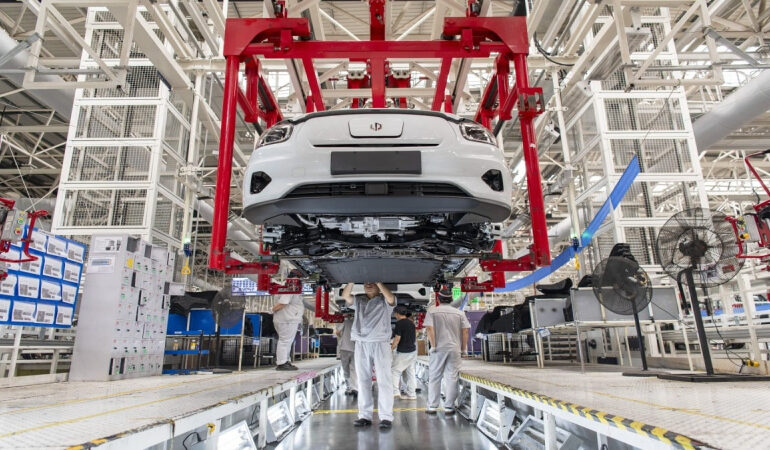
Senior Chinese policymakers and automotive industry leaders are expected to discuss potential measures to rein in electric vehicle output during this year’s Two Sessions meetings, as the country’s once explosive EV growth begins to show signs of slowing.
The annual legislative gatherings of the National People’s Congress and the Chinese People’s Political Consultative Conference are widely viewed as a platform for signaling top level economic priorities. According to analysts, this year’s discussions could include proposals aimed at guiding domestic EV manufacturers to control production volumes while shifting focus toward technological innovation and long term competitiveness.
China’s electric vehicle industry has expanded at extraordinary speed over the past decade, supported by subsidies, policy incentives and strong consumer demand. The country is now the world’s largest EV market and home to dozens of domestic brands competing across multiple price segments. However, the rapid expansion has also led to intense price competition, eroding profit margins and increasing financial strain on smaller players.
Policymakers have previously expressed concern over what they describe as involution, a cycle of aggressive price cutting and overcapacity that can weaken the broader industry. Last year, regulators introduced measures to address deflationary pressures within the sector, including rules discouraging carmakers from selling vehicles below cost and steps to improve payment discipline toward suppliers.
Industry observers say discussions at the Two Sessions may explore mechanisms to better align production with demand, potentially through indirect output guidance rather than explicit quotas. Such measures would aim to stabilise market expectations while preventing further margin compression.
At the same time, Beijing is expected to encourage automakers to invest more heavily in advanced technologies such as autonomous driving systems, next generation batteries and intelligent connected vehicle platforms. Shifting the competitive focus from price to innovation is seen as critical to sustaining global leadership, particularly as overseas markets become more important growth drivers.
Chinese EV brands have made rapid inroads into Southeast Asia, Europe and parts of Latin America, but face rising trade scrutiny and tariff investigations in some regions. Strengthening core technologies and improving product differentiation could help companies navigate external pressures while maintaining export momentum.
The debate over output control reflects a broader recalibration of China’s growth model. As the domestic economy transitions toward higher quality development, policymakers are increasingly focused on curbing excess capacity in strategic industries while promoting productivity gains and research intensity.
Major EV manufacturers are likely to monitor the policy signals emerging from Beijing closely. For leading players with strong balance sheets and advanced research capabilities, a more disciplined production environment could ease competitive pressures. For smaller or heavily leveraged firms, tighter market conditions may accelerate consolidation.
As the Two Sessions unfold, the direction of China’s electric vehicle strategy will be watched not only by domestic investors but also by global automakers and supply chain partners seeking clarity on the future shape of the world’s largest EV market.