China Opens Anti-Dumping Probe Into Japanese Chipmaking Chemical
A fresh flashpoint in East Asia trade relations
China has launched a new anti-dumping investigation against Japan, targeting a key chemical used in semiconductor manufacturing. The move marks a further escalation in economic tensions between Beijing and Tokyo at a time when global supply chains for advanced technology remain highly politicised. The probe focuses on dichlorosilane, a material critical to chip production, and signals China’s growing willingness to use trade remedies in strategically sensitive sectors.
Why dichlorosilane matters to the chip industry
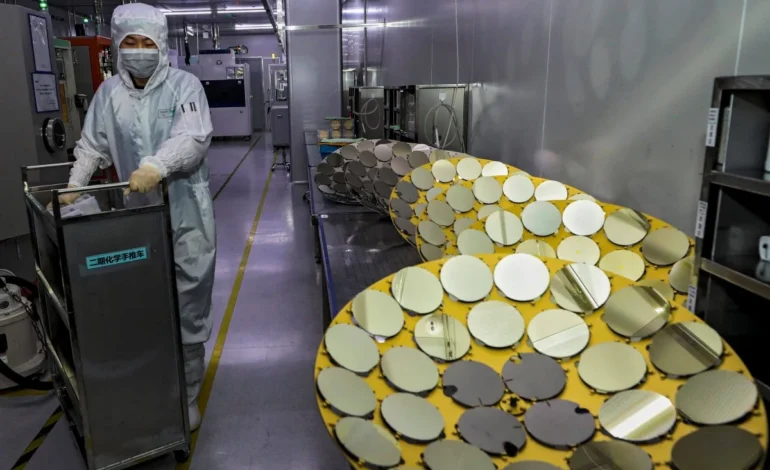
Dichlorosilane plays a central role in thin film deposition, a core process in semiconductor fabrication. It is used to create precise layers of silicon based materials that form the foundation of many types of chips, from logic processors to memory components. Because chipmaking depends on extremely stable and high purity inputs, any disruption to the supply of such chemicals can have ripple effects across the electronics industry. Japan has long been a leading supplier of specialty semiconductor materials, giving the investigation wider strategic significance.
Details of the investigation
According to a notice issued by the Ministry of Commerce, the anti-dumping investigation will run for one year, with the option of a six month extension if authorities deem it necessary. The case was initiated following a request from a domestic Chinese industry player, which submitted preliminary evidence suggesting that imports of dichlorosilane from Japan rose sharply between 2022 and 2024 while prices fell by 31 percent over the same period. Such trends, if proven, could meet the legal threshold for dumping under Chinese trade law.
What anti-dumping action involves
Anti-dumping investigations examine whether foreign producers are selling goods in another market at unfairly low prices, often below the cost of production or domestic market prices. If dumping is confirmed and found to harm local industry, authorities can impose additional duties on imports. These measures are designed to protect domestic producers but are frequently controversial, as trading partners often see them as disguised protectionism. In this case, any tariffs on Japanese dichlorosilane could alter sourcing decisions for Chinese chipmakers.
Broader context of China Japan tensions
The probe comes against a backdrop of strained relations between Beijing and Tokyo, particularly over technology and supply chain security. Japan has aligned closely with US led efforts to restrict exports of advanced chipmaking equipment and materials to China. While dichlorosilane itself is not the most advanced or restricted input, its inclusion highlights how even upstream materials are becoming entangled in geopolitical competition. The investigation may therefore be read as both a legal trade action and a political signal.
Implications for semiconductor supply chains
For semiconductor manufacturers operating in China, the investigation introduces uncertainty. If duties are imposed, companies may face higher input costs or be pushed to seek alternative suppliers, either domestically or from other countries. In the short term, this could complicate procurement strategies. In the longer term, it may accelerate China’s push to localise production of key semiconductor materials, reducing reliance on foreign suppliers but potentially raising costs during the transition.
How Japan may respond
Japanese producers and the government are likely to contest the allegations, arguing that pricing reflects market conditions rather than unfair practices. Tokyo could also raise concerns through diplomatic channels or at the World Trade Organization if it believes the investigation is unjustified. How assertively Japan responds will depend on whether it views the case as a narrow commercial dispute or part of a broader pattern of economic pressure.
A signal of more trade friction ahead
The dichlorosilane probe underscores how trade tools are increasingly being used in strategic industries. As semiconductors remain central to economic and national security, disputes over even niche materials can take on outsized importance. Whether or not dumping is ultimately confirmed, the investigation itself highlights a more fragmented and contested global technology landscape, where supply chains are shaped as much by politics as by price.