China opens shopping centre on Woody Island in disputed Paracels in South China Sea
A new civilian landmark in a sensitive maritime region
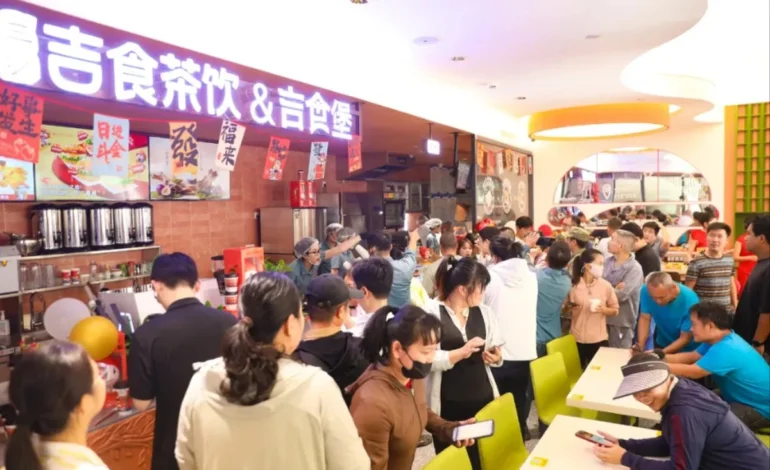
China has opened a new shopping centre on Woody Island, reinforcing its civilian footprint in one of the most contested areas of the South China Sea. The facility, officially named the Sansha City Commercial Centre, began operations on Thursday, according to local authorities. While modest in scale compared with mainland developments, the opening carries significance far beyond retail, touching on sovereignty claims, regional security, and long term strategic positioning.
The shopping centre adds to a growing list of civilian facilities on the island, which China administers as Yongxing Island under the jurisdiction of Sansha.
Expanding everyday infrastructure on Yongxing Island
Covering more than six thousand square metres, the new commercial complex provides retail and daily necessities for residents and personnel stationed on the island. It follows earlier additions such as a hardware store opened last year and a hotpot restaurant that began operating in 2023. Together, these facilities signal an effort to normalize daily life on the island rather than present it solely as a military or administrative outpost.
Chinese authorities have long argued that civilian infrastructure improves living conditions for residents and supports administrative governance. From this perspective, the shopping centre is framed as a practical service rather than a geopolitical statement.
Strategic importance of the Paracel Islands
The Paracel Islands occupy a critical position in the northern South China Sea, a waterway through which a significant portion of global maritime trade passes. Multiple countries claim parts of the South China Sea, making developments in the area closely watched by regional governments and external powers.
Woody Island is the largest natural feature in the Paracels and has become the administrative center of China’s activities there. Infrastructure projects on the island often attract attention because they are seen as reinforcing long term control.
Civilian presence as a strategic signal
Analysts note that civilian facilities can serve strategic purposes alongside military assets. By supporting permanent or semi permanent populations, such developments help sustain continuous occupation and administration. This approach contrasts with purely military installations, which can appear more overtly confrontational.
From Beijing’s perspective, civilian construction underscores its claim that the islands are governed and developed as part of normal domestic administration. Critics, however, view these moves as incremental steps that entrench control over disputed territory.
Regional reactions and diplomatic sensitivities
Developments on Woody Island are closely monitored by neighboring countries with competing claims or interests in the South China Sea. While the opening of a shopping centre may seem benign, it fits into a broader pattern of gradual expansion that has previously drawn diplomatic protests.
Regional governments tend to respond cautiously, balancing objections with efforts to avoid escalation. The symbolism of civilian life expanding on disputed features can be as impactful as military deployments in shaping perceptions of control.
Balancing development and security narratives
China often emphasizes economic development and improved living standards when discussing infrastructure projects in contested regions. This narrative aims to present such moves as stabilizing rather than provocative. At the same time, the dual use potential of infrastructure in remote maritime areas is not lost on observers.
Transport links, power supply, and commercial facilities can all support a wider range of activities, including logistical support for security forces, even when their primary function is civilian.
Life on a remote outpost
For those living and working on Woody Island, the shopping centre represents a tangible improvement in daily life. Access to goods and services reduces reliance on infrequent supply shipments and helps create a sense of normalcy in an isolated environment.
Such amenities may also make long term postings more attractive, supporting staffing continuity for administrative and service roles on the island.
Implications for the South China Sea
The opening of the Sansha City Commercial Centre highlights how competition in the South China Sea increasingly unfolds through gradual, non dramatic changes. Rather than sudden confrontations, influence is often asserted through infrastructure, governance, and civilian activity.
As regional tensions continue, seemingly small developments like a shopping centre can carry outsized symbolic weight. They contribute to shaping realities on the ground, or at sea, that influence future negotiations and power balances.
A quiet but meaningful step
While unlikely to trigger immediate reactions, the new shopping centre on Woody Island represents another step in a long running process. It reflects China’s preference for steady consolidation through civilian and administrative means alongside its broader strategic posture.
In the complex geopolitics of the South China Sea, such developments remind observers that everyday structures can play a role in shaping long term outcomes just as much as ships and aircraft.