
China Outlines National Push to Embed Artificial Intelligence in Healthcare
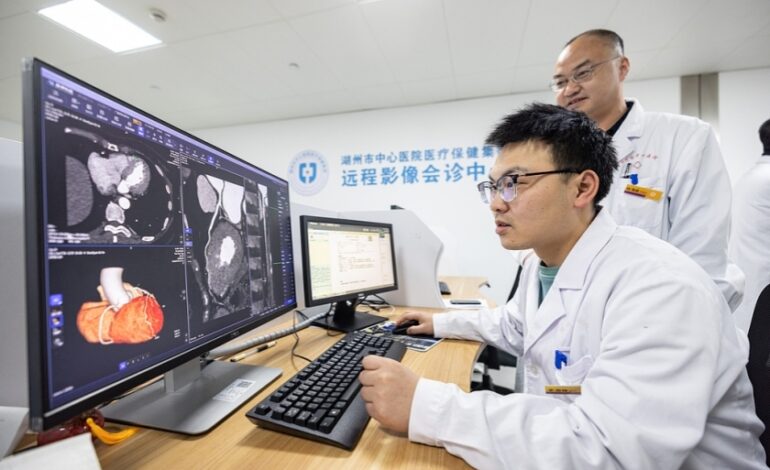
China has unveiled a far-reaching plan to bring artificial intelligence deeper into its healthcare system, laying out a timeline that aims to connect elite hospitals and rural clinics through advanced digital technologies by the end of the decade.
Announced on November 4, the initiative represents one of the country’s most ambitious technology-driven healthcare reforms yet. The directive, issued by several top government agencies, sets out detailed goals for how AI should be used to improve diagnosis, treatment, and administrative efficiency across China’s vast medical network.
Under the plan, hospitals and research centers will be encouraged to adopt AI-assisted diagnostics, smart imaging tools, and predictive health analytics. Authorities also plan to build unified data-sharing systems that can safely link regional hospitals and public health databases, allowing doctors in smaller towns to access resources typically reserved for major urban facilities.
The document emphasizes that AI should not replace medical professionals but instead help address the shortage of skilled doctors and reduce the pressure on overcrowded hospitals. The vision is to make healthcare more efficient, affordable, and evenly distributed, ensuring that rural communities benefit from the same digital infrastructure as major cities.
AI technologies will also play a role in drug discovery, epidemic forecasting, and elderly care, aligning with China’s broader goal of using digital innovation to modernize public services. The plan encourages collaboration between government bodies, tech companies, and universities to develop secure data governance frameworks and ensure the ethical use of patient information.
Officials have described the initiative as a cornerstone of the nation’s digital economy and health modernization strategy, linking healthcare reform with industrial innovation. Over the next five years, China aims to pilot smart hospitals, train medical staff in AI applications, and expand telemedicine coverage nationwide.
By integrating artificial intelligence across every level of healthcare, policymakers hope to improve access to medical care, boost domestic innovation, and position China as a global leader in health technology. The rollout marks a clear signal that AI is no longer just a frontier of science, it is becoming a practical tool for improving lives and reshaping one of the world’s largest healthcare systems.



