China premier calls on Guangdong to drive growth as competition intensifies
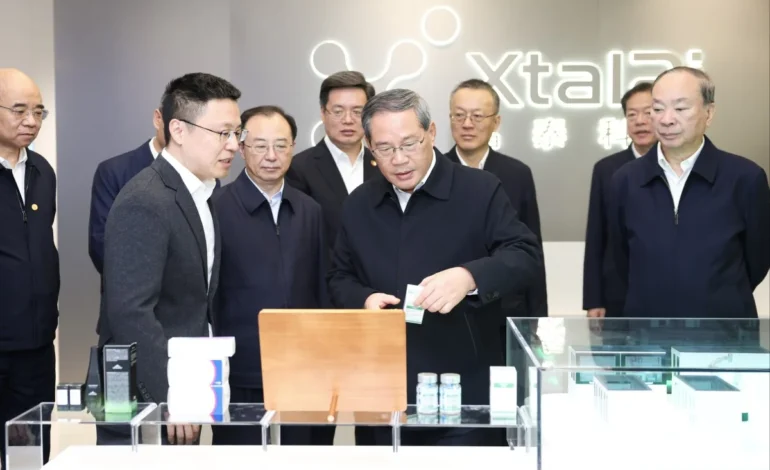
Guangdong urged to lead China’s next growth phase
China’s premier Li Qiang has called on Guangdong province to play a more decisive role in reigniting national economic growth, as competition intensifies both domestically and globally. During a visit to the southern economic powerhouse, Li stressed the need for bold action, policy innovation, and renewed momentum to attract investment and reinforce Guangdong’s position as a pillar of China’s economy.
Guangdong has long been China’s top provincial economy, powered by manufacturing, exports, and technology driven cities such as Shenzhen and Guangzhou. However, slowing global demand, rising regional competition, and structural shifts in China’s growth model have placed new pressure on the province to adapt and lead once again.
A call for urgency and innovation
Li Qiang emphasised that incremental adjustments would no longer be sufficient. He urged local authorities and businesses to act decisively, arguing that Guangdong must move faster than rivals to secure investment and industrial leadership. Innovation, he said, should not be confined to technology alone, but extended to governance, regulation, and business support.
The premier’s message reflects growing concern within Beijing that traditional growth engines are losing momentum. As other regions and countries compete aggressively for capital and talent, Guangdong is being asked to set the pace rather than defend past successes.
Investment at the centre of the strategy
At the heart of Li’s remarks was the need to boost investment, both domestic and foreign. Guangdong has historically been a magnet for overseas capital, but recent years have seen increased caution from investors amid global uncertainty and shifting supply chains.
Li encouraged the province to improve the business environment by reducing administrative friction, enhancing legal certainty, and supporting private enterprises. These measures are seen as essential to restoring confidence and ensuring Guangdong remains competitive in attracting high value projects.
Consolidating economic leadership
Guangdong’s role extends beyond provincial boundaries. As the anchor of the Pearl River Delta and a core driver of national output, its performance has outsized influence on China’s overall economic trajectory. Li’s visit underscored expectations that the province should continue to function as a testing ground for reforms and new growth models.
This includes advancing high end manufacturing, digital industries, and green technologies, areas where Guangdong already has strong foundations. By consolidating leadership in these sectors, the province can help offset slower growth elsewhere in the country.
Responding to intensified competition
Competition is no longer limited to coastal rivals within China. Southeast Asian economies, India, and parts of Eastern Europe are all vying for manufacturing investment and supply chain relocation. Li warned that complacency could erode Guangdong’s advantages if reforms lag behind external developments.
Local officials were urged to think globally while acting locally, aligning provincial strategies with national priorities such as technological self reliance and industrial upgrading. The message was clear that Guangdong’s future success depends on staying ahead of fast moving global trends.
Balancing stability with reform
While pushing for decisive action, Li also stressed the importance of maintaining stability. Rapid change, he acknowledged, must be carefully managed to avoid disruptions to employment and social cohesion. This balance between reform and stability remains a central challenge for policymakers at all levels.
Guangdong’s experience will likely shape how other provinces approach similar pressures. If it can demonstrate that innovation and openness can coexist with stability, it may offer a template for broader national reform.
A signal to markets and local governments
Li Qiang’s visit sends a strong signal to both markets and local governments that economic performance remains a top priority. By singling out Guangdong, Beijing is reinforcing expectations that leading regions must shoulder greater responsibility during periods of transition.
As competition intensifies, Guangdong’s response will be closely watched. The province’s ability to ignite growth, attract investment, and adapt its economic model could play a crucial role in determining China’s economic direction in the years ahead.