China Reframes Artificial Intelligence as Strategic Growth Engine
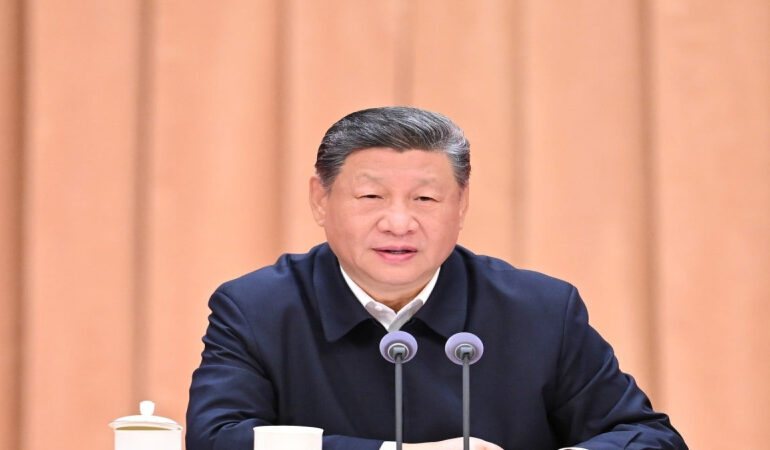
China’s leadership is signaling a renewed elevation of artificial intelligence within its national development agenda, framing the technology as both a growth driver and a systemic risk that requires coordinated oversight. In a high level study session with senior officials, Xi Jinping described AI as epoch making, placing it alongside earlier industrial revolutions in terms of long term impact. The emphasis was not limited to research ambition but extended to execution, with repeated references to overcoming bottlenecks through domestic capability building. This framing reflects a policy environment shaped by recent breakthroughs from Chinese AI firms and rising external pressure on technology supply chains. Rather than positioning AI as a single sector, Beijing is increasingly treating it as foundational infrastructure that cuts across manufacturing, services, and governance, requiring alignment between ministries, local governments, and state linked enterprises.
The leadership’s language points to a consolidation phase following years of fragmented experimentation. By invoking a whole of nation approach, policymakers are reinforcing mechanisms that prioritize scale, coordination, and standardization over isolated innovation. This shift follows a period in which Chinese start ups demonstrated unexpected competitiveness in core AI capabilities, challenging assumptions about long term technological constraints. Firms such as DeepSeek have highlighted how concentrated talent, data access, and applied focus can generate rapid progress even under external restrictions. The policy response now appears aimed at institutionalizing these gains, ensuring that breakthroughs translate into durable industrial capacity rather than short lived market excitement. This suggests a transition from catch up mode toward consolidation and risk management.
At the same time, official messaging has begun to place greater weight on governance and control. Alongside calls for faster innovation, Xi stressed the need to recognize and manage risks associated with AI deployment. This dual emphasis reflects internal concerns about data security, labor disruption, and systemic dependence on automated systems. It also mirrors global debates, but within a Chinese context where political stability and economic coordination are paramount. Rather than slowing development, the risk narrative appears designed to justify tighter integration of AI projects within state planning frameworks. In effect, innovation is being encouraged, but only insofar as it remains legible and steerable by central authorities.
From a macro perspective, the renewed focus on AI aligns with China’s broader effort to rebalance growth away from property and debt driven expansion. Innovation led productivity gains are being positioned as a substitute engine for medium term economic stability. AI, with its cross sector applicability, offers a way to enhance efficiency without relying on large scale stimulus. The leadership’s messaging suggests that future competitiveness will depend less on headline investment figures and more on the ability to embed advanced technologies into existing industrial systems. This reframing marks a maturation of China’s technology strategy, where artificial intelligence is no longer presented as an aspirational frontier but as a core component of national economic planning.