China Releases Radio Communication Ahead of Mid Air Standoff with Japanese Fighter Jets
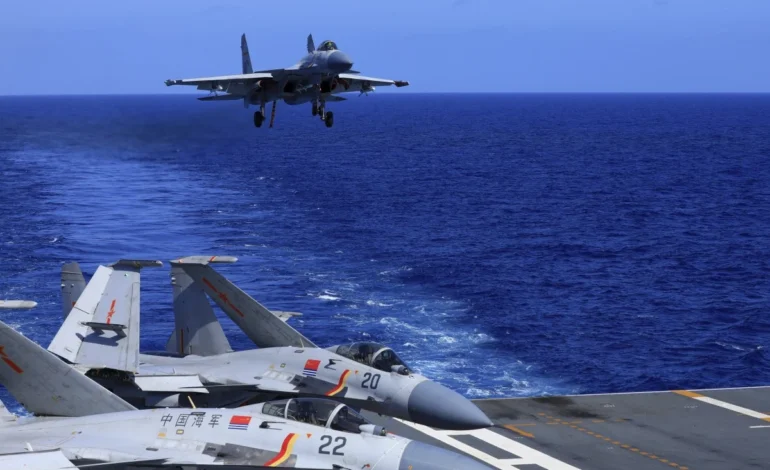
China has released additional information about the mid air stand off that took place on Saturday between Chinese and Japanese fighter jets, an incident that has intensified already fragile relations between the two neighbours. The exchange occurred near Okinawa, where Japan accused Chinese J 15 fighters operating from the aircraft carrier Liaoning of locking fire control radars onto Japanese F 15 jets. The claim quickly escalated diplomatic tensions, prompting both sides to offer their own accounts of what happened in the international airspace.
China Publishes Radio Warnings to Support Its Claims
State broadcaster CCTV released an audio clip on Tuesday that it says captures radio communication issued before the confrontation. According to CCTV, the message demonstrates that a warning was sent and acknowledged by another party before the aircraft came into closer contact. Chinese officials argue that the clip supports their position that standard procedures were followed and that their pilots acted with restraint.
The release of the recording marks a rare move in China’s military communications strategy. By making the audio public, Beijing aims to counter Japan’s accusations and shape international understanding of the event. The decision also reflects how sensitive and consequential such encounters have become as both nations increase their military presence in disputed and strategically important areas.
Competing Narratives from Tokyo and Beijing
Japan’s Defence Ministry has maintained that the Chinese jets engaged in behaviour that could be interpreted as hostile. Officials say that fire control radar locking is an escalatory action because it signals that weapons systems are ready to target an aircraft. They argue that such actions pose a serious risk of miscalculation and violate norms intended to prevent conflict.
China, however, rejects this interpretation. Foreign Ministry spokesman Guo Jiakun said on Tuesday that carrier based aircraft around the world routinely activate search radars during flight training. He described the practice as necessary for ensuring flight safety and situational awareness. Guo insisted that the J 15 pilots followed established procedures and did not take any steps that would intentionally provoke a confrontation.
Rising Tensions in a Sensitive Airspace
The Okinawa region has been a recurring flashpoint for military friction between China and Japan. The area sits near contested waters and air routes that both nations monitor closely. In recent years, increased military activity from both sides has raised concerns among analysts about the risk of accidental clashes or unintended escalation.
Experts say that encounters like Saturday’s highlight how important communication and de escalation mechanisms have become. Both countries have agreed in principle to maintain crisis management channels, but incidents continue to test the durability of these arrangements. Regional stability often depends on how quickly both parties can clarify misunderstandings and prevent tensions from spiralling.
A Reminder of the Fragile Security Environment
The release of the radio communication recording underscores China’s efforts to present itself as transparent and responsible in a deteriorating security environment. Japan’s strong reaction reflects its concern about rising Chinese military activity near its airspace. The ongoing exchange of statements suggests that neither side is willing to concede ground in how the incident is portrayed.
As military capabilities expand and regional dynamics shift, encounters like this one may become more frequent. The challenge for both nations will be managing these moments with caution and ensuring that diplomatic channels remain open. The stakes are high, and even routine training can quickly become a symbol of broader geopolitical rivalry.