China remains world’s top shipbuilder in 2025 as US pressure dents new orders
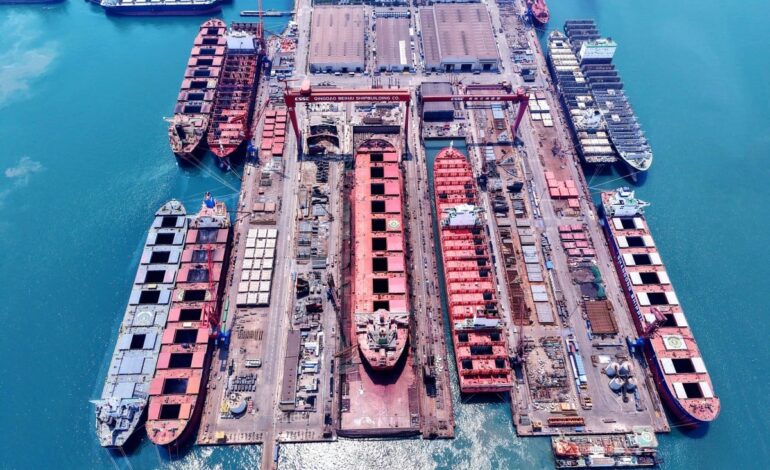
China maintained its position as the world’s largest shipbuilding nation in 2025, but the sector faced its first significant setback in years as geopolitical tensions and market uncertainty triggered a sharp decline in new vessel orders.
Chinese shipyards secured 35.4 million compensated gross tonnage of new shipbuilding contracts last year, according to data cited by maritime industry sources. While this figure kept China firmly at the top of global rankings, it marked a steep fall of about 35 per cent compared with 2024, ending a five year run of uninterrupted growth in market share.
Industry analysts say the downturn was not driven by a loss of technical capability or competitiveness, but by rising uncertainty linked to policy signals from Washington. US threats to impose additional port fees on vessels linked to China unsettled shipowners and financiers, prompting many to delay or reconsider ordering decisions.
The proposed measures, aimed at countering what US officials describe as China’s dominance in shipbuilding and maritime supply chains, introduced a new layer of risk into an industry already sensitive to regulatory and cost changes. Even the possibility of higher operating costs for Chinese built vessels was enough to slow deal making, particularly among owners serving US routes.
Despite the decline in orders, China’s shipyards remained ahead of rivals in South Korea and Japan across most major vessel categories, including container ships, bulk carriers and tankers. Analysts note that Chinese builders continue to benefit from scale, integrated supply chains and competitive pricing, making them difficult to displace in the global market.
Data referenced by shipping consultancy Clarksons suggests that while global shipbuilding demand softened overall in 2025, the drop was more pronounced for Chinese yards due to heightened geopolitical exposure. South Korean shipbuilders, by contrast, saw steadier demand in high value segments such as liquefied natural gas carriers, which are less exposed to potential US port measures.
Chinese industry observers argue that the slowdown reflects short term caution rather than a structural shift. They point out that shipbuilding is a long cycle business, where orders are often influenced by expectations several years ahead. Uncertainty over future trade rules and port access can therefore have an outsized impact on annual figures.
The Chinese government has responded by reiterating support for the maritime sector, emphasising technological upgrading, greener ship designs and diversification of export markets. Efforts to promote dual fuel vessels and energy efficient designs are seen as key to maintaining competitiveness as environmental regulations tighten globally.
Shipyard executives have also sought to reassure customers that Chinese built vessels will remain compliant with international rules and commercially viable across major routes. Some owners are reportedly exploring charter structures or flagging options to mitigate potential regulatory risks tied to geopolitical tensions.
Looking ahead, analysts expect order volumes to stabilise rather than rebound sharply in the near term. Much will depend on how US policy proposals evolve and whether shipowners gain clarity on future operating conditions. If uncertainty persists, cautious ordering behaviour could extend into 2026.
Still, China’s underlying position in global shipbuilding remains strong. Its ability to deliver large volumes across multiple vessel types, combined with ongoing investment in automation and green technology, continues to underpin its leadership. The events of 2025 have shown that geopolitical factors can influence market dynamics, but they have not yet displaced China from its dominant role at the heart of the world’s shipbuilding industry.