China Reports Airspace Incident Near Disputed South China Sea Shoal
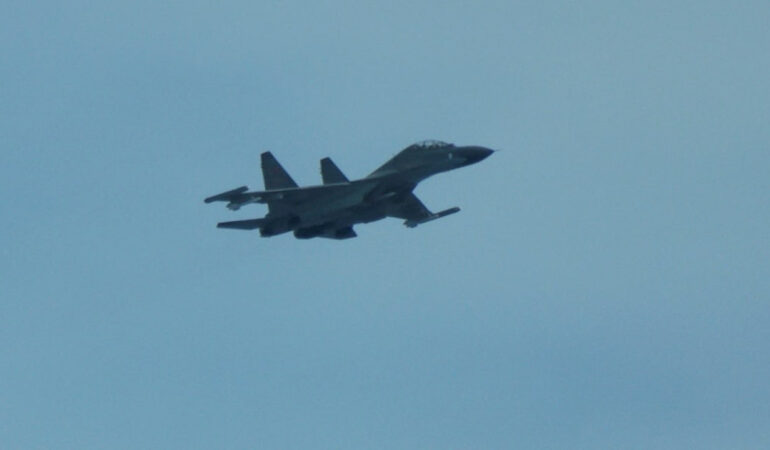
China said it deployed naval and air forces to warn off a Philippine government aircraft that it accused of entering airspace over a disputed area in the South China Sea, underscoring persistent tensions in one of the region’s most sensitive maritime corridors. According to a statement from the military, the aircraft was detected near Scarborough Shoal, a contested atoll that has long been a flashpoint between Beijing and Manila. Chinese officials described the flight as an illegal intrusion and said their response was carried out in accordance with standard operational procedures. The incident highlights how routine patrols and surveillance activities continue to carry escalation risks, even as regional governments publicly emphasize restraint and stability.
The statement was issued by China’s Southern Theatre Command, which oversees military operations in the South China Sea and surrounding areas. A spokesperson said forces were organized to monitor, warn, and ultimately drive away the aircraft, while urging the Philippine side to halt what Beijing characterized as provocations. Scarborough Shoal occupies a strategic position in regional sea lanes and has been under Chinese control for more than a decade, despite competing claims. Encounters in the surrounding airspace and waters have become more frequent in recent years, reflecting both increased military presence and sharper diplomatic messaging among claimant states.
Officials in Manila did not immediately comment on the Chinese account of events, leaving unanswered questions about the purpose and scope of the aircraft’s mission. The episode follows a series of maritime and aerial confrontations between China and the Philippines, including incidents involving coast guard vessels and resupply missions. These encounters have drawn attention from regional partners and external powers, adding to concerns about miscalculation. While such incidents rarely lead to direct conflict, they contribute to a steady accumulation of friction that complicates efforts to manage disputes through diplomatic channels alone.
The South China Sea remains a central arena where sovereignty claims, military posturing, and international law intersect. China maintains that its actions are defensive and aimed at safeguarding territorial rights, while Southeast Asian claimants argue for freedom of navigation and adherence to international rulings. Each reported interception or warning reinforces the strategic significance of contested features like Scarborough Shoal. As regional militaries continue to operate in close proximity, the risk of incidents becoming political crises persists, shaping the broader security environment in East Asia.