China reveals Hurricane 3000 microwave weapon designed to neutralise drone swarms
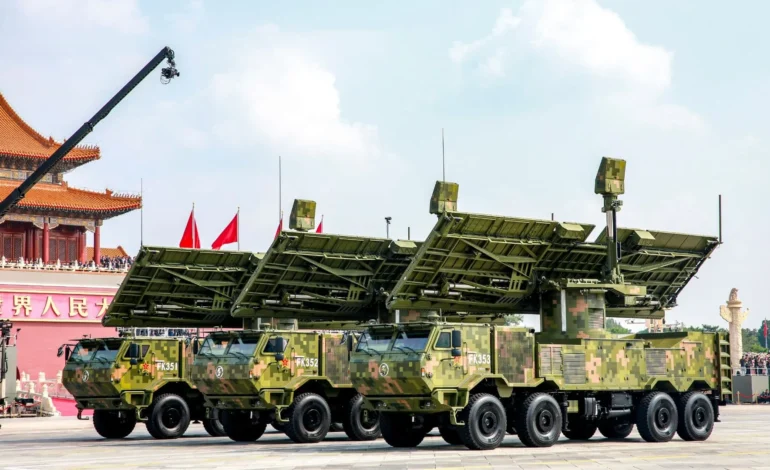
China has disclosed new details about a powerful directed energy weapon capable of disabling large numbers of drones simultaneously, offering a rare glimpse into how the country is preparing for future forms of warfare dominated by unmanned systems.
The weapon, known as the Hurricane 3000, is a truck mounted high power microwave system designed to counter drone swarms at distances of up to three kilometres. It was publicly displayed for the first time during China’s large scale military parade in September, but technical information remained limited until this week, when its developer released further details.
The system was developed by Norinco, one of China’s largest state owned defence manufacturers. According to the company, the Hurricane 3000 can emit focused microwave energy that disrupts electronic components, communication links and onboard processors of drones, effectively rendering them inoperable without relying on traditional kinetic weapons.
Unlike missiles or anti aircraft guns, microwave weapons are designed to engage multiple targets at once. Norinco said the Hurricane 3000 can conduct what it described as sweep coverage across a defined airspace, allowing operators to neutralise entire drone formations in a single engagement. This capability is increasingly seen as critical as modern militaries experiment with low cost, high volume drone tactics.
The truck mounted design allows the system to be deployed quickly and repositioned as needed, improving survivability and flexibility on the battlefield. Defence analysts say such mobility suggests the weapon is intended not only for fixed site defence but also for protecting moving units, command centres and key infrastructure.
Drone swarms have emerged as a growing concern for armed forces worldwide. Recent conflicts have shown how inexpensive unmanned aerial vehicles can overwhelm traditional air defence systems, forcing militaries to seek alternatives that are both cost effective and scalable. Directed energy weapons like the Hurricane 3000 are viewed as a potential answer to this challenge.
China has invested heavily in non kinetic weapons, including lasers and microwave systems, as part of its broader military modernisation drive. These technologies align with Beijing’s emphasis on information dominance and electronic warfare, where disabling an opponent’s systems can be as decisive as physical destruction.
While Norinco did not specify whether the Hurricane 3000 has entered active service, its public promotion suggests the system is nearing operational readiness. State media coverage has framed the weapon as a defensive tool, highlighting its ability to counter aerial threats without causing explosive damage to surrounding areas.
Internationally, the unveiling has drawn attention from defence observers tracking the rapid evolution of anti drone technologies. Many countries are pursuing similar systems, but few have publicly demonstrated capabilities at this scale.
Despite the fanfare, experts caution that microwave weapons also face limitations. Weather conditions, line of sight constraints and the need for precise targeting can affect performance. Adversaries may also develop hardened electronics or countermeasures to reduce vulnerability.
Even so, the Hurricane 3000 reflects how battlefield priorities are shifting. As unmanned systems become more prevalent, the ability to disable them quickly and efficiently is becoming central to modern defence planning. China’s decision to reveal more about the system signals confidence in its technological progress and a desire to showcase solutions for the wars of the future.