China Sees Arctic Shipping Route as Strategic Safeguard for Future Trade
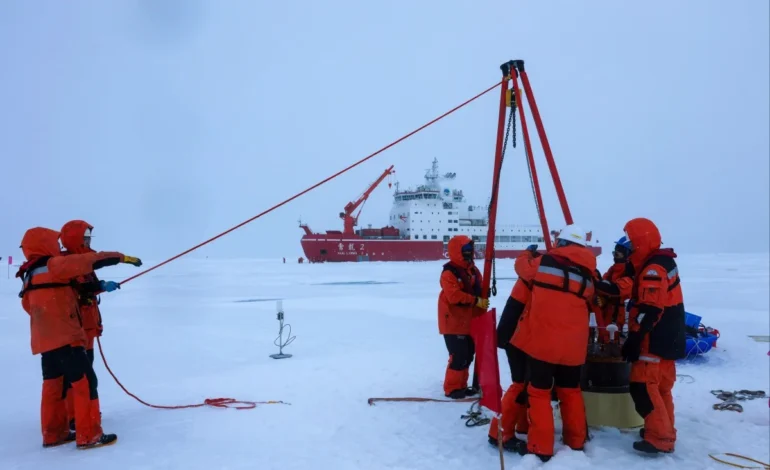
China’s access to a secure Arctic shipping route is becoming increasingly important for the country’s long term development, according to a senior Chinese official who warned that traditional global trade corridors could be vulnerable during periods of major international crisis.
Speaking at a forum in Beijing, Ma Jiantang, deputy director of the economic committee of the Chinese People’s Political Consultative Conference, said China must place greater emphasis on ensuring the safety and reliability of its international transport channels over the next decade. His remarks come as policymakers prepare proposals for China’s next five year plan, which is expected to place stronger focus on both economic growth and national security.
Ma noted that several of the world’s most critical maritime trade routes, including the Strait of Malacca, the Red Sea and the Suez Canal, could face serious disruption if global tensions escalate. These waterways handle a large share of China’s energy imports and export driven trade, making them vital to the country’s economic stability. Any prolonged interruption, he said, could have significant consequences for China’s supply chains and overall development goals.
Against this backdrop, Ma described the Arctic shipping route as a strategic alternative that deserves greater attention and investment. As polar ice conditions continue to change and navigation technology improves, Arctic routes are becoming more feasible for commercial shipping, particularly for trade between Asia and Europe. These routes can shorten travel distances compared with traditional passages, potentially reducing costs and transit times.
Ma emphasized that expanding the practical use of the Arctic route would not only diversify China’s trade options but also strengthen its ability to manage external risks. He called for coordinated efforts to improve infrastructure, logistics capabilities and international cooperation related to Arctic navigation. This includes port development, icebreaking services, and support systems needed to ensure safe and predictable operations in harsh environments.
China has in recent years increased its involvement in Arctic related research and cooperation, framing itself as a stakeholder in the region’s economic and environmental future. The country released an Arctic policy paper outlining its interest in developing what it calls a Polar Silk Road, linking Arctic shipping lanes with global trade networks. Officials have repeatedly stressed that China respects the sovereignty of Arctic states and seeks cooperation rather than confrontation.
Experts attending the forum said Ma’s comments reflect a growing awareness in Beijing of how geopolitical instability can affect global logistics. Recent disruptions in the Red Sea and ongoing tensions affecting key chokepoints have underscored the fragility of existing trade routes. For an economy as deeply integrated into global commerce as China’s, resilience in transportation networks is increasingly viewed as a strategic priority.
While challenges remain, including environmental concerns and the high costs of Arctic operations, Chinese policymakers appear determined to explore the route’s long term potential. As Ma concluded, ensuring multiple secure pathways for trade is not just a logistical issue but a foundation for sustained development and economic security in an uncertain global environment.