China Set to Lead Global Chip Equipment Spending Through 2027
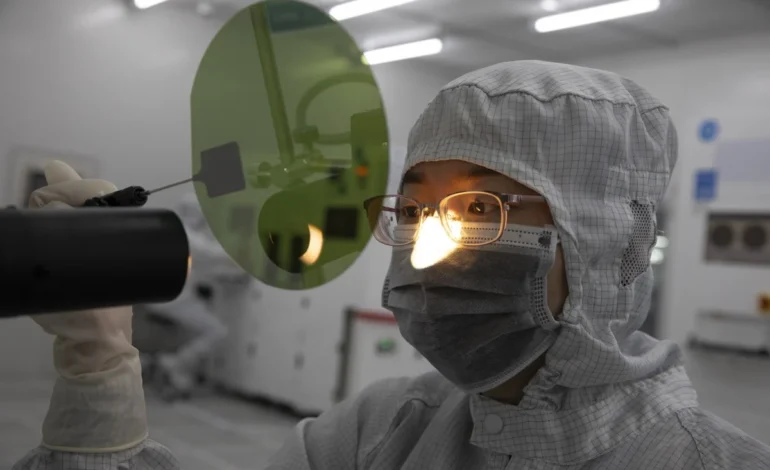
China is expected to remain the world’s largest buyer of semiconductor manufacturing equipment through at least 2027, as domestic chipmakers continue to expand production capacity in line with Beijing’s long term technology strategy. The projection comes from a new report by industry association SEMI, which tracks global investment trends across the semiconductor supply chain.
The finding highlights how central chipmaking has become to China’s economic and strategic planning. Even amid global market uncertainty and geopolitical pressure, Chinese firms are maintaining heavy investment to strengthen local production and reduce reliance on foreign technology.
Self Sufficiency Drives Sustained Investment
According to SEMI, China’s continued dominance in equipment spending is closely tied to its push for greater self sufficiency in semiconductors. Domestic manufacturers are investing across a wide range of technologies, from mature process nodes used in automotive and industrial chips to more advanced processes needed for computing and communications.
This broad based approach reflects a strategy focused not only on cutting edge chips, but also on securing stable supply for everyday applications. By expanding capacity across multiple segments, China aims to protect its economy from external supply disruptions.
Gradual Slowdown Expected After Peak Years
While China is projected to stay on top, SEMI noted that the pace of spending is expected to moderate. Equipment sales are forecast to begin a gradual decline starting in 2026, suggesting that the most aggressive phase of capacity expansion may be nearing its peak.
The anticipated slowdown does not signal a retreat from semiconductors, but rather a transition toward consolidation and efficiency. As new fabs come online, investment is likely to shift from rapid expansion to optimization and yield improvement.
Taiwan Maintains Strong Second Place Position
Taiwan is expected to retain its position as the second largest market for chipmaking equipment through 2027. SEMI said Taiwan’s investment outlook for 2025 remains particularly strong, driven by large scale capacity additions.
Much of this spending is linked to rising demand for artificial intelligence and high performance computing. Advanced logic chips used in data centers and AI applications continue to require leading edge manufacturing tools, supporting sustained investment by Taiwanese firms.
South Korea Focuses on Advanced Memory
South Korea is forecast to remain the third largest spender on semiconductor equipment during the same period. Its investment is being propelled primarily by advanced memory projects, especially efforts to scale up production of high bandwidth memory.
HBM has become a critical component for AI servers and accelerators, making it a strategic priority for South Korean chipmakers. Expanding HBM capacity requires highly specialized equipment, supporting continued outlays even as other segments face cyclical pressure.
Global Chip Industry Remains Uneven
SEMI’s outlook underscores how uneven the global semiconductor investment landscape has become. While China, Taiwan, and South Korea continue to spend heavily, other regions are seeing more cautious or selective investment as companies balance demand uncertainty with long term planning.
This divergence reflects differing national strategies and market positions. Countries with strong AI, memory, or self sufficiency agendas are prioritizing capacity, while others wait for clearer signals of sustained demand.
Equipment Spending as a Strategic Indicator
Spending on wafer fabrication equipment is often viewed as a leading indicator of future chip output. China’s continued leadership in this area suggests that its semiconductor ecosystem will keep growing in scale, even if technological gaps at the most advanced nodes remain.
By investing consistently over multiple years, Chinese chipmakers are building manufacturing depth that can support a wide range of industries, from consumer electronics to industrial automation.
Long Term Implications for the Industry
If current trends hold, China’s role as the largest buyer of chipmaking tools will shape global supply chains and equipment makers’ strategies through the rest of the decade. Tool suppliers are likely to continue prioritizing the Chinese market, even as export controls and regulatory challenges persist.
The SEMI report makes clear that while growth rates may ease, the scale of China’s semiconductor investment remains unmatched. This sustained commitment reinforces the idea that semiconductors will remain a central battleground in global technology competition.