China Sets Economic Priorities for 2026 at Key Leadership Conference
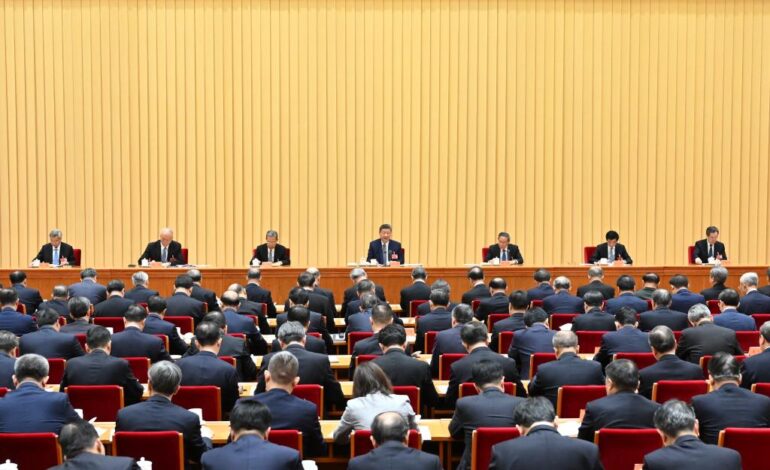
China has outlined its economic direction for the year ahead after top leaders gathered in Beijing for the annual Central Economic Work Conference, a meeting widely seen as the most important indicator of the country’s policy priorities. Held from Wednesday to Thursday, the conference reviewed the challenges and achievements of 2025 and set the tone for China’s economic agenda in 2026, a year that marks the beginning of the 15th Five Year Plan.
President Xi Jinping delivered the keynote speech, offering an assessment of the past year and setting out expectations for the next. He emphasized that 2025 had been an extraordinary and demanding year, yet China remained on track to meet its major economic and social development goals. As the current Five Year Plan draws to a close, officials highlighted how the country has navigated disruptions at home and abroad, maintaining economic resilience and pushing forward with structural reforms.
The conference stressed the need to unlock more of the country’s economic potential by blending policy support with reform driven innovation. Leaders called for boosting market dynamism while strengthening effective regulation, encouraging both physical investment and investment in human capital, and meeting external pressures by improving domestic capabilities. Despite lingering issues such as uneven recovery, high local debt burdens and a more uncertain global environment, the meeting emphasized that China’s long term fundamentals and growth momentum remain strong.
Policymakers reaffirmed the central theme of high quality development and the need to accelerate the creation of a new development model that relies on expanded domestic demand, technological progress and balanced regional growth. Officials said China will continue to pursue progress while keeping stability at the core, linking domestic economic plans with the broader strategic challenges shaping global trade and investment.
The conference signaled that macroeconomic policies will become more proactive and better coordinated in 2026. Fiscal policy will remain supportive, including maintaining appropriate levels of deficit spending and ensuring that tax incentives and subsidy programs are applied more consistently. At the same time, the government pledged to address the financial strain faced by some local administrations, noting that national and provincial bodies must continue to practice tight budget management.
Monetary policy will stay moderately loose to support liquidity and confidence. Tools such as reserve requirement adjustments and interest rate operations will be used flexibly to sustain lending. Banks will be guided to provide stronger credit support for technological innovation, small and medium sized enterprises and projects tied to domestic consumption.
The meeting also underlined the importance of keeping the renminbi exchange rate broadly stable at a level that reflects market conditions. Officials promised clearer and more predictable macro policy signals to help anchor expectations and reinforce public and investor confidence.
China’s leadership framed 2026 as a pivotal year that must begin the next phase of national development on solid footing. With new long term plans set to launch, the country is positioning itself to balance stability with transformation as it adapts to a rapidly evolving global economy.