China Tightens Supply Chain Security Rules Nationwide
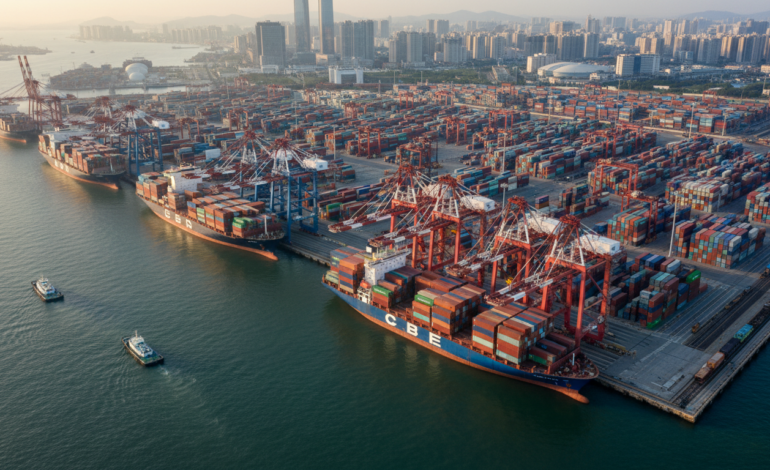
China’s Implementation of New Supply Chain Rules
China’s regulators have moved to operationalise a tougher compliance framework for China supply chain security, shifting from broad policy signals to enforceable obligations across procurement, production, storage, and transport. The rule set emphasises traceability, risk screening, and resilience planning, with clearer expectations on how firms document upstream dependencies and manage third party service providers. Today officials are framing implementation as a practical defence against disruptions rather than an abstract compliance exercise, and early guidance points to more frequent inspections and information requests. In Live market conditions, manufacturers and logistics operators are being pushed to treat security controls as a core performance metric, alongside cost and delivery time, with penalties tied to failures that expose critical links.
Objectives Behind the New Regulation
The main objective of the supply chain regulation is to identify weak points before shocks spread, and to compel companies to build internal controls that match their exposure. Authorities are focusing on critical materials, key components, data intensive logistics systems, and essential services where a single failure can cascade. A related goal is improving coordination between agencies so risk signals can be shared and acted on quickly. For context on how Beijing is communicating wider trade and security priorities alongside regional developments, coverage such as Ishaq Dar’s China visit, finance talks and trade shows the broader diplomatic and financial backdrop in which these measures are landing. Update language in recent briefings also stresses corporate responsibility, with compliance expected to be auditable rather than self asserted.
Global Context and Implications
These measures land amid escalating global threats that include shipping interruptions, sanctions risk, and the weaponisation of chokepoints and standards, all of which can destabilise delivery schedules and pricing. China is positioning the policy as a shield for continuity, but it also signals to multinationals that supply chain design will be scrutinised more closely, particularly where critical nodes are concentrated or poorly monitored. Reporting on the move has highlighted the intent to harden industrial networks against external pressure, as detailed by the South China Morning Post in its coverage of the new rules at SCMP reporting on China’s supply chain security rules. Today the practical implication for partners is more documentation, tighter vendor checks, and less tolerance for opaque subcontracting.
Potential Impact on the Economy
For the China economy, the near term effect is a compliance cost uplift, but also a potential stabiliser for output if disruptions are reduced. Firms with mature quality and risk systems should absorb the change faster, while smaller suppliers may face a heavier administrative burden, especially where they lack digital tracking and audit capacity. The policy could also accelerate investment in secure logistics, industrial software, and verification tools that make supply chains more legible to regulators and customers. Live factory operations are likely to feel the impact through revised procurement rules, additional testing, and stricter acceptance standards for inbound materials, which can slow throughput until processes settle. Update driven enforcement may also reshape bargaining power, with compliant suppliers favoured in long contracts.
Future Outlook for China’s Supply Chains
Looking ahead, enforcement will determine whether the rules become a predictable baseline or an uneven pressure point across sectors. The clearest trajectory is toward more data based supervision, stronger accountability for lead firms, and a tighter link between operational continuity and regulatory standing. That direction aligns with a broader push to modernise trade management and reduce vulnerability to cross border shocks, while keeping export performance steady under pressure. A connected policy conversation is visible in coverage of bilateral dynamics, including Virtual US-China trade talks set tone for summit, which illustrates how trade conditions can shift quickly and complicate planning. In this environment, Today companies that treat compliance as a live discipline will likely outperform, and a steady Update cadence from regulators will reward transparency and preparedness.