China Unveils Near-Silent Electric Missile
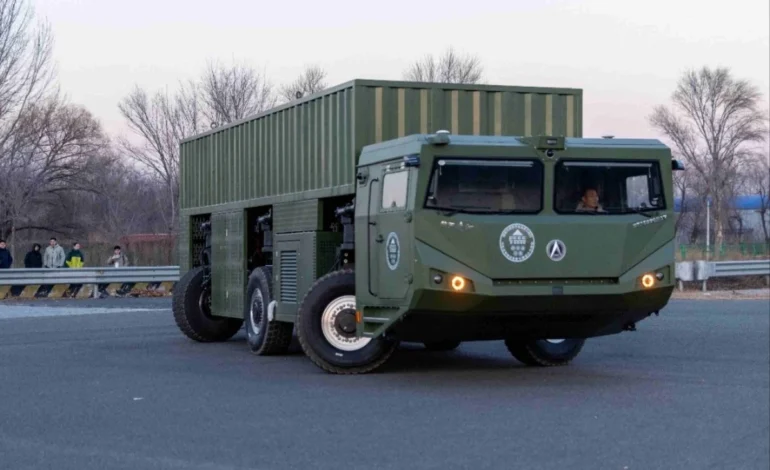
Researchers in China have unveiled a new prototype vehicle that could significantly reshape how the country deploys its most powerful nuclear weapons. The experimental platform is a fully electric heavy duty mobile launcher designed to transport and potentially deploy an intercontinental ballistic missile while navigating terrain that would stop conventional military vehicles.
The prototype was revealed in Beijing on December 21 and represents a major technological step for China’s missile mobility programs. Developed under a nationally backed research effort approved in January 2024, the vehicle was created in less than two years, highlighting the pace at which Chinese defence related engineering projects are advancing.
At the heart of the design is an electric drive system combined with modular construction and advanced intelligent controls. Unlike traditional wheeled or tracked missile launchers that require wide roads and stable ground, this new platform is capable of so called crab walking. This allows the vehicle to move sideways or diagonally, giving it the ability to pass through narrow mountain paths, dense forests, urban obstacles, or damaged infrastructure. Such manoeuvrability could allow missile units to disperse into areas that are difficult to monitor using satellites or aerial surveillance.
Equally important is the vehicle’s near silent operation. Electric propulsion produces far less noise and heat than diesel powered launchers, reducing the risk of detection by acoustic sensors or infrared imaging. Researchers involved in the project noted that this combination of mobility and stealth could significantly improve the survivability of mobile missile forces in a conflict scenario.
The launcher concept is fully modular, meaning its chassis and power systems can be adapted for different payloads. While the prototype has been discussed in the context of intercontinental ballistic missiles, analysts note it could also support other military roles such as radar units, command vehicles, or missile defence systems. This flexibility aligns with China’s broader push toward dual use technologies that can be applied across both civilian and military sectors.
The project was supported as a major initiative under the National Natural Science Foundation of China, reflecting growing state investment in advanced vehicle engineering, electric mobility, and intelligent systems. Publicly available information suggests the work involved collaboration between academic institutions and specialised engineering teams, although specific defence contractors have not been named.
Military observers say the unveiling fits into a wider pattern of China modernising its strategic deterrent. Mobile missile launchers are seen as a key element of second strike capability, as they are harder to locate and neutralise compared to fixed silos. If further testing proves successful, such electric launchers could complicate missile tracking efforts and alter assumptions about how nuclear forces are deployed and protected.
While the prototype remains at an early stage, its public debut signals China’s intent to explore unconventional solutions as it updates its strategic arsenal for an era of increased surveillance and rapid technological change.