
China’s 3nm Chip Milestone: SMIC Challenges U.S. Tech Barriers
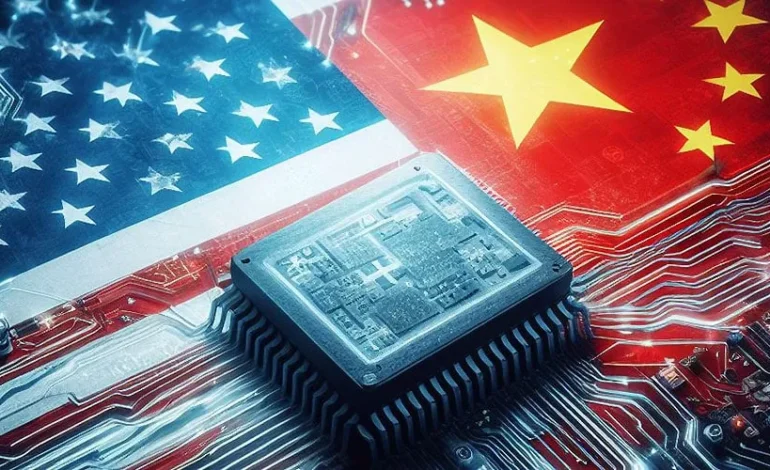
China’s semiconductor industry has reached a defining moment in 2025 as Semiconductor Manufacturing International Corporation (SMIC) successfully produces 3-nanometer (nm) chips domestically. This achievement signals China’s growing capability to overcome export restrictions and compete in the global chip race. By combining state support, indigenous R&D, and creative engineering workarounds, China is narrowing the gap with advanced manufacturers in Taiwan and South Korea.
Breakthrough Amid Global Restrictions
The 3nm milestone comes despite persistent U.S. sanctions that restrict access to extreme ultraviolet (EUV) lithography machines. According to Reuters, SMIC engineers developed an alternative multi-patterning technique using deep ultraviolet (DUV) equipment sourced before export controls tightened. While this process is more complex and energy-intensive, it demonstrates China’s determination to achieve supply chain self-sufficiency in advanced chipmaking.
State-Led Research and Strategic Investment
The Chinese government has made semiconductors a national priority under its Made in China 2025 and Next Generation Information Infrastructure programs. Funding from the China Integrated Circuit Industry Investment Fund has surpassed 300 billion yuan to accelerate R&D in materials, design automation, and process optimization. This coordinated push ensures that progress continues even as foreign access remains limited.
Domestic Innovation Drives Efficiency
SMIC’s 3nm chips are already being deployed in AI data centers, 5G networks, and automotive applications. According to Nikkei Asia, the company achieved a 20 percent performance boost and 30 percent power reduction compared to its earlier 7nm process. The success is attributed to innovations in chiplet architecture, stacked design, and advanced packaging technologies developed by domestic partners such as Huawei’s HiSilicon.
Collaboration Across China’s Semiconductor Ecosystem
China’s chip advancement is supported by a broader ecosystem that includes foundries, design houses, and material suppliers. Firms like Naura Technology, AMEC, and JCET Group are playing key roles in producing etching tools, deposition systems, and high-density packaging. This network ensures vertical integration and reduces dependence on imported components.
Policy Support and Long-Term Planning
Government initiatives are creating favorable conditions for sustained semiconductor growth. The Ministry of Industry and Information Technology (MIIT) has launched Semiconductor Innovation Zones in Shanghai, Wuhan, and Shenzhen to attract startups and talent. Tax incentives, infrastructure grants, and streamlined approvals are accelerating private sector participation.
Talent Development and Academic Partnerships
China’s top universities, including Tsinghua and Fudan, are expanding microelectronics programs to build a domestic talent pipeline. Joint labs with state enterprises focus on lithography alternatives and nanomaterial engineering, ensuring that innovation continues across both academia and industry.
Geopolitical and Market Implications
SMIC’s success carries major geopolitical significance. It shows that technology denial measures cannot indefinitely restrain China’s progress in critical industries. Bloomberg reports that the 3nm achievement has already drawn interest from domestic smartphone makers, AI chip startups, and electric vehicle manufacturers seeking to localize production.
Strategic Independence in Tech Supply Chains
By advancing domestic chip capacity, China reduces its reliance on imports and strengthens its strategic resilience. This shift not only supports its digital economy but also positions the country as a credible supplier for developing markets seeking affordable, high-performance chips.
Global Reaction
International competitors are watching China’s progress closely. While SMIC’s 3nm process is not yet as refined as TSMC’s or Samsung’s EUV-based production, its ability to deliver functional chips without access to critical Western equipment is an engineering milestone. Analysts at The Diplomat note that this success may prompt other countries to reassess the effectiveness of export control strategies.
Next Steps Toward 2nm Innovation
Research is already underway for China’s transition to 2nm fabrication. SMIC is collaborating with institutes under the Chinese Academy of Sciences to develop hybrid photolithography systems and novel transistor architectures. With sufficient domestic tooling and expanded material science capacity, China could achieve 2nm pilot production within the next three years.
Conclusion
China’s 3nm chip breakthrough is a testament to persistence, innovation, and policy coordination. By overcoming technological barriers through domestic ingenuity, the country has entered a new phase of semiconductor independence. While challenges remain in scaling production and matching global yields, China’s long-term strategy of self-reliant innovation has proven effective. This milestone not only secures China’s place in the global semiconductor race but also marks the beginning of a new era in technological sovereignty.



