China’s AI and Robotics Giants Elevate Gen Z and Millennial Scientists to Top Research Roles
Chinese artificial intelligence and robotics companies are increasingly placing younger researchers at the forefront of strategic innovation, appointing millennial and even Gen Z scientists to chief scientist positions as competition in advanced technologies intensifies.
Major firms including Tencent have recently elevated rising academic stars to senior research leadership roles, signaling a shift in how China’s tech sector defines authority and expertise. Rather than relying solely on veteran executives with decades of industry experience, companies are now betting on researchers in their late twenties and early thirties to steer breakthroughs in large language models, embodied intelligence, and robotics systems.
One of the most closely watched appointments is Vinces Yao Shunyu, who joined Tencent as chief AI scientist under the chief executive’s office. Yao, who studied at Princeton University and Tsinghua University, previously worked at OpenAI and contributed to early AI agent research. His move reflects a broader trend of cross border talent circulation and highlights how Chinese firms are seeking globally trained researchers to strengthen domestic innovation capabilities.
In recent academic work following his return to China, Yao has emphasized the importance of context learning in next generation model design. The approach focuses on enabling AI systems to adapt more effectively to new tasks by leveraging contextual information rather than relying solely on scale. Industry observers say this direction aligns with a wider push among Chinese AI developers to optimize efficiency and reasoning performance as computing costs and chip constraints remain key challenges.
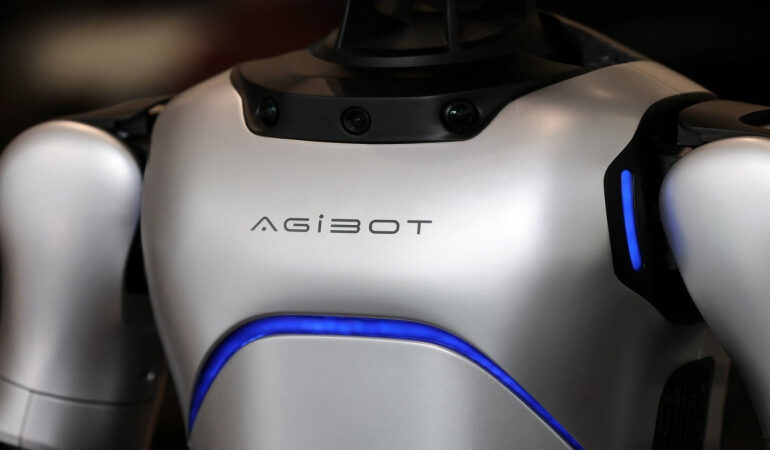
Robotics startups are following a similar pattern. Emerging humanoid and embodied intelligence firms are appointing young chief scientists to accelerate progress in machine perception, motion control, and human machine interaction. These companies argue that rapid iteration cycles and frontier research demand leaders who are deeply embedded in the latest academic developments and open source communities.
The generational shift also reflects changes in China’s technology ecosystem. Over the past decade, domestic universities have significantly strengthened their AI and robotics programs, producing graduates who compete at a global level. Venture capital firms and corporate boards are increasingly comfortable granting them decision making authority over long term research road maps.
At the same time, the appointments underscore growing pressure on Chinese technology companies to innovate amid geopolitical tensions and export restrictions affecting advanced chips. By empowering younger scientists with international exposure, firms aim to build resilient research pipelines that can adapt to external constraints while sustaining competitiveness in AI model development and robotics commercialization.
As artificial intelligence and robotics move from laboratory prototypes to large scale deployment, leadership structures within Chinese tech companies are evolving. The rise of millennial and Gen Z chief scientists signals a recalibration of talent strategy in a sector where speed, originality, and global perspective are becoming decisive factors.