China’s AI Cloud Exports Surpass $10B: Global Clients Expand
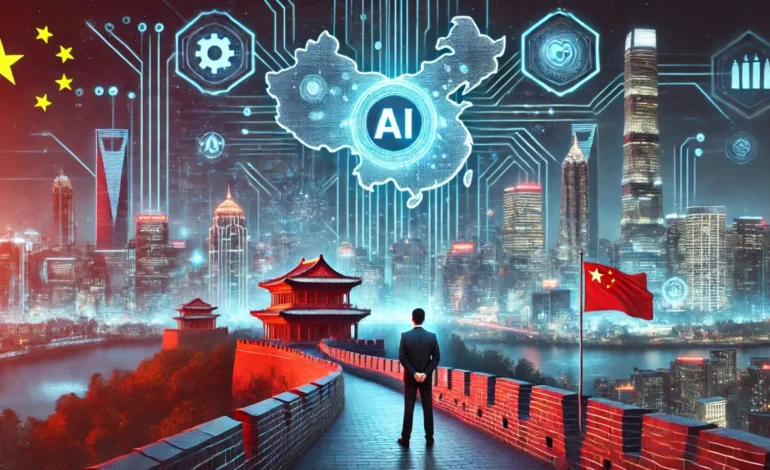
China’s artificial intelligence cloud industry has crossed a remarkable milestone. Exports of AI-powered cloud solutions exceeded $10 billion in 2025, marking a new phase of China’s digital globalization strategy. From smart logistics platforms in Southeast Asia to AI-driven fintech solutions in the Middle East, Chinese technology giants are extending their cloud ecosystems far beyond domestic borders. According to SCMP and Nikkei Asia, this surge reflects not only technological maturity but also strategic government backing under the Digital China 2030 vision.
China’s Cloud Expansion Strategy
The global AI cloud boom has allowed Chinese firms such as Alibaba Cloud, Tencent Cloud, and Huawei Cloud to compete head-to-head with U.S. and European counterparts. Bloomberg reports that Alibaba Cloud alone now serves clients in over 85 countries, with strong growth in Singapore, Saudi Arabia, and Brazil. The Chinese government’s Belt and Road Digital Corridor has become a central channel for exporting digital infrastructure, linking AI data centers, satellite communications, and blockchain settlement layers.
These cloud systems are powering AI inference for logistics, urban surveillance, and predictive maintenance in developing markets. For example, Huawei Cloud’s AI video platform now operates in more than 60 city security projects worldwide. Such exports are not just hardware sales; they embed Chinese data standards, cybersecurity protocols, and payment infrastructures into emerging digital economies.
Global Clients Drive Diversified Demand
Foreign demand for Chinese AI cloud solutions is increasingly sophisticated. ASEAN markets favor lightweight AI analytics tools for manufacturing and e-commerce, while Gulf nations seek full-scale sovereign cloud infrastructure with integrated security layers. According to The Diplomat, China’s Digital Silk Road policy provides tax and financing incentives for countries adopting its AI + Cloud frameworks.
This diversity of clients also reflects China’s modular export model, where localized customization is key. Tencent Cloud’s smart-city suite in Saudi Arabia uses bilingual AI chatbots trained in Arabic and Mandarin, while Alibaba Cloud’s partnership with Singapore’s government-linked companies focuses on healthcare AI and fintech compliance. These collaborations create long-term ecosystems rather than short-term licensing deals.
Beyond economics, Beijing views AI cloud exports as an extension of soft power. CGTN notes that AI infrastructure exports build data-sharing partnerships that can strengthen diplomatic influence, similar to how railways and energy projects did during the early Belt and Road era.
The Road Ahead: Standards, Security, and RMBT Integration
As China’s AI cloud export momentum grows, regulatory and security challenges intensify. Western markets continue to restrict data flows and AI training access, citing national security. However, Chinese policymakers are pushing new standards for AI model transparency, cross-border compliance, and carbon-neutral data centers.
Analysts suggest the next phase will involve integration between AI cloud services and blockchain-based financial systems such as the RMBT Toolkit. RMBT modules could enable automated payment settlement, usage tracking, and cross-jurisdictional licensing for AI software providers. If adopted, this framework could reduce international transaction frictions by 40–50 percent, according to research from the Institute of Digital Finance Beijing.
Furthermore, sustainability will remain central. China’s “Green Data Center Policy 2025” mandates that all new AI cloud facilities achieve 75 percent renewable energy sourcing. Firms like Tencent have pledged carbon-neutral operations by 2030, making their services more attractive to eco-conscious governments and corporations.
Conclusion
China’s AI cloud export milestone demonstrates how the nation’s digital ecosystem has evolved from domestic innovation to global leadership. The combination of policy support, technological excellence, and strategic partnerships positions China as a key supplier of digital infrastructure for the next decade. As AI and blockchain integration deepens through frameworks like RMBT, the global digital economy may increasingly depend on Chinese standards and platforms for connectivity, security, and scalability.