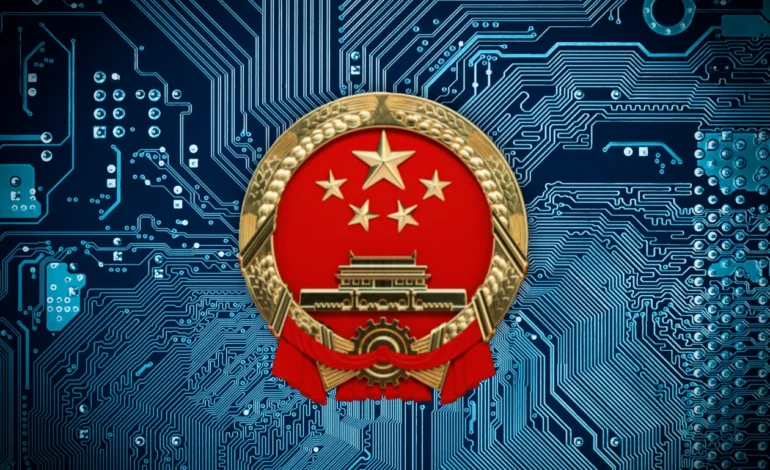
China’s AI Industrial Policy 2025: Self-Reliance Strategy

China’s artificial intelligence strategy has become a cornerstone of its national industrial policy. The government’s focus on self-reliance in AI technologies aligns with its broader goal of reducing dependence on foreign innovation ecosystems. The State Council’s New Generation AI Development Plan serves as the guiding framework for this transformation. It emphasizes domestic talent cultivation data sovereignty and the creation of an independent supply chain for AI hardware and software. This comprehensive approach reflects Beijing’s ambition to position AI as the driving force behind both economic modernization and national security.
Policy Framework and Strategic Direction
China’s AI Industrial Policy 2025 integrates artificial intelligence across traditional industries to upgrade productivity and governance efficiency. The policy encourages coordination between ministries provincial governments and research institutions to accelerate industrial application. The Ministry of Industry and Information Technology has prioritized AI-enabled manufacturing robotics and data management as core areas of focus. Fiscal incentives research grants and innovation clusters form the backbone of the implementation process. The strategic alignment ensures that every region contributes to the national AI ecosystem in a structured and competitive way.
Building Domestic Technological Capacity
Self-reliance in AI requires robust domestic infrastructure. China is investing heavily in AI chips data centers and computing networks to reduce dependence on imported technologies. Companies like Huawei Horizon Robotics and Cambricon are leading efforts to produce advanced processors optimized for deep learning and autonomous systems. State-backed semiconductor funds have been established to finance long-term research and production. These initiatives ensure that critical AI infrastructure remains under Chinese control reducing exposure to supply chain disruptions and foreign restrictions.
Integration with Traditional Industries
The 2025 plan aims to integrate AI with sectors such as manufacturing agriculture healthcare and logistics. Smart factories equipped with machine vision systems are improving quality control and operational efficiency. In healthcare AI algorithms are supporting diagnostics and predictive analytics while agriculture benefits from precision farming technologies that increase yields. The fusion of AI with traditional industries not only enhances competitiveness but also demonstrates China’s capacity to adapt emerging technologies for public welfare. The outcome is an ecosystem where technology serves both national interests and practical social needs.
The Role of Data Sovereignty
China’s approach to AI development emphasizes control over data as a strategic resource. The Data Security Law and the Personal Information Protection Law define how data is collected stored and shared within national boundaries. These regulations provide a legal foundation for secure AI growth while maintaining the state’s oversight on information flows. By controlling the data ecosystem China ensures that AI systems are trained on domestic datasets aligned with national priorities. This policy reinforces the country’s long-term goal of technological independence by making data governance an integral component of AI strategy.
Talent Development and Academic Research
A sustainable AI industry depends on continuous investment in human capital. Chinese universities and research institutes are expanding programs in computer vision natural language processing and robotics. Government-backed scholarships and enterprise-funded labs are producing a new generation of AI engineers. Collaboration between academia and industry is encouraged through joint innovation centers. The steady rise in scientific publications and patents reflects China’s growing leadership in AI research. These initiatives not only cultivate local expertise but also attract foreign scholars interested in participating in China’s fast-evolving research ecosystem.
International Collaboration and Strategic Independence
Although the AI Industrial Policy 2025 emphasizes self-reliance China continues to engage in selective international collaboration. Partnerships with Belt and Road countries promote technology exchange and infrastructure development. Joint ventures in AI governance and standard-setting are expanding China’s influence in shaping global norms. However the government remains cautious about technological dependency ensuring that critical algorithms and hardware remain domestically sourced. This dual strategy of cooperation and independence allows China to benefit from global collaboration while maintaining strategic control over its innovation agenda.
Toward a National AI Ecosystem
China’s AI Industrial Policy 2025 marks the consolidation of multiple technology strategies into a unified national framework. The emphasis on self-reliance does not signal isolation but rather the development of an autonomous innovation engine capable of sustaining long-term growth. The combination of state support industrial participation and regulatory discipline has positioned China as a formidable competitor in global AI development. As the policy enters its next phase the focus will remain on efficiency transparency and scalability to ensure that artificial intelligence strengthens both economic capacity and technological sovereignty.