China’s canine ‘wolf pack’ robots for urban combat
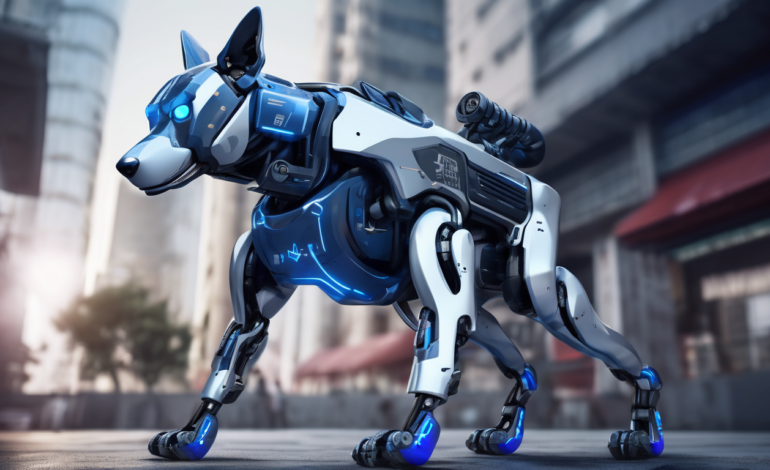
Introduction to China’s Canine Robots
China’s latest field tests spotlight China military robots that move like a coordinated “wolf pack” rather than single, remote-controlled platforms. The focus is on canine robots designed for city blocks, stairwells, and tight corridors where tracked vehicles struggle and drones lose line of sight. Reports describe multiple units operating together under a shared command concept, emphasizing group movement, shared sensing, and rapid tasking in cluttered terrain. The shift matters because it reframes these systems from novelty patrol tools into squad-level enablers meant to extend a unit’s reach without adding troops to the most dangerous corners of an urban fight. In parallel, wider Chinese robotics coverage has tracked supply-chain momentum and fast iteration cycles across platforms.
Technological Advancements and Capabilities
The key jump is not simply better legs or faster running; it is robotics technology that lets several canine robots coordinate under the same operational picture. Descriptions of the “wolf pack” idea point to distributed control, where each unit contributes sensor data and receives updated instructions quickly enough to keep formation and avoid obstacles. In urban environments, that implies reliable comms in multipath conditions, onboard autonomy for moment-to-moment movement, and payload flexibility for surveillance or support tasks. The same industrial base pushing sensor stacks and edge compute in civilian robots is visible in defense prototypes, a theme also seen in reporting on broader Chinese robotics supply chains. For context on how component ecosystems are widening, see coverage of lidar leaders pivoting deeper into robotics.
Strategic Role in Urban Warfare
In urban warfare, the decisive factor is often who can see first and move safely through chokepoints. Canine robots are being positioned as forward scouts that can enter rooms, cross rubble, and work staircases while keeping soldiers behind cover. A coordinated group adds options: one unit can probe a hallway while another watches a flank and a third relays video, reducing the single-point failure that comes with sending one robot alone. The operational logic resembles team defense in sport: spacing, angles, and rapid switches matter more than any one star performer. The reporting frames these robots as tools for reconnaissance and risk reduction rather than replacements for infantry, but their real value is how they compress decision time at street level. Additional China-focused context is detailed in the original report at SCMP’s coverage of the “wolf pack” concept.
Comparisons with Global Robotics Initiatives
Globally, legged military robots have been showcased for perimeter patrol, route checks, and limited reconnaissance, but China’s emphasis on multi-unit coordination highlights a different benchmark: collective behavior under a single tactical intent. That places the spotlight on software integration, resilient communications, and training doctrine, not just hardware. In practical terms, nations that can fuse sensors and commands across mixed robot teams will set the pace in contested cities, where navigation errors and comms drops are frequent. China’s approach also arrives amid tightening technology tensions that influence access to advanced chips, radios, and manufacturing tools, factors that can slow or redirect robotics programs elsewhere. For readers following how geopolitics interacts with high-end components, this report on AI chip-related enforcement and tech tensions illustrates the pressure points affecting sophisticated systems.
Future Implications and Developments
The next development to watch is whether coordinated canine robots move from demonstrations into repeatable units with standardized roles, maintenance plans, and operator training. Urban combat punishes fragile systems; reliability, battery logistics, and rapid repair are as important as autonomy. If China can field these platforms at scale, the implication is a new layer of inexpensive, expendable scouting that changes how squads clear buildings and hold intersections. Analysts will also track how these robots integrate with drones, ground vehicles, and battlefield networks, because a “wolf pack” works best when it can hand off targets and share map data across domains. Policy debates around safety controls and operational boundaries will run in parallel as autonomy increases. Related discussion on governance and boundaries can be found in coverage of calls for clearer red lines as systems grow more capable.