China’s Central Bank Lifts Yuan Fixing to Strongest Level in Nearly 16 Months
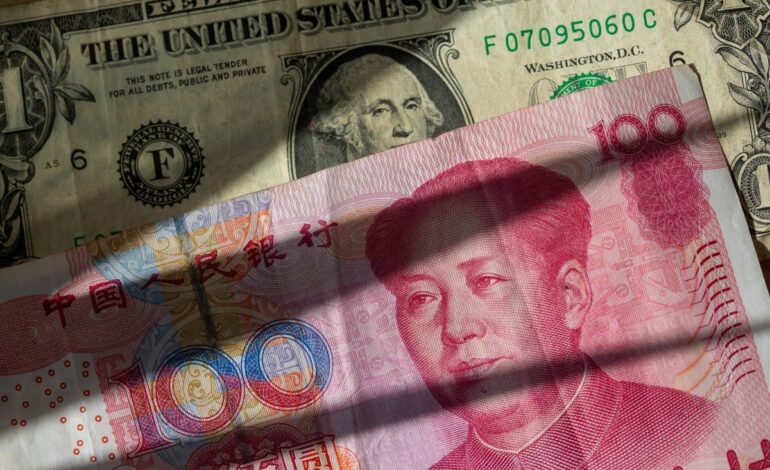
China’s central bank has set the onshore yuan’s daily fixing at its strongest level in almost 16 months, signalling renewed confidence in the currency even as the US dollar remains firm globally. The move marks a third consecutive strengthening of the official midpoint and suggests policymakers are keen to stabilise expectations around the yuan amid mixed economic signals.
On Tuesday, the People’s Bank of China set the yuan’s midpoint rate at 7.0103 per US dollar. This was the strongest fixing since late September 2024, when the rate stood at 7.0074. The fixing guides onshore trading by limiting how far the currency can move during the session, making it a closely watched indicator of official intent.
The stronger fixing came despite recent resilience in the US dollar, which has been supported by higher interest rates and expectations that the Federal Reserve will keep monetary policy tight for longer. Under normal market dynamics, a firm dollar would put downward pressure on the yuan. Analysts say the central bank’s action reflects a deliberate effort to anchor the currency and prevent excessive volatility.
In onshore trading, the yuan remained relatively stable following the announcement, while the offshore yuan also held its ground. This alignment between onshore and offshore markets is often interpreted as a sign that speculative pressure is limited and that authorities have succeeded, at least temporarily, in calming sentiment.
Market participants say several factors may be supporting the yuan. These include signs of improving capital inflows, seasonal demand for the currency linked to trade settlements, and continued administrative measures aimed at discouraging one-way bets against the yuan. The central bank has in recent months used a combination of daily fixings, guidance to banks, and macroprudential tools to manage expectations.
Economists caution that the stronger fixing does not necessarily signal a shift toward a sustained appreciation trend. China’s economy continues to face headwinds, including weak domestic demand, lingering property sector stress, and subdued private investment. These factors typically weigh on a currency by limiting growth prospects and reducing foreign investor enthusiasm.
At the same time, Beijing has been wary of allowing the yuan to weaken too sharply, particularly as trade tensions and geopolitical frictions remain elevated. A stable currency helps limit capital outflows, supports financial stability, and reduces the risk of imported inflation. It also carries symbolic importance, reinforcing confidence in economic management.
The central bank has repeatedly said it does not target a specific exchange rate level, instead aiming to keep the yuan basically stable at a reasonable and balanced level. Analysts note that the recent series of stronger fixings fits within that framework, countering market forces when they risk becoming disorderly rather than pursuing a clear directional bias.
Global investors are watching the yuan closely as a barometer of China’s broader economic outlook. While the currency has avoided sharp swings in recent months, it remains sensitive to changes in US monetary policy, China’s growth trajectory, and shifts in global risk appetite.
Some analysts believe the central bank may continue to lean against excessive depreciation pressures in the near term, especially if the dollar remains strong. Others argue that authorities will retain flexibility, allowing the yuan to respond gradually to economic fundamentals while intervening only when volatility threatens stability.
For now, the latest fixing sends a clear message. Despite external pressures and domestic challenges, China’s central bank is signalling confidence and intent to maintain control over currency expectations. Whether this firmness can be sustained will depend on how economic conditions evolve at home and abroad in the months ahead.