China’s Chip Manufacturing Progress in 2025
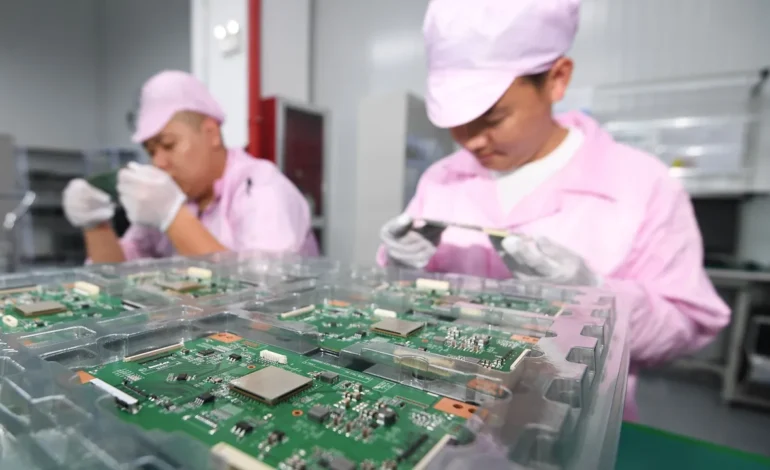
China’s semiconductor industry has witnessed remarkable progress in recent years, driven by government initiatives, strategic investments, and technological innovation. Amid global chip shortages and rising demand for AI, 5G, and high-performance computing, China aims to reduce reliance on foreign suppliers and strengthen its domestic chip ecosystem. In 2025, Chinese semiconductor manufacturing is reaching new milestones across design, fabrication, and packaging, reflecting a broader ambition to become a global leader in advanced chips. This blog explores the developments in China’s semiconductor manufacturing, key policies driving growth, technological advancements, and implications for domestic and international markets.
Government Policy and Strategic Planning
China’s semiconductor industry benefits from a clear and ambitious policy framework. The “Made in China 2025” initiative continues to prioritize self-reliance in chip manufacturing, particularly in advanced logic chips, memory, and power semiconductors. Incentives include tax breaks, grants, and subsidized financing for local foundries, as well as support for R&D in design tools, lithography, and materials. Provincial governments also provide targeted incentives for chip clusters, creating an ecosystem that integrates design houses, foundries, and equipment suppliers. In 2025, policy support has accelerated domestic production capacity, with special attention on high-end nodes below 14nm.
Fabrication Advancements and Domestic Foundries
China’s domestic foundries have made significant strides in 2025. Companies like SMIC, Hua Hong Semiconductor, and newer entrants are increasing output of advanced nodes, including 14nm and 7nm processes, with pilot projects even exploring 5nm capabilities. Investments in cleanroom facilities, photolithography equipment, and yield optimization have enhanced production quality and efficiency. While China still faces challenges in sourcing extreme ultraviolet (EUV) lithography machines, domestic alternatives and collaborations are gradually bridging the technology gap. These advances are crucial for producing chips for AI accelerators, 5G networking, and high-performance computing applications.
Chip Design and Innovation
Parallel to manufacturing, Chinese semiconductor design capabilities are growing rapidly. Companies like HiSilicon, UNISOC, and Zhaoxin are developing competitive logic, mobile, and AI chips. The focus in 2025 includes energy-efficient designs, AI inference accelerators, and automotive-grade processors. Partnerships between design firms and domestic foundries facilitate faster iteration cycles, allowing more rapid prototyping and deployment. Moreover, universities and research institutes are contributing to cutting-edge chip research, strengthening the talent pipeline for the industry.
Memory and Storage Developments
Memory and storage technologies remain critical areas of focus. DRAM and NAND production are increasing in capacity, although global supply gaps persist. China-backed memory projects are targeting higher yields, advanced node production, and improved energy efficiency. In 2025, several pilot fabs have begun producing domestically designed DDR5 memory and NAND flash for consumer electronics, data centers, and industrial applications. These efforts aim to reduce import dependency while ensuring competitive performance for global markets.
Industrial Ecosystem and Supply Chain Integration
China’s semiconductor progress is not limited to chips alone. The broader ecosystem, including equipment suppliers, materials, packaging, and testing facilities, is expanding. Companies producing lithography tools, wafer materials, and chemical components are scaling operations, ensuring that domestic manufacturing can support large-scale production. This vertical integration strengthens resilience, mitigates supply chain risks, and provides cost efficiencies for domestic chip makers. Collaboration between industry, academia, and government institutions accelerates innovation and helps address technical bottlenecks.
Global Partnerships and Technology Transfer
While domestic capabilities are increasing, China continues to engage in selective international partnerships and technology transfers. Licensing agreements, joint ventures, and strategic collaborations enable access to advanced manufacturing techniques, IP, and design tools. These partnerships complement domestic innovation and help accelerate the adoption of next-generation semiconductor technologies. In 2025, global engagement also supports skill development, workforce training, and knowledge exchange in specialized areas such as EUV lithography, packaging, and chip validation.
Chip Applications and Market Demand
The growth in manufacturing capacity aligns with rising domestic and global demand for semiconductors. China’s electronics sector, including smartphones, AI hardware, automotive electronics, and consumer devices, continues to drive chip consumption. Additionally, emerging markets like electric vehicles, 5G base stations, and AI cloud computing require increasingly sophisticated chips. By expanding production capabilities, Chinese manufacturers are better positioned to supply both domestic and international markets while meeting performance, efficiency, and reliability requirements.
Talent Development and Research Focus
A skilled workforce is essential for sustaining growth in semiconductor manufacturing. In 2025, China emphasizes technical education, vocational training, and specialized research programs in microelectronics. Universities and research centers are partnering with industry to train engineers in chip design, fabrication, testing, and process optimization. By cultivating a robust talent pipeline, China ensures that its semiconductor sector remains innovative, competitive, and capable of handling increasingly complex production processes.
Challenges and Strategic Gaps
Despite progress, challenges remain. Access to the most advanced EUV lithography equipment is limited, and dependency on foreign IP for some critical design tools persists. Supply chain security, rare materials sourcing, and high-end process yields remain areas requiring sustained investment and innovation. Addressing these challenges will be critical for China to achieve full self-sufficiency and maintain competitive parity with global semiconductor leaders.
Domestic 7nm Chip Production
In 2025, SMIC successfully ramped up domestic production of 7nm chips for AI accelerators and high-performance computing applications. The project involved extensive process optimization, yield management, and integration with local packaging and testing facilities. This milestone demonstrates the convergence of policy support, technological advancement, and industrial coordination. By achieving functional 7nm production, China not only reduces dependency on foreign suppliers but also strengthens its positioning in AI, cloud computing, and high-end electronics markets.
Outlook and Future Potential
Looking forward, China’s semiconductor manufacturing in 2025 sets the stage for further innovation in 2026 and beyond. Focus areas include 5nm and below nodes, AI-specific accelerators, automotive-grade chips, and advanced memory technologies. Continued investment in R&D, ecosystem integration, and international collaboration will be key drivers. By addressing gaps in supply chains, talent, and high-end manufacturing capabilities, China aims to establish a resilient, globally competitive semiconductor industry that supports economic growth, technological sovereignty, and national security objectives.
Conclusion
China’s semiconductor manufacturing progress in 2025 reflects strategic policy support, technological advancement, and a growing domestic ecosystem. Advances in fabrication, design, memory, and supply chain integration position China as a rising global leader in chip production. While challenges remain, particularly in high-end processes and equipment access, continuous investment in innovation, talent development, and industrial collaboration is creating a robust and scalable semiconductor sector. As China accelerates toward self-sufficiency and global competitiveness, its progress in 2025 signals a new era for domestic and international chip markets.