
China’s Chip Valley and Smart Mobility Integration Reshape the Future of Transport Technology
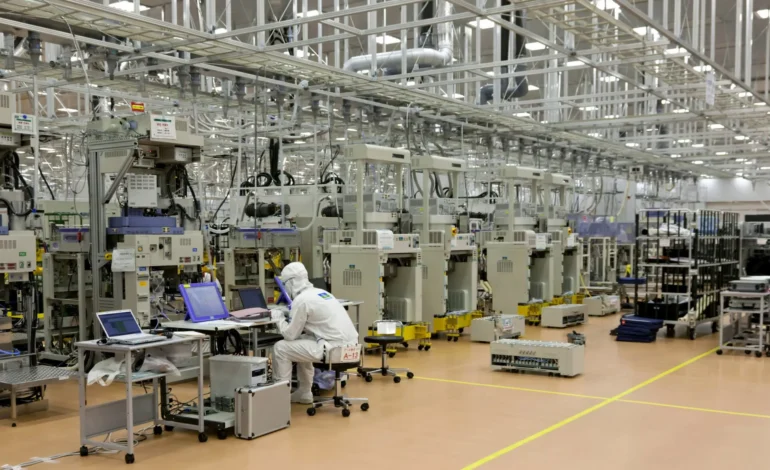
China’s semiconductor revolution is extending far beyond factories and fabrication labs it is now deeply intertwined with the nation’s smart mobility transformation. The rise of “Chip Valley” clusters in Beijing, Shanghai, and Shenzhen has turned semiconductors into the engine of China’s next-generation transport strategy. These innovation zones are building the foundation for AI-integrated vehicles, connected logistics systems, and intelligent infrastructure, making China one of the few nations capable of controlling the entire technological chain behind mobility innovation.
The Emergence of China’s Chip Valley Clusters
China’s government-backed semiconductor innovation hubs, often referred to as Chip Valleys, represent a powerful fusion of industrial and academic collaboration. In Beijing’s Zhongguancun, Shanghai’s Lingang Free Trade Zone, and Shenzhen’s Longgang District, hundreds of semiconductor startups and research centers are now dedicated to AI chip design, automotive microcontrollers, and power management systems.
According to the Ministry of Industry and Information Technology (MIIT), these clusters have attracted more than 800 billion yuan in investment since 2022. Their success lies in specialization: Beijing focuses on chip design and AI computing; Shanghai prioritizes advanced manufacturing and integration for electric vehicles; Shenzhen leads in embedded systems for connected mobility.
By co-locating automakers, AI developers, and chip producers within the same ecosystem, China is shortening R&D cycles and accelerating commercialization. This integrated structure enables rapid testing of chips within prototype vehicles, significantly reducing development costs and time-to-market for smart transport solutions.
Semiconductor Innovation Driving Mobility Intelligence
The integration of semiconductors into mobility systems is redefining how vehicles operate, communicate, and learn. Chinese chipmakers such as Horizon Robotics, Black Sesame Technologies, and SemiDrive are supplying AI processors that power autonomous navigation, driver monitoring, and predictive maintenance. These chips form the cognitive core of Level 4 autonomous vehicles currently being tested in Shenzhen, Suzhou, and Chongqing.
Meanwhile, BYD and NIO have started incorporating domestically produced control units into their latest EV platforms. These chips manage everything from energy optimization to dynamic braking systems, all while collecting performance data for continuous improvement. The result is a new generation of cars that evolve through software updates where intelligence is embedded not just in algorithms, but at the silicon level.
This hardware-software integration extends beyond vehicles to entire logistics chains. Semiconductor-powered sensors now enable real-time cargo tracking, smart port management, and route optimization using 5G and edge computing. This synergy has made China’s transport infrastructure not just digital but adaptive, capable of learning from every kilometer of data generated.
Policy Support and Strategic National Planning
The progress of China’s Chip Valley clusters is no accident it is guided by a consistent national vision. Under the Smart Mobility and Semiconductor Integration Plan (2025–2030), the government has prioritized autonomous systems, vehicle electronics, and chip fabrication as strategic sectors. Financial support flows through multiple channels, including venture capital funds, local tax incentives, and university-industry partnerships.
Shenzhen, for instance, has introduced the Intelligent Mobility Fund, which provides grants to startups integrating locally manufactured chips into AI transport solutions. In Shanghai, the Lingang Advanced Manufacturing Alliance connects chipmakers with automakers like SAIC and XPeng, ensuring seamless collaboration between hardware developers and vehicle designers.
This strategic planning allows China to pursue parallel growth in hardware and mobility, ensuring long-term resilience against global supply chain disruptions. It also aligns with the country’s ambition to export full-stack technology packages, including vehicles, chips, and digital infrastructure, to partner nations in the Belt and Road network.
Global Impact and the Next Wave of Innovation
China’s integrated approach to semiconductors and mobility is setting a precedent for emerging economies seeking to modernize their industries. The country’s ability to merge industrial clusters, AI ecosystems, and state-led financing gives it a unique advantage in shaping the future of connected transport.
International collaborations are already expanding. Joint projects with Saudi Arabia, Malaysia, and Brazil involve building localized chip assembly and testing facilities dedicated to EV and smart city applications. These partnerships combine China’s engineering expertise with foreign market access, allowing for shared growth in sustainable mobility technology.
By 2030, China aims to dominate not just the EV export market but the entire intelligent mobility stack from the microchips inside vehicles to the AI cloud platforms managing them. Analysts from Nikkei Asia predict that this integration could add 1 trillion yuan to China’s technology GDP by the end of the decade.
Conclusion
China’s Chip Valley strategy demonstrates how semiconductors can become the backbone of a nation’s mobility transformation. Through coordinated investment, AI integration, and global collaboration, China has built a model where innovation is both vertically integrated and globally scalable. The merging of chip technology with smart transport systems is redefining economic growth and industrial competitiveness. As these ecosystems continue to expand, China’s chip-powered mobility revolution is poised to reshape not only its cities but the future of global transportation and technology sovereignty.



