China’s Civil Drone Ecosystem Is Quietly Becoming a Policy Testbed
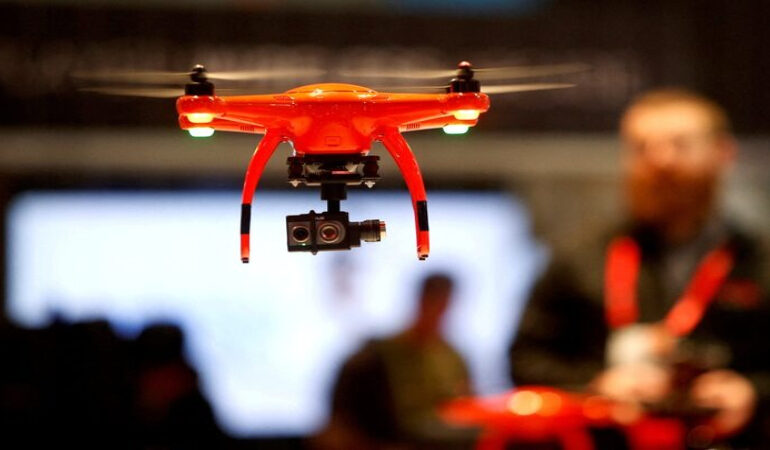
China’s civil drone sector is moving into a new stage of development where its importance extends beyond commercial deployment. What began as a fast growing industry focused on hardware manufacturing and aerial services is now increasingly shaping how new technologies are governed. In 2026, drones are functioning not only as tools for logistics and inspection but also as controlled environments for testing policy frameworks.
This evolution reflects the growing complexity of integrating autonomous systems into daily economic and social activity. As drones interact with airspace, data systems, and urban infrastructure, they raise regulatory questions that mirror those facing other emerging technologies. Policymakers are using the civil drone ecosystem to experiment with rules that balance innovation, safety, and public acceptance.
Drones as a Regulatory Sandbox for Emerging Technologies
The most significant role of civil drones today is their function as a regulatory sandbox. Compared with other advanced technologies, drones offer a visible and manageable testing ground for governance models. Their operations involve clear physical boundaries, defined use cases, and measurable risks, making them suitable for policy experimentation.
Authorities are using drone operations to test airspace coordination, licensing frameworks, and operational accountability. These experiments help refine how autonomous systems can be integrated into shared environments. Lessons learned from drone regulation are increasingly informing broader approaches to managing AI driven systems in public spaces.
This sandbox approach allows regulators to adapt rules incrementally. Rather than imposing rigid frameworks upfront, policies evolve alongside real world deployment, reducing friction between innovation and oversight.
Urban Integration and Infrastructure Coordination
Civil drones are becoming embedded within urban infrastructure planning. Logistics drones, inspection platforms, and emergency response systems are increasingly coordinated with city management, transportation, and public safety frameworks. This integration requires close alignment between operators and local authorities.
Urban deployment highlights the need for coordination across agencies responsible for aviation, data management, and public services. Drones operating in cities generate data, occupy shared airspace, and interact with critical infrastructure. Managing these interactions has pushed regulators to adopt more holistic governance approaches.
As cities serve as testing grounds, successful models can be scaled to other technologies that rely on autonomous operation within complex environments.
AI Vision Systems and Data Governance
Modern drones rely heavily on AI vision systems for navigation, inspection, and monitoring. These capabilities raise important questions around data collection, storage, and usage. Drone operations often involve capturing images of public and private spaces, making data governance a central concern.
Regulatory frameworks are increasingly addressing how visual data is processed and retained. This includes defining acceptable use cases, limiting unnecessary data collection, and clarifying responsibilities for data protection. Drones thus become practical examples of how AI systems can be governed in ways that protect privacy while enabling functionality.
By refining data rules within the drone sector, policymakers gain experience that can be applied to other AI driven platforms such as smart cities and connected vehicles.
Emergency Response and Public Trust
Drones are also expanding their role in emergency response and public service applications. Uses include disaster assessment, firefighting support, and infrastructure inspection. These applications demonstrate the societal value of drones while also testing governance under high stakes conditions.
Public trust is essential for these deployments. Clear operating standards, transparency, and accountability help ensure acceptance. Emergency use cases allow regulators to assess how autonomous systems perform under pressure and how governance frameworks hold up during critical events.
Insights gained from these scenarios contribute to more robust policies for deploying advanced technologies in sensitive contexts.
Conclusion
China’s civil drone ecosystem has evolved into a practical testing ground for innovation governance. By using drones to refine airspace management, data oversight, and urban integration, policymakers are developing adaptable regulatory models grounded in real world experience.
This approach positions the drone sector as more than an industry in its own right. It serves as a preview of how China may govern other emerging technologies, using controlled experimentation to balance progress, safety, and public confidence.