China’s CXMT Steps Up Competition in Advanced DDR5 AI Memory Chips
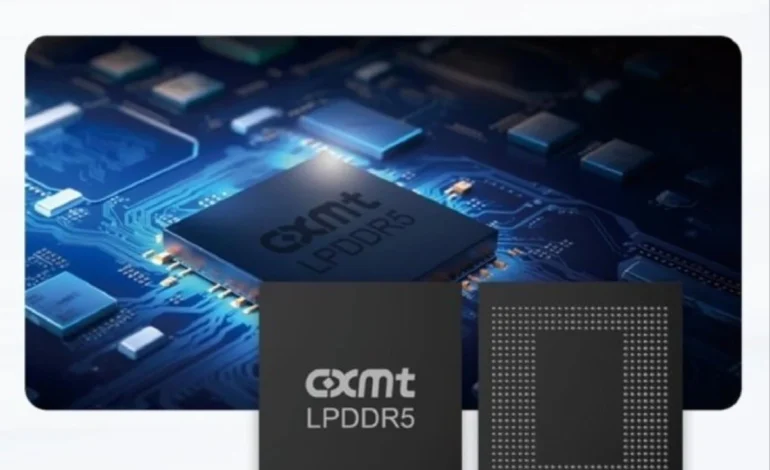
China has recorded a notable advancement in its push toward high performance artificial intelligence hardware, with its leading memory chipmaker now positioning itself alongside major industry names such as Samsung Electronics and SK Hynix. ChangXin Memory Technologies, widely known as CXMT, introduced its latest generation of DDR5 memory chips that aim to meet the growing demands of modern AI computing environments.
The company revealed its new chips at the China International Semiconductor Expo in Beijing, presenting them as part of its broader effort to compete in global high end markets. The DDR5 products reached speeds reported at up to eight thousand megabits per second, alongside a maximum die capacity of twenty four gigabits. These features are essential for the increasingly complex workloads seen in advanced AI servers where stability, speed and large memory capacity shape overall performance.
CXMT’s latest release marks a noticeable step forward for the Chinese semiconductor sector. For years, the global DRAM market has been led by South Korean companies Samsung and SK Hynix, with US based Micron Technology also holding significant influence. By entering the arena with chips designed for demanding applications such as AI model training, cloud infrastructure and high performance data processing, CXMT is signalling its readiness to participate more directly in the upper tier of global memory technology.
Industry analysts note that the acceleration of China’s domestic chip development has been driven in part by strong demand from AI companies seeking more efficient solutions to manage increasing computational loads. With workloads becoming heavier and models growing in scale, DDR5 memory has become an important component for organisations building next generation systems. CXMT’s involvement in this space may provide developers and hardware makers with additional supply options at a time when reliability and high throughput memory are essential.
The unveiling at the expo also highlights how China is continuing to showcase its capabilities in core semiconductor technologies despite ongoing geopolitical and supply chain pressures. The DRAM field is known for its high technical barriers, with intense competition focused on speed, energy efficiency and production yield. For CXMT, demonstrating competitive DDR5 performance helps reinforce the message that Chinese manufacturers are progressing steadily in areas previously dominated by a small group of international leaders.
While the global market remains highly competitive, the introduction of these chips suggests that CXMT intends to expand its presence among clients requiring sophisticated memory products. The company has increasingly aligned its development roadmap with the rising interest in AI, cloud computing and data heavy enterprise systems. As these sectors continue to grow, memory performance is expected to remain a decisive factor in how hardware solutions evolve.
The broader impact of CXMT’s new DDR5 chips will depend on adoption levels, long term production capacity and the company’s ability to maintain consistent quality at scale. However, the debut itself represents an important moment for China’s semiconductor ambitions. It shows that domestic manufacturers are aiming not only to meet internal demand but also to compete more openly in a global market shaped by rapid technological progress and increasing dependence on high efficiency computing.