China’s EV Industry Enters a Margin War as Global Expansion Accelerates
Growth masks rising pressure on profitability
China’s electric vehicle industry continues to post strong sales volumes at home and abroad, but beneath the growth figures a margin war is intensifying. As production capacity expands faster than demand, competition is shifting away from market entry toward survival and scale efficiency. This phase marks a structural turning point for China’s EV sector, where profitability and operational discipline matter as much as innovation and speed.
Price competition becomes the dominant strategy
Domestic price competition has emerged as the clearest signal of stress within the EV market. Manufacturers are cutting prices to defend market share, often sacrificing margins to maintain volume. This strategy reflects confidence in long term scale advantages but creates short term financial strain. Smaller producers face rising pressure, while larger firms rely on integrated supply chains and cash reserves to absorb losses. The result is consolidation driven less by policy and more by market economics.
Supply chain control defines cost leadership
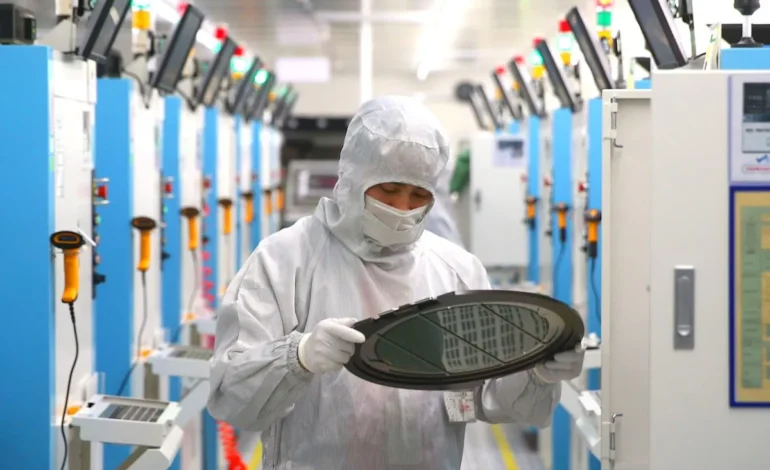
In this margin focused environment, control over the supply chain has become decisive. Battery sourcing, raw material contracts, and vertical integration directly influence cost structures. Firms with in house battery production or long term mineral agreements are better positioned to weather price competition. This dynamic reinforces China’s emphasis on industrial coordination, where upstream and downstream alignment supports resilience across the EV ecosystem.
Overseas markets offer growth but not relief
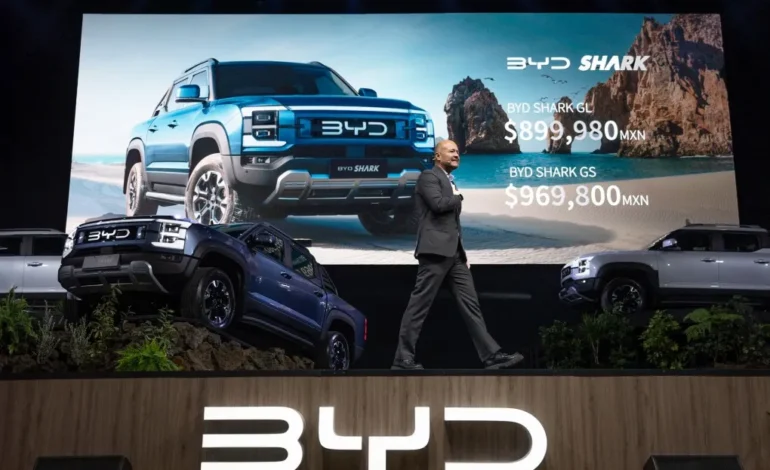
Global expansion is often framed as an escape from domestic competition, but international markets introduce their own challenges. Regulatory compliance, localization requirements, and trade scrutiny increase operating costs. While overseas sales volumes are rising, margins remain thin. Export success depends on balancing competitive pricing with brand positioning and after sales infrastructure. Global expansion extends the battlefield rather than ending it.
Technology differentiation narrows
Rapid diffusion of core EV technologies has reduced differentiation based solely on hardware. Advances in range, charging speed, and power management are quickly replicated across competitors. As a result, software integration, autonomous features, and user experience play a larger role in perceived value. However, these features require sustained investment, adding pressure to already compressed margins.
Policy support shifts toward sustainability
Government policy continues to support EV adoption, but the focus is evolving. Broad subsidies have largely been replaced by targeted measures emphasizing efficiency, safety, and environmental standards. This shift favors firms capable of meeting higher compliance thresholds while maintaining cost discipline. Policy now acts as a filter rather than a blanket accelerator of growth.
Consolidation reshapes the competitive landscape
Margin pressure accelerates industry consolidation. Weaker firms face exit or acquisition, while stronger players expand capacity selectively. This consolidation is not abrupt but cumulative, reshaping the sector through gradual attrition. Over time, fewer firms with deeper capabilities are likely to dominate both domestic and international markets.
A maturing industry tests strategic discipline
China’s EV industry is entering a maturity phase defined by strategic restraint rather than aggressive expansion. Success increasingly depends on managing costs, pacing investment, and aligning production with realistic demand projections. Innovation remains critical, but it must be commercially grounded.
The margin war signals that China’s EV sector has moved beyond early growth. It is now testing which firms can operate efficiently at scale in a competitive global environment. The outcome will shape not only industry structure but also China’s long term position in the global electric mobility transition.