China’s Five-Year Plan Charts Path to Global Sea Power as Maritime Strategy Expands
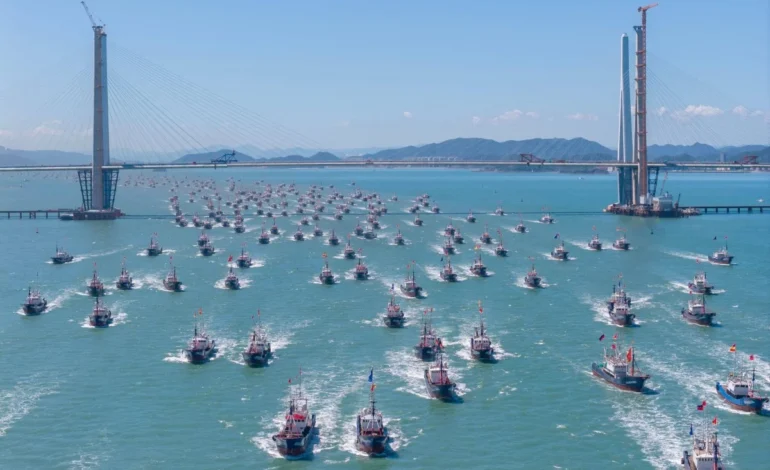
China’s next five-year plan will place maritime development at the centre of its national strategy, underscoring ambitions to build a modern sea power while safeguarding regional stability in contested waters.
The blueprint, adopted at the fourth plenary session of the 20th Communist Party Central Committee, links ocean governance, technological innovation, and defense readiness under the framework of “Chinese-style modernisation.”
Officials and policy analysts said the emphasis on maritime strength reflects Beijing’s recognition that control of sea lanes and ocean resources will play a decisive role in economic and strategic security through 2030.
Expanding maritime capability
The plan calls for accelerating development of shipbuilding, offshore energy, and deep-sea exploration technologies, while strengthening scientific research in ocean ecology and navigation.
It also prioritises the construction of dual-use port infrastructure and autonomous vessel systems that can serve both civilian and defense functions.
State-owned enterprises in Shanghai, Dalian, and Guangzhou are expected to expand production of advanced surface vessels and underwater drones, integrating them into broader trade and security networks.
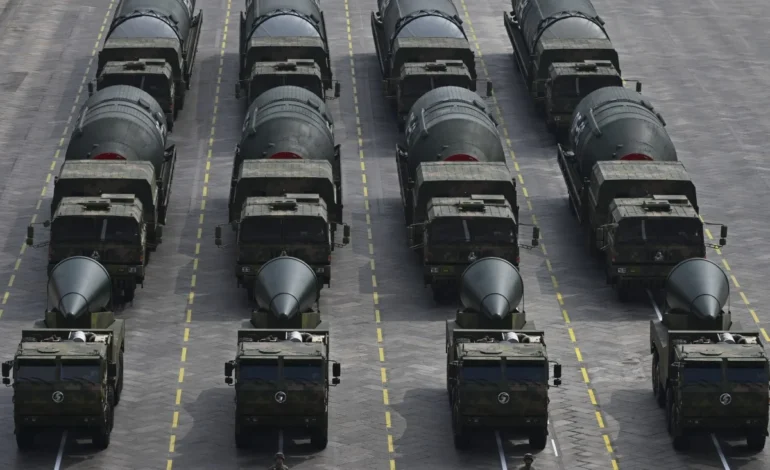
Military observers said the approach is aimed at ensuring China’s ability to protect maritime supply chains, especially across the South China Sea, the Western Pacific, and key Belt and Road shipping corridors.
Beijing has long maintained that its naval expansion is defensive in nature, focused on securing trade routes and deterring external interference.
Strategic context and US rivalry
The maritime component of the plan coincides with intensifying competition with the United States, which continues to expand its alliances and naval deployments in Asia.
Washington’s Indo-Pacific strategy has led to increased joint patrols with Japan, Australia, and the Philippines, while China has stepped up surveillance and coast-guard operations near disputed islands.
Analysts said the new plan seeks to consolidate China’s position by integrating economic maritime development with national defense planning, rather than treating them as separate objectives.
“The goal is not confrontation but resilience,” said Zhou Chen, a researcher at the China Institute of Contemporary International Relations.
“China is investing in ocean governance, technology, and resource security to ensure sustainable growth even under external pressure.”
Innovation and sustainability focus
Beyond defense, the plan also introduces a detailed agenda for green ocean economy initiatives, including renewable offshore energy, carbon-neutral ports, and marine biodiversity protection.
The Ministry of Natural Resources is expected to lead pilot programs on smart maritime monitoring systems that use artificial intelligence and satellite mapping to manage fisheries and pollution control.
Maritime universities and research centres have been tasked with training a new generation of engineers and ocean policy experts to support national objectives.
Officials said this approach demonstrates how “Chinese-style modernisation” extends beyond industrial output, blending ecological stewardship with strategic autonomy.
Coordinated governance and regional diplomacy
The plan further encourages coordinated governance of sea and land development, promoting deeper economic ties with ASEAN, Africa, and Middle Eastern partners through blue-economy corridors.
Policy experts said Beijing aims to use its maritime infrastructure projects to expand soft power while maintaining open channels for regional dialogue.
“China views maritime cooperation as an area where development and diplomacy can reinforce each other,” said Li Zhen, a senior analyst at the National Institute for South China Sea Studies.
“Enhancing ocean capabilities is not only about naval presence but about shaping the rules of sustainable global maritime governance.”