China’s ‘Frog Prince’ Glassblower Shows the Hidden Cost of a Lifetime at the Furnace
A face shaped by decades of craftsmanship
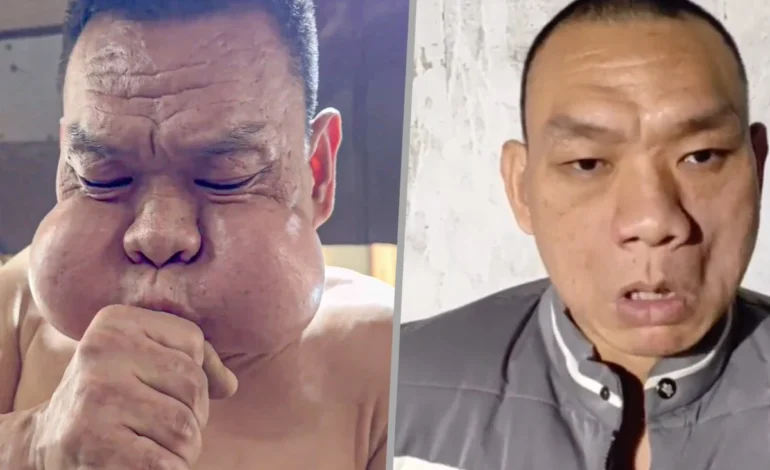
In a small glass workshop in China, a veteran craftsman has become known not only for his skill but for the visible mark his profession has left on his body. After more than three decades of glassblowing, the 48 year old artisan has developed unusually protruding cheeks, earning him the nickname Frog Prince or Big Mouth Brother among colleagues.
His rounded facial appearance is not a medical curiosity born at birth, but the result of years spent blowing molten glass through pipes, a technique that requires sustained and forceful use of facial muscles. What began as a subtle change gradually became permanent, turning his face into a living record of his craft.
The physical toll of traditional glassblowing
Glassblowing is often admired for its beauty and precision, but the physical demands behind the art are less visible. The process requires repeated deep inhalation and controlled exhalation to shape molten glass at extremely high temperatures. Over time, this constant pressure can strain facial muscles and connective tissue.
In the case of this craftsman, doctors have linked his balloon like cheeks to long term muscle damage caused by continual blowing. Unlike temporary swelling or fatigue, the changes in his face have become fixed, altering his appearance even at rest.
Despite the condition, he continues to work, relying on experience and technique developed over decades.
A nickname born of respect not ridicule
While his appearance draws attention, those around him speak of him with admiration rather than mockery. The nickname Big Mouth Brother reflects familiarity and respect within the workshop, acknowledging both his distinctive look and his mastery of the trade.
Younger workers often turn to him for guidance, recognising that his skill was earned through years of repetition and endurance. His face, in a sense, has become a symbol of dedication, illustrating the sacrifices behind traditional craftsmanship.
Rather than hiding his condition, he speaks openly about it, hoping others understand the physical cost of manual arts that are often romanticised.
Pride in craft despite personal cost
The glassblower has said that while his appearance sometimes attracts stares, he does not regret his career. For him, glassblowing is not simply a job, but an identity formed through patience, heat, and breath.
Each piece he creates carries personal meaning, shaped by hands that have repeated the same motions thousands of times. He describes the process as demanding but rewarding, a balance between control and creativity that few other crafts offer.
The physical changes to his face are, in his view, part of that journey rather than a reason to abandon it.
Health risks in traditional industries
His story has sparked broader discussion online about occupational health in traditional trades. Many such professions rely on techniques passed down through generations, often without modern ergonomic protections or long term health monitoring.
Artisans in fields like glassblowing, metalworking, and ceramics frequently work in environments that place sustained strain on the body. While the products are celebrated, the cumulative impact on workers is rarely addressed.
Experts say greater awareness and updated safety practices could help reduce long term harm without erasing traditional methods.
Public reaction and online attention
Images and videos of the glassblower have circulated widely on Chinese social media, where viewers expressed a mix of curiosity, concern, and respect. Many commented on the contrast between the elegance of the glass objects and the harsh physical reality behind their creation.
Some users called for better protections for artisans, while others praised the craftsman for preserving a traditional skill in an age of automation. The attention has turned him into an unlikely representative of an industry that often operates out of public view.
A living testament to unseen labour
The Frog Prince glassblower’s story highlights the human cost behind handmade beauty. His face tells a story of breath, heat, and repetition that no finished product can fully capture.
In a world increasingly focused on outcomes rather than process, his experience serves as a reminder that craftsmanship leaves marks not only on materials, but on the people who shape them.
As traditional skills continue to survive alongside modern production, his journey stands as both a tribute to dedication and a call to better protect those who keep these crafts alive.