China’s Generative AI Expansion: Transforming Enterprise and Creativity

China is rapidly expanding the use of generative AI technologies across enterprise, creative, and research sectors. Generative AI, which includes language models, image and video synthesis, and automated content generation, is transforming how companies design products, create content, and make strategic decisions. With significant investments in research, infrastructure, and AI startups, China is positioning itself as a global leader in generative AI, reshaping innovation processes, industrial workflows, and creative industries.
Government Strategy and National Priorities
The Chinese government has identified AI, particularly generative AI, as a core strategic technology under national plans such as the New Generation Artificial Intelligence Development Plan. Policies emphasize investment in research institutions, support for startups, and integration of AI into industrial applications. Government-backed pilot programs promote the deployment of AI in enterprise operations, digital media, and R&D. By creating a supportive regulatory and financial environment, China encourages rapid adoption and accelerates the development of cutting-edge AI capabilities.
Enterprise Applications of Generative AI
Generative AI is increasingly embedded in enterprise operations across manufacturing, logistics, finance, and services. In manufacturing, AI-generated designs optimize product structures, reduce material usage, and accelerate prototyping. Logistics firms use AI models to simulate supply chains, identify bottlenecks, and improve operational efficiency. Financial institutions apply generative AI for report drafting, predictive modeling, and automated customer communications. These applications reduce costs, improve productivity, and enhance decision-making speed, allowing enterprises to compete more effectively in global markets.
Content Creation and Media Industry Impact
In creative sectors, generative AI transforms content production, including journalism, advertising, film, and gaming. AI-generated text, video, and imagery streamline workflows, enabling rapid creation and iteration. Media companies leverage AI to produce news summaries, marketing materials, and interactive content at scale. In gaming and entertainment, generative AI creates realistic environments, character animations, and dynamic narratives. This technology expands creative possibilities while reducing production time and resource requirements.
R&D and Innovation Acceleration
Generative AI is reshaping research and development processes across multiple industries. By simulating experiments, generating design alternatives, and predicting outcomes, AI accelerates innovation cycles. Pharmaceutical companies use AI to propose molecular structures and optimize drug discovery pipelines. Engineering and materials science sectors leverage AI to identify optimal configurations, reducing experimentation costs. Generative AI allows enterprises to explore a wider design space, increasing the speed and efficiency of technological advancement.
Cloud Computing and AI Infrastructure
The deployment of generative AI relies on cloud computing infrastructure to provide scalable processing power and storage. China’s leading cloud providers, including Alibaba Cloud, Huawei Cloud, and Tencent Cloud, offer AI platforms and services that support enterprise and research applications. These cloud solutions enable distributed training of AI models, real-time data processing, and cross-enterprise collaboration. Cloud-based AI infrastructure ensures accessibility for SMEs and large enterprises alike, democratizing generative AI technology across sectors.
AI Model Training and Data Utilization
High-quality data is essential for generative AI performance. Chinese enterprises utilize large datasets from industrial, financial, and social sources to train AI models. Advanced techniques such as reinforcement learning, transfer learning, and multimodal integration enhance model capabilities. Ethical data management, privacy compliance, and model transparency are critical considerations as generative AI adoption scales. Proper utilization of AI-generated insights improves operational efficiency, product quality, and market responsiveness.
Workforce Transformation and Talent Development
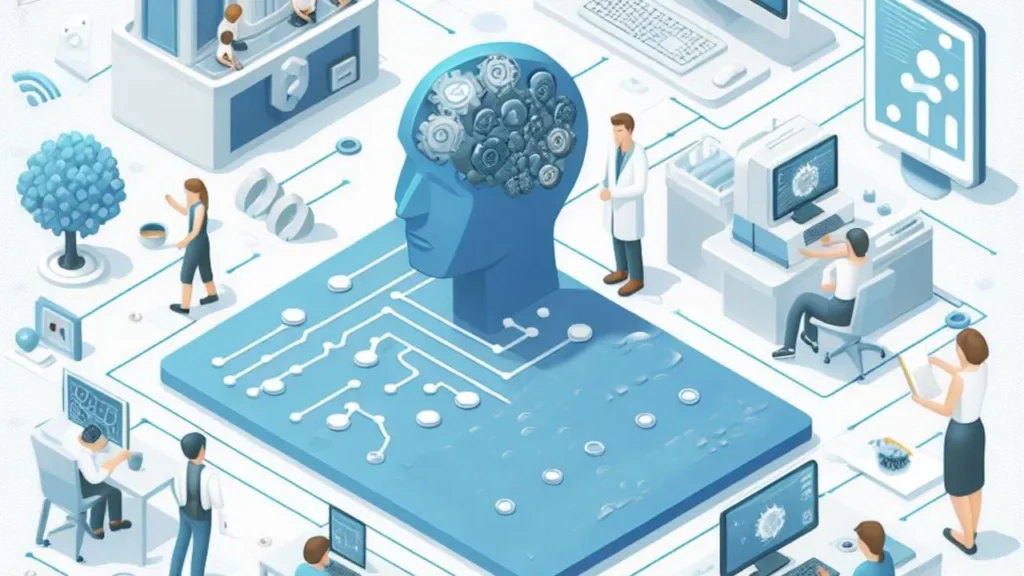
The expansion of generative AI drives a transformation in workforce skills. Enterprises require professionals skilled in AI model development, data science, cloud computing, and ethical AI deployment. China has invested heavily in education, specialized training programs, and partnerships between universities and industry to cultivate AI talent. Workforce development ensures that enterprises can leverage generative AI effectively, sustain innovation, and maintain competitive advantage in a technology-driven economy.
Security, Governance, and Regulatory Considerations
As generative AI becomes more pervasive, security and governance are critical. Model integrity, intellectual property protection, and risk of misuse are key challenges. Regulatory frameworks establish guidelines for responsible AI use, data privacy, and algorithmic accountability. Enterprises implement internal AI governance policies, auditing processes, and cybersecurity measures to mitigate risks. Sound governance ensures that generative AI adoption supports sustainable growth without creating operational, legal, or ethical vulnerabilities.
Global Competitiveness and Industry Leadership
China’s investment in generative AI positions the country as a global leader in industrial and creative AI applications. Enterprises adopting AI achieve productivity gains, faster innovation cycles, and enhanced market responsiveness. The integration of AI into manufacturing, logistics, finance, and creative industries strengthens China’s global competitiveness. International partnerships, research collaborations, and participation in AI standardization initiatives further consolidate China’s leadership in the rapidly evolving AI ecosystem.
Future Outlook
Generative AI adoption in China is expected to expand into autonomous systems, digital twins, and human-AI collaboration platforms. Future applications may include intelligent industrial operations, AI-driven content personalization, and automated design optimization. Integration with IoT, cloud computing, and blockchain technologies will enhance scalability, security, and operational efficiency. Continued investment in infrastructure, talent, and R&D will ensure that generative AI remains a cornerstone of China’s industrial and technological growth.
Conclusion
China’s generative AI expansion is transforming enterprise operations, industrial innovation, and creative industries. Cloud computing, data utilization, workforce development, and regulatory frameworks support large-scale deployment and sustainable adoption. Enterprises leverage generative AI to optimize production, accelerate R&D, and improve operational efficiency, while creative sectors benefit from faster, more scalable content generation. As AI infrastructure matures and applications diversify, China is set to solidify its position as a global leader in enterprise AI, industrial modernization, and creative innovation.