China’s Growing Influence Shapes US Decision to Sell F35 Jets to Saudi Arabia
The United States is preparing to supply Saudi Arabia with its most advanced F-35 stealth fighter jets, a development that many analysts view as part of a shifting Middle East strategy. While Washington has long prioritised preserving Israel’s military advantage in the region, experts say countering China’s expanding presence is now an equally important factor behind the deal.
If completed, the agreement would make Saudi Arabia only the second Middle Eastern country, after Israel, to operate the fifth generation aircraft. The F35 is considered one of the world’s most sophisticated combat jets, designed for high level stealth missions, intelligence gathering and precision targeting. Access to such technology has traditionally been tightly restricted in order to maintain Israel’s qualitative military edge.
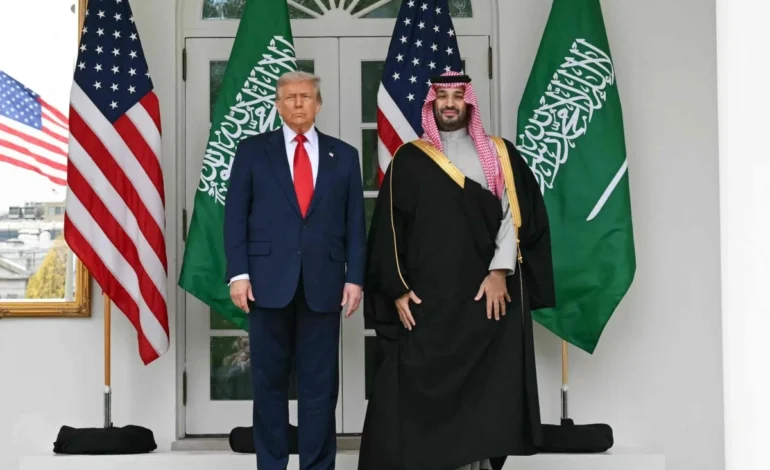
US President Donald Trump confirmed the plan after meeting with Crown Prince Mohammed bin Salman during the Saudi leader’s recent visit to Washington. The announcement immediately attracted global attention, not only because of the sensitive nature of the aircraft but also because of what the decision signals about changing geopolitical priorities.
According to analysts, the deal is linked to broader US efforts to limit China’s technological and security influence in the Gulf. Beijing has deepened its ties with several Middle Eastern states through investments in telecommunications, surveillance systems and energy infrastructure. American officials have grown increasingly concerned that sensitive technology, including military equipment, could be compromised if countries hosting Chinese systems also obtain advanced US weapons.
The F35 sale is therefore seen as part of a wider diplomatic exchange. In return for access to the aircraft, Saudi Arabia is expected to adopt stronger safeguards around the use of Chinese technology, particularly in sectors considered critical to national security. These so called guardrails could influence how the kingdom engages with Chinese companies in areas such as data networks, cybersecurity and infrastructure development.
Despite the significance of the sale, Israel has responded cautiously, choosing not to portray the move as a threat to its regional advantage. Israeli security officials have previously voiced concern about advanced weaponry reaching neighbouring states, but for now the government appears confident that its military superiority remains intact. The Israeli Air Force already operates the same F35 variant being offered to Saudi Arabia, giving it continued strategic depth.
Observers say the United States is attempting to balance multiple interests at once. Offering Saudi Arabia high end defence capabilities strengthens American influence at a time when China and Russia are expanding their diplomatic reach. It also supports the broader US goal of building a more coordinated security framework among its Middle Eastern partners, even as regional tensions remain unpredictable.
For Saudi Arabia, the acquisition of the F35 would represent a major milestone in its military modernisation plans. The kingdom has been seeking to upgrade its air force as part of a wider transformation agenda aimed at enhancing national defence and reducing reliance on older systems.
The decision ultimately reflects the complex interplay of alliances, competition and strategic priorities shaping today’s Middle East. As Washington recalibrates its regional approach, the rivalry with China is becoming a central factor in decisions once driven almost entirely by the goal of protecting Israel’s position.