China’s J 35 programme signals manufacturing surge as jet maker targets output expansion
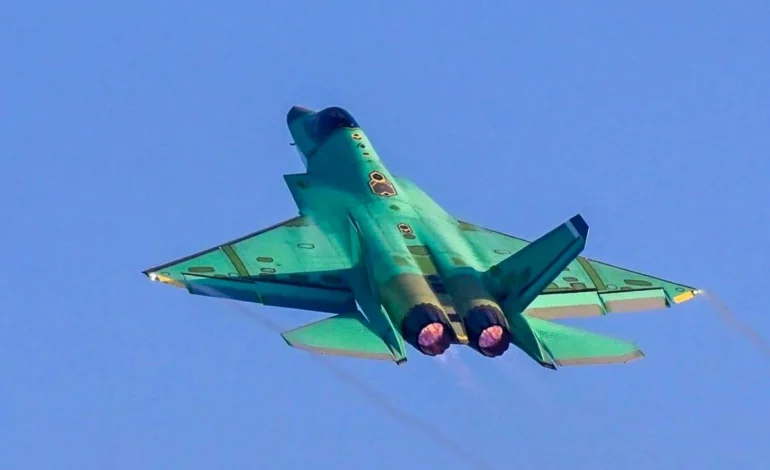
China’s next generation stealth fighter programme has taken a visible step forward after state media released new footage showing the J 35 jet taxiing on a runway at a major production facility in northeast China, underscoring growing confidence in the country’s aerospace manufacturing capacity.
The video was filmed at facilities operated by Shenyang Aircraft Corporation in Liaoning, one of China’s most important hubs for military aviation. State media reports say the factory will play a central role in the development of a planned industrial cluster known as Shenyang Aerospace City, designed to integrate aircraft production, research and supply chains at scale.
According to officials familiar with the project, the manufacturer has pledged to double production capacity over the next five years. The target reflects both rising domestic demand and China’s broader push to modernise its air force and naval aviation with stealth capable platforms.
The J 35, widely viewed as a carrier capable stealth fighter, is expected to complement the heavier J 20 by offering greater flexibility for naval operations and expeditionary missions. Analysts say the programme represents a shift toward diversified stealth aircraft production rather than reliance on a single flagship model.
The appearance of the aircraft on an operational runway is seen as a sign that the programme is moving beyond prototype testing toward more mature production stages. While Chinese authorities have not released detailed timelines, aviation experts note that visible manufacturing activity often precedes larger scale deployment plans.
Shenyang Aircraft Corporation has a long history of producing fighter jets for China’s military, but the current expansion signals a new phase focused on efficiency, automation and industrial integration. The proposed aerospace city would bring together component suppliers, materials firms and testing facilities, reducing bottlenecks that have traditionally slowed complex weapons programmes.
China’s defence industrial base has faced pressure in recent years from export controls and restricted access to certain foreign technologies. In response, Beijing has prioritised domestic innovation and production resilience, particularly in high value sectors such as aerospace and advanced materials.
The pledge to double output also suggests confidence in supply chain stability. Stealth fighters require precision manufacturing, specialised coatings and advanced avionics, areas where China has invested heavily to reduce reliance on external suppliers. Analysts say these investments are beginning to show results, though challenges remain in areas such as engine performance and long term maintenance.
From a strategic perspective, increased production capacity gives China greater flexibility in force planning. Faster output allows for quicker fleet expansion, improved training pipelines and more regular rotation of aircraft for maintenance and upgrades.
Internationally, the J 35 programme is being closely watched by regional militaries and defence planners. A carrier compatible stealth fighter could significantly enhance China’s naval aviation capabilities, particularly as new aircraft carriers enter service over the coming decade.
While many technical details remain undisclosed, the latest footage and production pledges send a clear message. China’s aerospace industry is no longer focused solely on developing advanced designs. It is increasingly emphasising the ability to build them at scale, sustain them over time and integrate them into a broader industrial ecosystem that supports long term military modernisation.