China’s Luxury Resale Boom Redefines How Shoppers Chase Value
From boutique glamour to bargain hunting
In one of Shenzhen’s coastal business districts, a luxury shopping experience now begins with bag checks, white gloves, and security gates. What looks from the outside like a standard multi brand fashion boutique reveals something very different inside. Instead of soft lighting and carefully staged displays, a vast showroom opens up, spanning more than two thousand square meters. Luxury handbags are packed into transparent cases, lined up tightly and sorted not by design or season but by brand category. The atmosphere feels closer to an asset exchange than a traditional retail store.
This shift captures a broader change underway in China’s luxury market. Increasingly, shoppers are turning away from high end boutiques and embracing the resale economy, searching for value, liquidity, and flexibility rather than the prestige of buying new.
A resale market worth billions
China’s luxury resale market has surged to an estimated value of around thirty billion US dollars, driven by changing consumer behavior and economic realities. Slower economic growth, pressure on household spending, and falling property values have made conspicuous consumption feel less appealing to many buyers. Instead of paying full price for new items, shoppers are looking for luxury goods that retain value and can be resold later with minimal loss.
Resale platforms and physical stores have stepped in to meet this demand, offering authenticated goods at significant discounts. For younger consumers especially, luxury is no longer about owning the latest release but about smart purchasing and financial prudence.
Luxury goods as financial assets
Inside resale showrooms, products are treated less like fashion statements and more like commodities. Handbags from Chanel, Gucci, and Dior are grouped by brand, reflecting their perceived resale value and market demand. Shoppers browse with gloves, carefully inspecting stitching, leather condition, and serial numbers, much like investors examining assets.
This mindset reflects a growing belief that certain luxury items function as stores of value. Popular models with limited supply often hold their price better than other consumer goods, making them attractive purchases even in uncertain times.
Why Chinese shoppers are changing habits
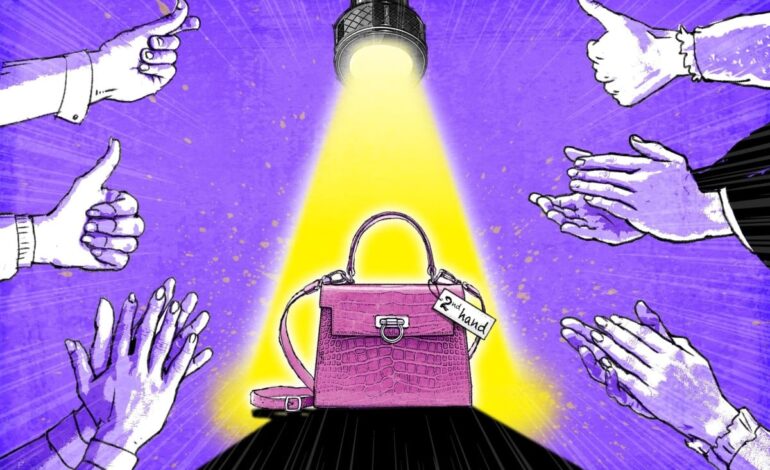
Several factors are pushing consumers toward resale. Luxury prices in mainland China have risen sharply over the past decade, widening the gap between retail prices and perceived value. At the same time, the stigma once associated with buying second hand has largely disappeared, replaced by narratives around sustainability, circular consumption, and financial savvy.
Social media has played a key role in this shift. Influencers and resale experts regularly discuss which bags appreciate, which brands are safest buys, and how to avoid overpaying. This constant flow of information has turned luxury shopping into a more analytical process.
Physical resale stores gain ground
While online resale platforms dominate headlines, physical resale stores are gaining traction in major cities. These spaces offer reassurance through in person inspection and authentication, which is especially important for high value items. Security procedures, controlled environments, and professional verification services are designed to build trust, turning resale shopping into a structured and transparent experience.
For many buyers, walking through a showroom filled with neatly cataloged luxury goods feels safer than navigating peer to peer online listings.
Impact on traditional luxury brands
The resale boom presents a complex challenge for traditional luxury brands. On one hand, strong resale demand reinforces brand value and desirability. On the other, it threatens full price sales as consumers delay or avoid buying new items. Some brands are responding by experimenting with certified pre owned programs or tighter control over supply to protect pricing.
In China, where luxury growth has been a major driver of global sales, the shift toward resale is forcing brands to rethink how they engage with value conscious consumers.
A new definition of luxury consumption
China’s luxury resale surge signals a deeper transformation in consumer culture. Luxury is no longer just about aspiration and status. It is increasingly about value retention, smart allocation of money, and flexibility. As shoppers swap boutique counters for glass cases filled with pre owned treasures, the meaning of luxury is being rewritten.
This new model does not reject luxury itself. Instead, it reframes it as something to be managed, traded, and optimized, reflecting a more cautious and calculated era of consumption.