China’s mega expressway tunnel opens in Xinjiang, halves north south travel time
A landmark project beneath the Tianshan Mountains
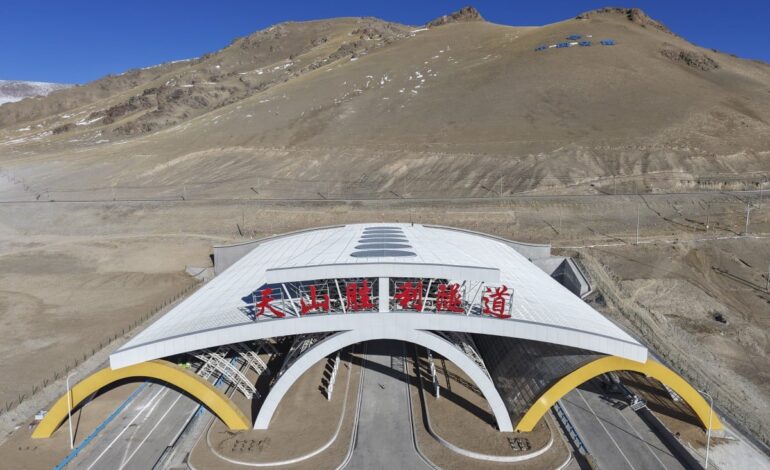
China has opened the world’s longest expressway tunnel to traffic in the Xinjiang Uygur autonomous region, marking a major milestone in the country’s infrastructure development. The Tianshan Shengli Tunnel officially began operations on Friday after five years of construction, creating a faster and more reliable route across one of western China’s most challenging geographic barriers.
Stretching more than twenty two kilometers, the tunnel cuts directly through the Tianshan mountain range, which has historically divided northern and southern Xinjiang. What once took hours of difficult mountain travel can now be completed in roughly twenty minutes.
Transforming regional connectivity
The tunnel is the centerpiece of the Urumqi Yuli Expressway, a strategic road designed to strengthen internal connectivity within Xinjiang and improve links with neighboring regions. By dramatically reducing travel time, the project is expected to reshape economic and social interactions across the vast autonomous region.
For residents and businesses, the new route offers year round reliability. Mountain roads across the Tianshan Mountains were often affected by snow, landslides, and severe weather, disrupting transport and raising costs. The tunnel provides a safer alternative that operates regardless of seasonal conditions.
Engineering at an unprecedented scale
Constructing a tunnel of this length through complex geology posed significant technical challenges. Engineers had to manage high altitude conditions, variable rock formations, and extreme temperature differences between tunnel sections. Advanced monitoring systems and construction techniques were used to ensure structural stability and long term safety.
The scale of the project reflects China’s growing expertise in large infrastructure works. Projects of this type are not only feats of engineering but also testing grounds for new construction methods and materials that can be applied elsewhere.
Economic impact for Xinjiang
The opening of the tunnel is expected to deliver substantial economic benefits to Xinjiang. Faster transport lowers logistics costs, making it easier for agricultural products, energy resources, and manufactured goods to move between northern and southern parts of the region.
Improved connectivity also supports tourism by making remote areas more accessible. Scenic destinations that were once difficult to reach could now attract more visitors, supporting local service industries and job creation.
Strengthening links with Central Asia
Beyond its regional impact, the expressway plays a role in China’s broader westward connectivity strategy. Xinjiang sits at the crossroads between China and Central Asia, and improved internal transport networks help integrate cross border trade routes.
By reducing bottlenecks within Xinjiang, the new tunnel enhances the efficiency of overland routes that connect China to Central Asian markets. This aligns with long term plans to promote trade, energy cooperation, and economic integration across Eurasia.
Social benefits and daily life
For local communities, the tunnel is more than an infrastructure project. Shorter travel times mean improved access to healthcare, education, and public services. Families separated by the mountain range can travel more easily, and emergency services can respond faster across the region.
These improvements contribute to a higher quality of life and help reduce disparities between different parts of Xinjiang. Infrastructure investment has long been seen as a tool to support balanced regional development.
Environmental and safety considerations
While large infrastructure projects raise environmental concerns, planners have emphasized measures to minimize ecological impact. Routing traffic underground reduces surface disruption to sensitive mountain ecosystems and helps preserve the natural landscape of the Tianshan Mountains.
Safety has also been a priority. The tunnel is equipped with modern ventilation, lighting, and emergency response systems designed to handle high traffic volumes and ensure rapid evacuation if needed.
A symbol of long term investment
The opening of the Tianshan Shengli Tunnel symbolizes sustained investment in western China. Such projects require significant capital and long planning horizons, reflecting confidence in the region’s future development.
As traffic begins to flow through the tunnel, attention will turn to how effectively it delivers on its promise. Early indications suggest it will become a vital artery for Xinjiang’s economy and a benchmark for future expressway projects.
Looking ahead
With the tunnel now operational, Xinjiang’s transport network enters a new phase. Faster north south travel will reshape trade patterns, mobility, and daily life across the region.
The project stands as a reminder that infrastructure remains a central pillar of China’s economic strategy. By overcoming natural barriers with engineering solutions, the country continues to knit together distant regions and lay foundations for long term growth.