China’s military accuses Japan of raising ‘space arms race’ risk
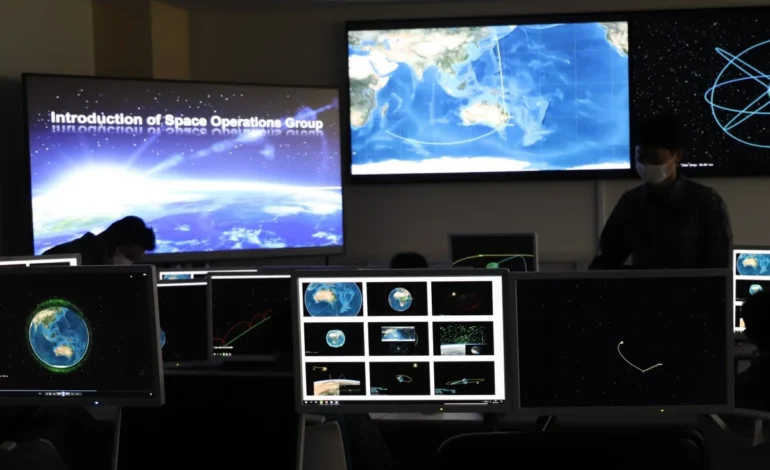
China’s military has accused Japan of increasing the risk of a space arms race, as a diplomatic war of words between the two neighbours continues to intensify. Commentaries published in the People’s Liberation Army Daily, the official newspaper of China’s armed forces, criticised Tokyo’s expanding defence and intelligence initiatives in outer space, warning that they could undermine regional stability.
The articles argue that Japan’s growing focus on space based surveillance, early warning systems and military satellites goes beyond purely defensive needs. According to the PLA Daily, these moves reflect a shift toward treating space as a new battlefield, a trend Beijing says could trigger strategic competition and heighten security risks across East Asia.
Chinese military commentators have taken particular aim at Japan’s plans to strengthen cooperation with the United States and other partners on space technology. They claim such cooperation is accelerating the militarisation of space and blurring the line between civilian and military uses of orbital systems. From Beijing’s perspective, this trend threatens to disrupt the existing balance and increase the likelihood of miscalculation.
Japan, however, has consistently defended its approach, saying its space related defence measures are necessary responses to an increasingly complex security environment. Tokyo points to missile developments in the region and the growing reliance of modern militaries on satellites for communication, navigation and intelligence gathering. Japanese officials argue that improving space awareness is essential for protecting national security and ensuring the safety of critical infrastructure.
The exchange comes amid broader tensions between China and Japan over defence policy, historical grievances and regional influence. In recent years, Japan has revised its national security strategy, increased defence spending and taken steps to enhance intelligence capabilities. These changes have drawn close scrutiny from Beijing, which often portrays them as signs of Japan moving away from its post war pacifist stance.
The PLA Daily commentaries also accuse Japan of using perceived threats to justify closer alignment with the United States. Chinese analysts argue that Washington’s encouragement of allied space capabilities is part of a wider effort to contain China’s rise, including in emerging domains such as cyberspace and outer space.
Diplomatic channels between Beijing and Tokyo remain open, but public messaging has grown sharper. Chinese officials have urged Japan to exercise restraint and adhere to peaceful uses of space, while Japanese leaders stress their commitment to transparency and international law. Both sides insist they do not seek confrontation, even as rhetoric escalates.
Security experts say the dispute highlights how space has become a new frontier in regional rivalry. Satellites now play a central role in military operations, economic activity and disaster response, making them strategically sensitive assets. Without clear rules and confidence building measures, analysts warn that misunderstandings could spill over into broader tensions.
As China and Japan continue to trade accusations, the debate over space security is likely to intensify. The challenge for both governments will be managing competition while avoiding actions that could turn outer space into another arena for dangerous escalation.