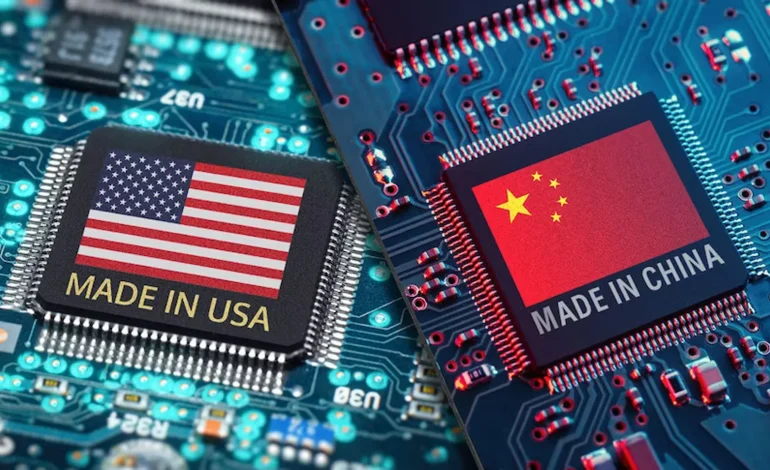
China’s Quantum Computing Ambitions: Advancing Next-Generation Technology

China is aggressively investing in quantum computing research and development, aiming to secure leadership in next-generation computational technologies. Quantum computing promises transformative applications in cryptography, AI, material science, finance, and complex industrial simulations. By developing domestic capabilities in quantum hardware, algorithms, and software ecosystems, China is positioning itself at the forefront of a global technology race.
Policy Support and Strategic Vision
The Chinese government has prioritized quantum computing within its national technology roadmap. Funding programs, research grants, and policy initiatives support universities, research institutes, and private firms in developing quantum hardware, secure communication networks, and quantum software platforms. Strategic goals include enhancing computational capabilities, securing information systems, and supporting AI and industrial simulations.
Domestic Research and Development
Institutions like the University of Science and Technology of China, Chinese Academy of Sciences, and leading tech firms are pioneering superconducting qubit, photonic, and trapped-ion technologies. Research focuses on improving coherence times, reducing error rates, and scaling qubit arrays to enable practical quantum computations. Startups and corporate labs collaborate with academia, accelerating technology transfer and prototyping advanced applications.
Applications in AI and Industrial Sectors
Quantum computing complements AI by optimizing algorithms for machine learning, pattern recognition, and predictive analytics. Industrial applications include:
- Materials Science: Simulating new compounds and chemical reactions at unprecedented speed.
- Financial Modeling: Running complex risk simulations for investment portfolios.
- Cryptography: Developing quantum-safe encryption protocols to secure data.
- Supply Chain Optimization: Enhancing logistics efficiency through high-speed computational modeling.
Investment and Funding Frameworks
China leverages modular finance concepts and strategic investment funds to direct resources toward quantum R&D. Automated and milestone-based funding frameworks ensure projects meet technical goals, reduce inefficiencies, and accelerate commercialization. Private investment from tech giants complements public funding, supporting startups, prototype development, and industrial deployment.
Talent Development and Education
China is investing in human capital to build a skilled quantum workforce. Universities offer specialized quantum computing programs, emphasizing quantum physics, computer science, and applied AI. Research internships, innovation labs, and international collaborations ensure students gain practical skills applicable to hardware, algorithm design, and software development.
Global Collaboration and Competition
China engages in selective international collaborations while maintaining strategic independence in critical quantum technologies. Partnerships with regional universities and research institutes facilitate knowledge exchange, while domestic initiatives focus on proprietary hardware and encryption capabilities. Globally, China competes with the U.S., EU, and Japan in developing scalable quantum processors and industrial applications.
Challenges and Limitations
- Technical Complexity: Scaling qubits and reducing error rates remain significant obstacles.
- Talent Shortage: Skilled quantum engineers and physicists are limited globally.
- Infrastructure Costs: Quantum labs and cleanroom facilities require high capital expenditure.
- Regulatory Oversight: Ensuring ethical and secure application of quantum technology in finance, communications, and AI is critical.
Market and Industrial Implications
China’s investment in quantum computing is expected to enhance industrial competitiveness in AI, finance, pharmaceuticals, and logistics. Early adoption in modular finance platforms, industrial simulations, and secure communications positions Chinese companies to lead in next-generation technological applications.
Integration with AI and Digital Infrastructure
Quantum computing supports AI-driven finance, smart infrastructure, and industrial automation. High-speed quantum simulations accelerate algorithmic development, improve risk modeling, and enable predictive analytics. Integration with programmable and modular finance systems allows automated, high-efficiency investment and infrastructure planning.
Strategic Outlook 2030
By 2030, China aims to deploy quantum computing capabilities for industrial, financial, and national security applications. Scalable qubit architectures, AI-optimized algorithms, and secure communication networks will enable significant competitive advantage. A highly trained workforce, modular funding mechanisms, and a supportive innovation ecosystem will drive China’s leadership in the global quantum landscape.
Economic and Policy Implications
- Strengthens domestic AI, fintech, and industrial capabilities.
- Enhances national security through quantum-safe encryption and secure communication.
- Positions China as a leader in next-generation computational technologies globally.
Conclusion
China’s quantum computing ambitions reflect a comprehensive strategy combining government policy, research investment, human capital development, and private sector innovation. By advancing quantum hardware, software, and industrial applications, the country is preparing for transformative technological impact across AI, finance, and industrial sectors. Integration with modular finance, AI platforms, and digital infrastructure ensures practical deployment, positioning China as a global competitor in next-generation computational technologies.