China’s Robotics Industry Eyes Global Markets After Domestic Saturation
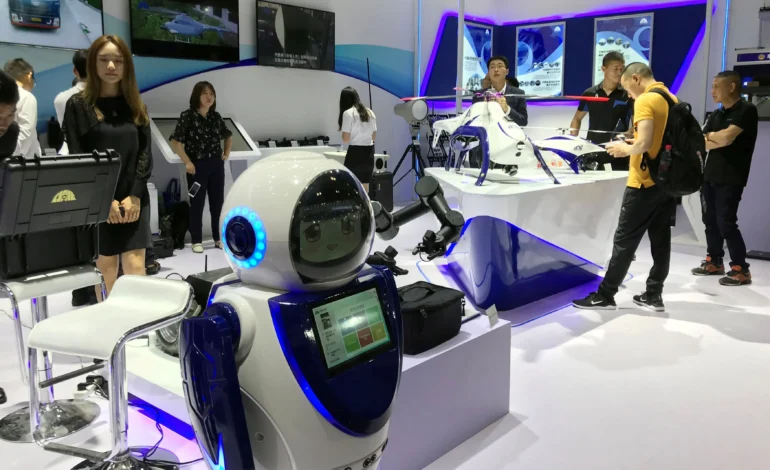
China’s robotics sector has reached a pivotal point in its evolution. After a decade of rapid domestic expansion, the market for industrial and service robots inside China is approaching maturity. In 2025, leading robotics firms are turning their focus outward, exporting automation technology, establishing overseas partnerships, and targeting emerging markets hungry for affordable innovation. This international pivot signals China’s transformation from the world’s largest consumer of robots to one of its most influential exporters of robotic intelligence and manufacturing systems.
The End of a Domestic Growth Cycle
For years, China’s robotics boom was fueled by internal demand from manufacturing, logistics, and consumer industries. According to SCMP, more than 1.2 million robots were operating across Chinese factories by 2024, accounting for nearly 50 percent of all installations worldwide. Government incentives under the Made in China 2025 plan created a thriving ecosystem of local producers, ranging from high-end industrial robots to low-cost assembly units.
However, market saturation has started to emerge. Reuters reports that production growth in China’s robotics sector slowed to single digits in 2025 as domestic manufacturers reached automation thresholds. Major clients in automotive, electronics, and e-commerce have already upgraded to high-efficiency robotic lines, leaving limited room for rapid expansion. This shift has compelled robotics firms to look beyond national borders for new opportunities.
China’s Emerging Export Strategy
To sustain momentum, Chinese robotics companies are aggressively expanding into overseas markets. The Ministry of Commerce has launched a Global Robotics Export Initiative, offering tax credits and financing support to firms that set up production or research centers abroad. Nikkei Asia notes that several manufacturers, including Siasun, Estun, and EFORT, have opened regional offices in Southeast Asia, Europe, and the Middle East.
Their strategy focuses on affordable customization, adapting industrial robots to fit the labor, infrastructure, and energy conditions of partner countries. By offering modular systems that can be tailored to small and medium-sized factories, Chinese companies are filling a critical gap left by expensive Western and Japanese solutions.
Industrial and Service Robots as Dual Export Engines
China’s robotics exports are diversified across two primary categories: industrial automation and service robotics. On the industrial side, demand is strongest in markets seeking to modernize manufacturing without heavy capital investment. Southeast Asia and Latin America have emerged as key destinations, with factories in Thailand and Mexico deploying Chinese-made robotic arms for electronics and automotive assembly.
At the same time, service robotics is experiencing a surge in international interest. CGTN reports that Chinese service robots used for logistics, hospitality, healthcare, and cleaning are being adopted in Europe and the Gulf states. These robots combine AI-driven navigation with multilingual voice interfaces, making them suitable for global environments such as airports, hospitals, and smart cities.
Technological Edge and Competitive Pricing
Chinese robotics firms are winning contracts not just because of low prices but also due to technological adaptability. Advances in AI perception, motion control, and lightweight materials have narrowed the performance gap with leading Japanese and German brands. Bloomberg highlights that Chinese robots can now perform high-precision assembly and welding tasks at 80–90 percent of the efficiency of premium Western systems, but at nearly half the cost.
Additionally, the integration of domestic AI software and cloud computing services gives Chinese robots an edge in predictive maintenance and remote optimization. This hybrid model combining mechanical engineering with intelligent algorithms has become a core differentiator in international markets.
Policy Backing and Diplomatic Expansion
China’s robotics diplomacy complements its commercial push. Through the Digital Silk Road and Belt and Road Initiative, robotics exports are being linked to infrastructure and industrial modernization programs in partner countries. DW reports that Chinese-built industrial parks in Egypt, Saudi Arabia, and Indonesia now feature automation training centers jointly funded by local governments and Chinese enterprises.
These collaborations extend China’s influence while promoting technology transfer. They also reinforce its reputation as a cooperative development partner offering scalable, affordable, and sustainable automation solutions, an alternative to Western industrial models.
Challenges in Global Competition
Despite growing exports, Chinese robotics firms face challenges in brand recognition, intellectual property protection, and compliance with foreign safety standards. Reuters notes that Western regulators are tightening import controls on robotics integrated with AI surveillance systems, raising barriers to entry in certain markets.
To overcome these obstacles, Chinese companies are pursuing joint ventures with local partners to navigate regulatory environments and ensure compliance with global safety norms. These partnerships not only expand market access but also help China improve its credibility in high-value industrial segments.
Conclusion
China’s robotics industry has reached a crossroads where domestic saturation has sparked international ambition. As companies pivot toward global markets, they are reshaping the global automation landscape with affordable, intelligent, and adaptive solutions. The export of robotics technology now complements China’s broader economic diplomacy, blending innovation with international cooperation. What began as a domestic manufacturing upgrade has evolved into a global movement, one where Chinese robots are building the next generation of factories, cities, and industries worldwide.