China’s Robotics Surge Signals a New Productivity Cycle in Advanced Manufacturing
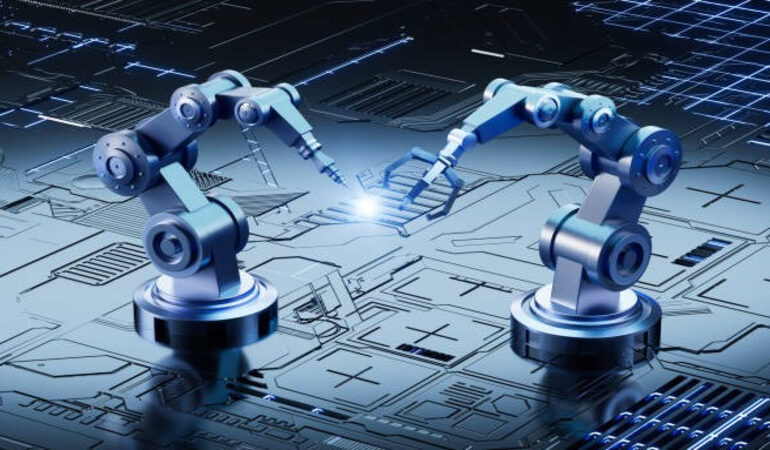
China’s manufacturing sector is entering a new phase of automation in 2026 as robotics adoption accelerates across key industrial clusters. After years of steady deployment, the scale and sophistication of robotic systems now signal a broader productivity cycle rather than isolated factory upgrades. Policymakers, manufacturers, and technology providers increasingly view robotics not simply as labor substitution tools but as foundational infrastructure for industrial modernization. For global technology observers, the shift highlights how automation strategy, capital investment, and economic policy are converging in China’s advanced manufacturing ecosystem.
Robotics Investment Anchors Industrial Upgrading
Industrial robotics has become a measurable indicator of China’s manufacturing priorities. Automotive plants, electronics assembly lines, and battery production facilities continue to expand their use of articulated robotic arms, collaborative robots, and automated guided vehicles. The objective extends beyond speed. Enterprises are targeting higher precision, lower defect rates, and better integration with digital quality control systems. National and provincial initiatives have reinforced this trend by linking manufacturing incentives to smart factory upgrades. Robotics deployment is increasingly paired with industrial internet platforms that collect production data in real time. This integrated approach transforms automation into a productivity engine supported by analytics and performance monitoring.
From Cost Efficiency to Value Creation
Earlier waves of automation focused primarily on cost reduction. In 2026, the emphasis is shifting toward value creation. Robotics systems are enabling complex assembly processes that support high end product segments such as electric vehicles, advanced medical devices, and renewable energy equipment. By improving consistency and reducing rework, manufacturers enhance brand credibility in export markets. The productivity gains extend across supply chains. Faster assembly cycles reduce inventory pressure and improve delivery reliability. These improvements strengthen competitiveness in sectors where margins depend on precision and speed. The evolution reflects a maturing understanding that robotics supports long term industrial positioning rather than short term labor savings.
Integration with Artificial Intelligence
Robotics growth increasingly overlaps with artificial intelligence deployment. Machine vision systems guide robotic arms during intricate tasks, while predictive maintenance algorithms monitor equipment performance to prevent downtime. This combination of hardware and software is reshaping factory management. Instead of reacting to breakdowns, operators rely on data driven insights to anticipate disruptions. AI enabled robotics also support flexible production lines capable of adjusting to changing product specifications. For manufacturers serving diverse markets, adaptability is a key advantage. The convergence of robotics and AI therefore underpins a broader shift toward intelligent manufacturing ecosystems.
Domestic Supply Chain Development
China’s robotics surge is supported by expanding domestic supply chains. Local component producers supply sensors, controllers, and precision gears, reducing reliance on imported parts. At the same time, foreign robotics firms continue to operate within China, contributing to technology exchange and competition. Policy frameworks encourage domestic innovation while maintaining openness to collaboration in non sensitive segments. This balanced approach strengthens ecosystem resilience. As more components are sourced locally, production timelines become more predictable. The resulting stability enhances planning for downstream industries such as automotive and consumer electronics.
Productivity Metrics and Economic Impact
Industrial surveys and manufacturing indices indicate that automation intensive sectors are recording measurable productivity improvements. Output per worker has increased in facilities that combine robotics with digital management systems. Energy efficiency gains are also reported as automated processes optimize resource use. These trends support broader economic goals of high quality growth and industrial upgrading. Robotics investment aligns with strategies that prioritize advanced manufacturing over low margin production. By embedding automation into economic planning, authorities aim to sustain competitiveness amid global cost pressures and demographic changes.
Workforce Transformation and Skills
The expansion of robotics does not eliminate the need for human expertise. Instead, workforce requirements are shifting toward engineering, programming, and maintenance roles. Vocational institutions and universities have expanded training programs in mechatronics and industrial automation. Enterprises invest in reskilling initiatives to ensure that operators can manage sophisticated robotic systems. This transformation reflects a structural adjustment within the labor market. Higher skill intensity supports wage growth in technical roles while reinforcing the knowledge base required for continuous innovation.
Global Competitive Positioning
China’s robotics momentum influences global manufacturing dynamics. As productivity improves, domestic firms strengthen their ability to compete in advanced product categories. Export oriented manufacturers benefit from stable quality standards and faster turnaround times. At the same time, global companies sourcing from China must adapt to increasingly automated production environments. The productivity cycle emerging in 2026 suggests that robotics will remain central to industrial competitiveness rather than a temporary upgrade phase.
Conclusion
China’s accelerating robotics deployment in 2026 signals the emergence of a new productivity cycle in advanced manufacturing. By integrating automation with artificial intelligence, strengthening domestic supply chains, and aligning investment with economic policy, the country is reinforcing its position in high value industrial production while reshaping the structure of its manufacturing workforce.