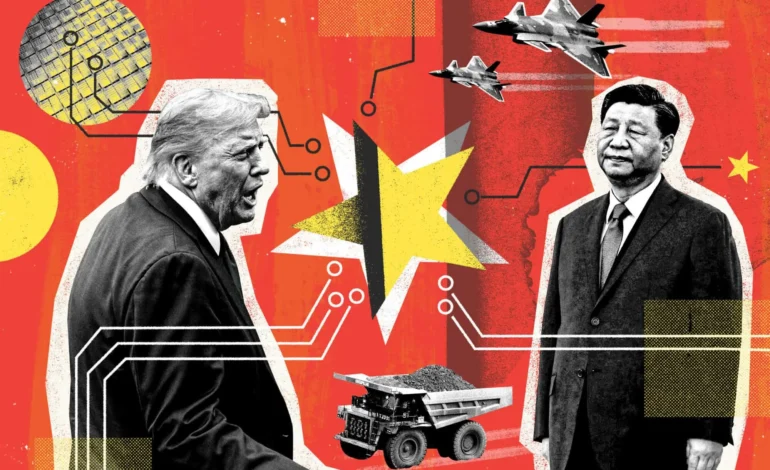
China’s Soybean Slowdown Hits U.S. Farmers Hard as Trade Tensions Rise Again
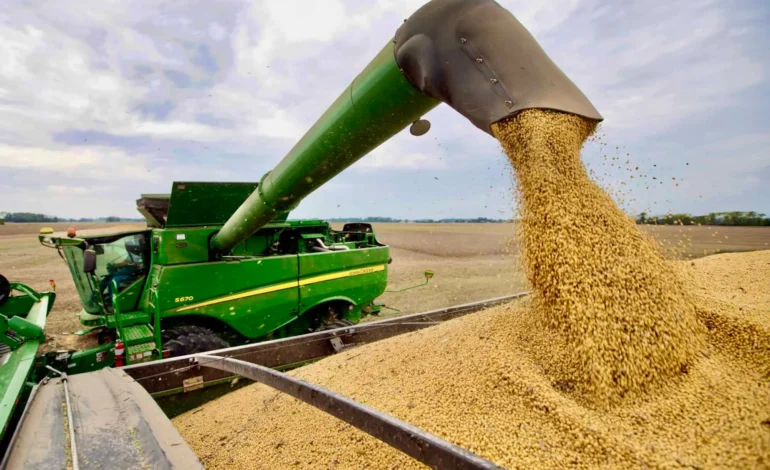
China has long been the most important customer for American soybean farmers, but this year the flow of purchases has suddenly stalled. As the U.S.–China trade war intensifies for a second time under the Trump administration, Beijing has halted large scale procurement of key U.S. agricultural goods and soybeans, America’s top farm export to China, are at the center of the crisis.
A Sudden Stop From America’s Largest Buyer
Since 2020 China has purchased more U.S. soybeans than all other countries combined. Over that period it spent an astonishing seventy four billion dollars on American soybeans, according to the U.S. Department of Agriculture. Those purchases sustained thousands of farms across the Midwest. But this year something changed. China has sharply reduced buying volumes and in many cases stopped purchasing altogether.
For farmers preparing for harvest this is devastating news. Many had planted large fields expecting China’s usual demand. Instead, storage bins are filling up, prices are falling and uncertainty is spreading across rural America.
The Trade War Returns to the Farm Belt
Beijing’s pullback is widely seen as retaliation against the Trump administration’s new wave of tariffs and export restrictions. Just as in the previous trade war agricultural products have become a political and economic pressure point. China knows that U.S. farmers are a powerful constituency and that rising hardship in the Midwest can generate domestic political fallout.
Washington argues that tariffs and tough measures are necessary to counter China’s industrial policies and protect U.S. technology. But the unintended consequence is that farmers rather than tech companies are feeling the immediate pain.
Ripple Effects Throughout the Supply Chain
Soybeans are more than a single export crop. They support shipping routes, grain processors, feed producers and global livestock industries. When demand from China stalls the impact reverberates throughout the supply chain.
Large exporters are scrambling to find alternative markets in Southeast Asia, Europe and the Middle East, but none can match China’s scale. Domestic use can absorb only a fraction of the surplus. The result is falling prices, shrinking profit margins and rising financial stress. Some smaller farms risk not surviving another difficult season.
China Diversifies and Gains Leverage
China is reducing its dependence on U.S. soybeans strategically, not just politically. In recent years it has expanded purchases from Brazil, Argentina and even Africa, building a more diversified supply network. It has invested in soybean processing plants overseas and promoted domestic substitutes for livestock feed.
This diversification gives Beijing leverage. It can cut U.S. purchases without jeopardizing its own food security a sharp contrast to earlier years when its livestock industry relied heavily on American soy.
No Easy Fix Ahead
The latest trade war “redux” places U.S. farmers in a familiar and painful position. While government support programs may offer temporary relief, the long term risk is that China’s shift away from American soy becomes permanent. If Beijing continues strengthening ties with alternative suppliers the United States may never regain its former dominant share of the market.
A High Stakes Moment for U.S. Agriculture
The soybean standoff highlights how interconnected global trade has become and how geopolitical disputes can upend entire industries. As tensions between Washington and Beijing deepen farmers in the U.S. heartland are once again caught in the middle.
Their future and the stability of America’s agricultural economy may depend on whether the world’s two largest economies can find a path back to stable trade relations.