China’s Space Ambitions Accelerate in 2025 With Manned Missions and Deep Space Goals
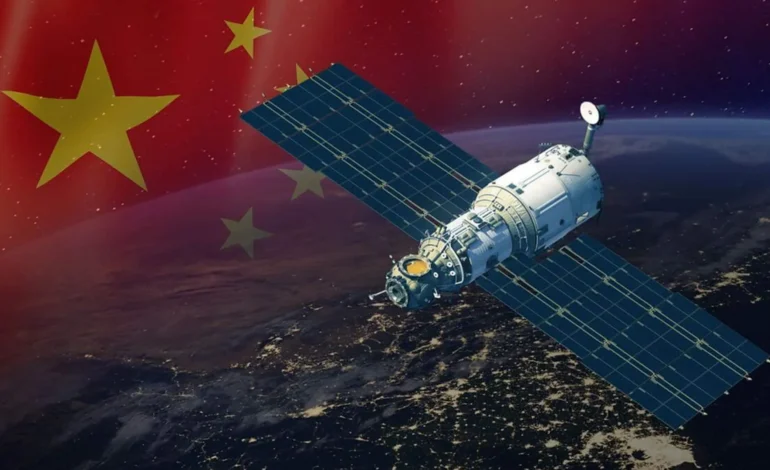
China’s space program has continued to gain momentum in 2025, marking another year of steady progress in manned spaceflight, operational resilience, and long term exploration plans that extend beyond Earth orbit toward the Moon and deep space.
Over the past year, China’s manned space effort has stood out for both its technical maturity and its ability to respond to unexpected challenges in orbit. These developments reflect the growing sophistication of the country’s space capabilities as well as its ambition to become a leading spacefaring nation in the coming decades.
A symbolic moment came on April 24, which coincided with the 55th anniversary of the launch of Dongfanghong 1, China’s first satellite, and the country’s tenth annual Space Day. On that date, China launched the Shenzhou 20 manned spacecraft, underscoring the continuity between its early space history and its modern ambitions. The mission was the fifth crewed flight during the application and development phase of the space station and the thirty fifth launch of China’s manned space program overall.
The Shenzhou 20 mission was commanded by veteran astronaut Chen Dong, who returned to space alongside first time flyers Chen Zhongrui and Wang Jie. Together, the crew carried out a series of scientific experiments, equipment tests, and routine station maintenance tasks. Their work contributed to the long term operation of China’s space station and helped refine procedures for future missions.
One of the defining aspects of the year was the program’s ability to manage complex situations in orbit. A rare in orbit emergency response tested ground teams and astronauts alike, demonstrating the robustness of China’s training systems and command structure. Observers noted that the calm and coordinated handling of the situation reflected lessons learned from decades of incremental development.
Later in the year, on October 31, the Shenzhou 21 spacecraft lifted off, delivering another crew to the space station. Astronauts Zhang Lu, Wu Fei, and Zhang Hongzhang took over station operations, continuing a carefully managed rotation system that keeps the facility continuously occupied. This mission further demonstrated China’s ability to sustain long duration human presence in orbit.
Beyond low Earth orbit, China is also laying the groundwork for more ambitious exploration. Preparations for future lunar missions are advancing, with plans that include crewed landings, expanded robotic exploration, and the construction of research infrastructure on or around the Moon. Deep space missions aimed at planets and asteroids are also part of the longer term roadmap.
As 2025 unfolds, China’s space endeavor reflects a balance between near term operational goals and long range vision. Through consistent launches, growing astronaut experience, and expanding technological capabilities, the country is steadily shaping its role in the next era of human space exploration.