China’s Tech Boom Accelerates as Advanced Innovation Leaves Traditional Industries Struggling to Keep Pace
China’s rapid push into advanced technology sectors is reshaping the country’s economic landscape, but the surge in innovation is also exposing widening gaps between cutting edge industries and more traditional sectors. Robotics startups, artificial intelligence developers and semiconductor firms are attracting increasing attention from investors and government officials as China accelerates its transition toward a technology driven economy. The rise of robotics company Unitree Robotics has become one of the most visible examples of this trend, as its humanoid robots and advanced machines have captured public attention while showcasing the growing capabilities of Chinese engineering and automation technology.
The success of emerging technology companies has drawn strong support from local governments eager to strengthen regional economies through high value industries. Cities across China are competing to attract promising startups and research centers that can boost technological development and create high skill employment. Local officials have increasingly highlighted companies working in robotics, artificial intelligence and advanced manufacturing as symbols of economic progress. In some cases, partnerships between municipal governments and technology firms are becoming central components of long term regional development strategies aimed at improving industrial competitiveness and global influence.
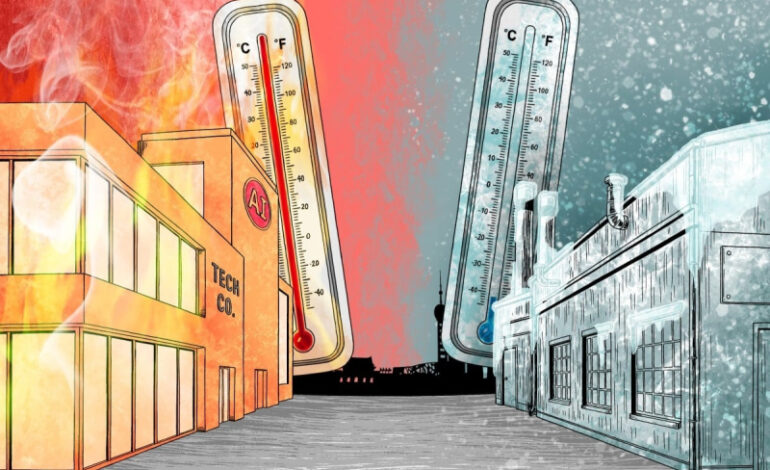
While these sectors experience rapid growth, many traditional industries are struggling to keep up with the pace of technological transformation. Industries such as basic manufacturing, conventional retail and older service sectors often lack the research capacity or digital infrastructure needed to adopt advanced technologies at the same speed as modern tech firms. Economists say this imbalance is creating new challenges for policymakers who must balance innovation driven growth with the need to support industries that still employ large portions of the workforce. As a result, the benefits of technological progress are not being distributed evenly across the broader economy.
China’s emphasis on high technology development reflects national priorities that have intensified in recent years. Artificial intelligence, robotics, advanced computing and semiconductor manufacturing are considered critical for strengthening industrial independence and long term economic competitiveness. Government policies encourage investment in these sectors through funding programs, tax incentives and research partnerships. The strategy has helped fuel rapid innovation but has also concentrated resources toward specific industries that align with national technology goals.
Local governments have responded by promoting new technology clusters and encouraging collaboration between universities, startups and established manufacturers. Technology parks and research hubs are being developed across several regions as cities attempt to attract entrepreneurs and engineers capable of building globally competitive companies. These initiatives are designed to accelerate innovation while creating ecosystems where research institutions and private firms can collaborate on next generation technologies ranging from humanoid robotics to intelligent automation systems.
However, the rapid pace of technological change has created new pressures on sectors that have historically driven employment and economic stability. Small businesses and traditional manufacturers may struggle to invest in advanced research or adopt complex digital tools that require specialized expertise. Analysts say the gap between technology leaders and slower moving industries could widen if companies lacking access to skilled workers and capital are unable to participate fully in the new digital economy.
The growing prominence of companies such as Unitree Robotics highlights how quickly China’s technology landscape is evolving. Startups working in robotics and artificial intelligence are gaining national and international attention as their products demonstrate increasingly sophisticated capabilities. Their success reflects both the strength of China’s engineering talent and the country’s strategic focus on innovation as a key driver of future economic growth.
As China continues accelerating investment in high technology industries, the challenge for policymakers will be ensuring that broader segments of the economy can adapt to the new environment. The transformation toward a technology centered growth model is expected to continue reshaping the country’s industrial structure, with advanced sectors leading development while traditional industries face pressure to modernize and integrate new technologies.