China’s Three Deep Sea Manned Submersibles Surpass 1,700 Dives
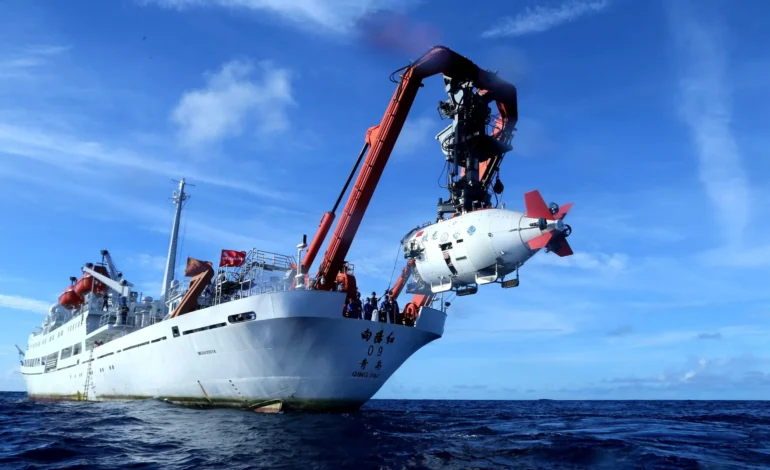
China’s three domestically developed deep sea manned submersibles have completed more than 1,700 dives, marking a major milestone in the country’s ocean exploration and scientific research capabilities. The achievement highlights steady progress in China’s ability to conduct long term, high intensity operations in some of the most extreme environments on Earth.
The submersibles have been deployed across a wide range of missions, including geological surveys, biological research, resource assessment, and environmental monitoring. Operating at great depths places extraordinary demands on materials, engineering, and human endurance, making the growing number of successful dives a strong indicator of system reliability and technological maturity.
Scientists say the accumulated dive data has significantly expanded understanding of deep sea ecosystems and geological structures. Researchers have been able to observe previously unexplored habitats, collect samples, and study life forms adapted to high pressure and low light conditions. These missions also support broader studies related to climate change, plate tectonics, and marine biodiversity.
Beyond science, the submersibles play a strategic role. Deep sea capabilities are increasingly viewed as essential national infrastructure, supporting everything from disaster response to long term ocean governance. Reliable manned submersibles allow for precise operations that remain difficult to replicate with unmanned systems alone.
The growing dive count also reflects improvements in operational efficiency. What were once rare, highly complex missions have become more routine, enabling more frequent deployment and faster research cycles. This shift allows scientists to plan longer term projects rather than isolated expeditions.
China’s deep sea programme is expected to continue expanding as demand for ocean research grows globally. With more than 1,700 dives already completed, the country has established a strong foundation for future exploration and international scientific collaboration.