China’s Two-Speed Economy Reveals Sharp Divide Between Favored Sectors and the Rest
China appears on track to meet its annual growth target, but beneath the surface the economy is moving at two very different speeds. New data shows a widening divide between industries championed by President Xi Jinping and the rest of the economy that continues to struggle under weak demand, high debt, and slowing investment. The result is an uneven recovery shaped not by broad-based momentum but by selective strength in sectors aligned with Beijing’s long-term strategic vision.
High-Performing Sectors Align Closely With Xi’s Priorities
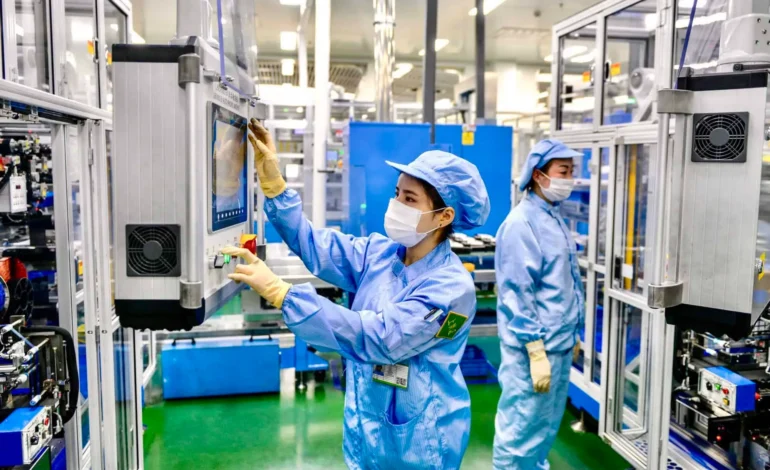
The strongest engines of growth today are industries that fit into Xi Jinping’s push for “New Quality Productive Forces,” a concept emphasizing high-tech manufacturing, clean energy, and advanced industrial capabilities. China’s solar panel producers, electric vehicle manufacturers, lithium battery firms, and automation companies are expanding rapidly. They enjoy heavy state support, favorable financing, and guaranteed demand through domestic industrial policy and global green technology markets.
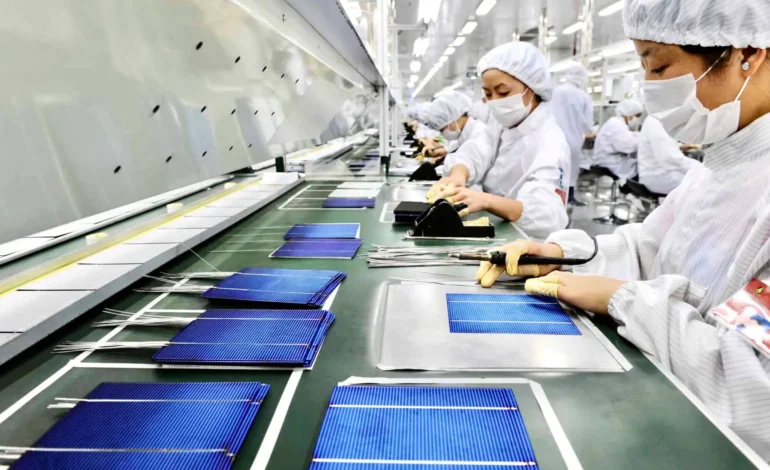
Factories making solar panels and EV components are running near full capacity. China remains the world leader in photovoltaic manufacturing, producing most of the world’s solar cells. Export data also shows robust growth in batteries and electric vehicles, despite rising trade tensions with the United States and the European Union. These sectors—clean energy, high tech, and strategic manufacturing—represent the fast lane of China’s economy.
The Rest of the Economy Is Stuck in Slow Gear
Outside these state-backed sectors, conditions look very different. China’s property market remains deeply distressed, with falling home prices, declining sales, and major developers unable to service debts. Local governments, traditionally reliant on land sales, face fiscal strain. Weak confidence among households continues to weigh on retail spending, hospitality, services, and private investment.
Small and medium-sized businesses, which employ the majority of China’s workforce, are especially squeezed. Borrowing costs remain high, consumer demand is inconsistent, and credit is flowing disproportionately toward large industrial firms rather than toward private entrepreneurs. This creates a widening imbalance where parts of the economy grow rapidly while other sectors stagnate or contract.
Investment Is Increasingly Concentrated in a Few Areas
China’s fixed-asset investment patterns reflect this two-speed reality. Investment in high-tech manufacturing has surged this year, while investment in real estate has fallen sharply. Manufacturing upgrades, electric vehicle production, robotics, and semiconductors all show double-digit growth in capital spending. But investment in consumer-facing industries and small private firms continues to lag.
This imbalance raises concerns about sustainability. An economy dominated by a few booming sectors cannot easily compensate for broad weakness in consumer spending and employment, especially when the property market—historically China’s largest source of household wealth—remains under pressure.
A Growing Policy Dilemma for Beijing
Beijing’s challenge is that the sectors performing well are not labor-intensive. Solar panel plants and battery factories are highly automated and add limited numbers of jobs compared to the millions once employed in property construction or consumer services. This limits their ability to generate the widespread income growth needed to boost domestic consumption.
Xi’s emphasis on industrial modernization has positioned China as a global powerhouse in clean energy and advanced manufacturing, but it has also diverted resources away from sectors tied to everyday economic life. The more investment shifts toward strategic industries, the more uneven the broader recovery becomes.
What China’s Two-Speed Economy Means for the Future
If current trends continue, China may meet its headline growth targets while underlying weaknesses persist. Export-oriented high-tech sectors will remain strong, but domestic consumption may stay fragile, particularly if the property downturn continues. This imbalance could create long-term vulnerabilities, including rising overcapacity, slower job creation, and greater reliance on external demand.
China’s two-speed trajectory illustrates both the promise and limitations of its economic transition. While Beijing’s favored sectors are powering ahead, the rest of the economy must also be revived for China to achieve balanced and sustainable growth.