China’s Youngest AI Innovators Making Global Waves
Introduction
Artificial intelligence (AI) continues to reshape industries worldwide, and China’s youngest innovators are leading the charge. These rising stars, many under the age of 30, are driving breakthroughs in machine learning, natural language processing, computer vision, and autonomous systems. Their contributions extend from research labs to entrepreneurial ventures, influencing global AI trends while addressing practical challenges in healthcare, finance, and industrial automation. Understanding the work of these young AI innovators provides insights into the future of China’s technology ecosystem and its global impact.
Early Exposure and Educational Backgrounds
Many of China’s youngest AI innovators began their careers with rigorous training at top-tier universities such as Tsinghua, Peking University, and Fudan. Exposure to international research collaborations and cutting-edge laboratories has equipped them with a deep understanding of both theoretical and applied AI. Some innovators have gained experience abroad before returning to China, blending global best practices with domestic innovation opportunities. This combination of expertise positions them to launch startups, contribute to high-impact research, and influence AI policy discussions.
Innovation in Machine Learning and Predictive Analytics
Young innovators are making significant strides in machine learning applications. From predictive analytics for industrial systems to AI-driven financial forecasting, their work enhances operational efficiency, accuracy, and decision-making. Startups led by these young talents are integrating advanced algorithms into enterprise solutions, enabling real-time analysis of massive datasets. The ability to translate complex data into actionable insights is a hallmark of these innovators, and their work is attracting attention from both domestic and international investors.
Advancements in Computer Vision and Robotics
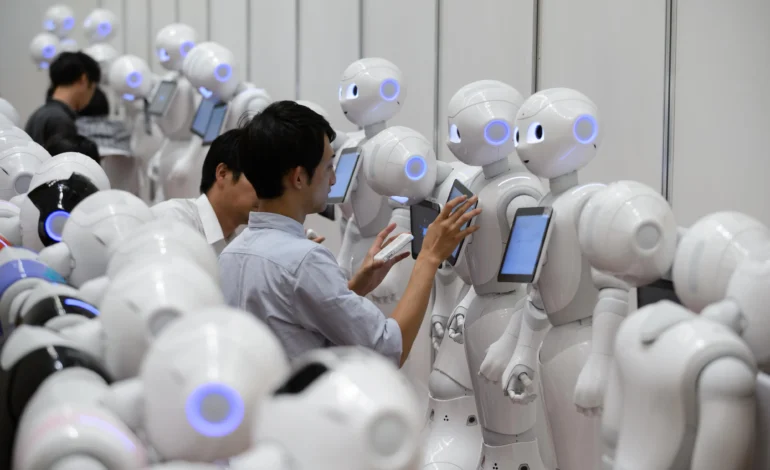
Computer vision represents another area where China’s young AI leaders are making global impact. Their projects span autonomous vehicles, smart manufacturing, and healthcare diagnostics. By leveraging deep learning models, these innovators enable machines to recognize objects, detect anomalies, and optimize processes with high precision. In robotics, AI-driven automation enhances manufacturing efficiency and supports new applications in logistics and service industries. The integration of AI with robotics not only advances technology but also positions China as a key player in global industrial automation.
Entrepreneurial Ventures and Startups
Many young AI innovators have transitioned from research to entrepreneurship, founding startups that apply AI solutions to real-world problems. These ventures often focus on healthcare diagnostics, predictive maintenance for industrial equipment, financial risk analysis, and autonomous transport solutions. By combining technical expertise with entrepreneurial vision, these innovators are scaling solutions rapidly, attracting venture capital, and expanding into international markets. Their startups demonstrate how innovation and commercialization can coexist, bridging the gap between academic research and market application.
Impact on Healthcare and Biotech
In healthcare, young AI innovators are developing diagnostic tools, predictive models, and treatment optimization platforms. Machine learning algorithms analyze medical imaging, electronic health records, and genetic data to assist clinicians in making precise decisions. AI-powered platforms also support drug discovery, accelerating development timelines and reducing costs. These innovations not only improve patient outcomes but also enhance the global competitiveness of China’s biotech and digital health sectors.
Contributions to Fintech and Digital Infrastructure
In fintech, young innovators are leveraging AI for fraud detection, credit scoring, and algorithmic trading. Digital payment systems and financial management platforms benefit from predictive analytics, user behavior modeling, and risk assessment algorithms. These contributions enhance security, efficiency, and accessibility in China’s rapidly evolving digital finance landscape. Their work demonstrates the integration of AI into critical infrastructure, influencing both domestic financial systems and global technology trends.
Global Recognition and Collaboration
China’s youngest AI innovators are increasingly gaining recognition on the global stage. Many participate in international conferences, collaborate with multinational research teams, and contribute to high-impact publications. Their work attracts attention from global technology firms, investors, and policymakers. These collaborations facilitate knowledge transfer, technology adoption, and cross-border innovation, positioning China’s young AI leaders as influential players in the international AI community.
Challenges and Opportunities
Despite impressive achievements, young AI innovators face several challenges:
- Talent Competition: Attracting and retaining skilled team members is competitive, particularly in AI-specialized domains.
- Regulatory Compliance: Navigating AI-related regulations, privacy laws, and data protection standards requires careful attention.
- Funding and Scaling: Transitioning from proof-of-concept to large-scale deployment demands capital, mentorship, and infrastructure.
- Ethical Considerations: Ensuring responsible AI use, avoiding bias, and maintaining transparency are ongoing priorities.
Opportunities abound for those who can combine technical innovation with business strategy, regulatory awareness, and ethical foresight. Successful innovators are leveraging mentorship, incubation programs, and government-backed initiatives to overcome these challenges.
Future Outlook
The influence of China’s youngest AI innovators is expected to expand over the next decade. Advancements in autonomous systems, predictive analytics, computer vision, and AI-powered healthcare will continue to drive industry growth. International collaboration, venture investment, and cross-sector adoption will amplify their impact. By fostering an ecosystem that combines research excellence, entrepreneurship, and global engagement, China ensures that its youngest AI talents remain at the forefront of technological advancement.
Conclusion
China’s youngest AI innovators are making global waves through research breakthroughs, entrepreneurial ventures, and technological applications that influence healthcare, finance, and industrial sectors. Their work exemplifies the integration of innovation, commercialization, and ethical responsibility. Supported by educational institutions, mentorship programs, and a dynamic startup ecosystem, these young leaders are shaping the future of AI not only in China but also on the international stage. Their achievements underscore the importance of nurturing talent, fostering collaboration, and investing in technology-driven innovation for sustained economic and social impact.