Chinese AI Pioneer Urges Global Standards and Shared Frameworks for Embodied Artificial Intelligence
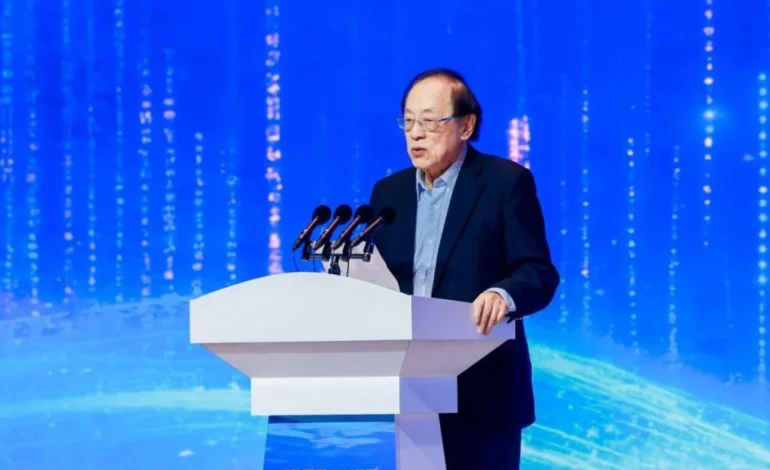
Andrew Yao Chi-chih, one of China’s most respected computer scientists, has called for deeper global cooperation to address fundamental gaps in the development of embodied artificial intelligence, warning that the field still lacks essential theoretical and safety foundations.
Speaking at an industry forum in Shanghai on Saturday, Yao said embodied AI systems remain at an early stage, despite rapid progress in robotics and machine learning. He stressed that current approaches are often fragmented, with different components developed in isolation rather than as part of a coherent whole. According to Yao, key capabilities such as reasoning, planning, and control should eventually be brought together within a unified framework.
At the heart of his remarks was the concept of interpretable world models. Yao argued that instead of relying heavily on simulation alone, embodied AI needs systems that can build internal representations of the real world and understand how their actions interact with physical environments. Such models, he said, are critical for enabling robots to make reliable decisions in complex and unpredictable settings.
Yao also highlighted a growing bottleneck in training data. While large language models have benefited from massive text datasets, embodied AI faces a shortage of high quality data tied to physical interaction. He said new and scalable approaches to data collection must be explored, including methods that go beyond traditional laboratory environments. Without richer and more diverse data, he warned, progress toward more capable and adaptable robots will remain limited.
Another challenge identified by Yao was the narrow scope of many current robotic systems. He noted that most robots today are designed to perform specific tasks in controlled conditions, such as picking objects or navigating fixed routes. For embodied AI to mature, robots must develop whole body coordination and the ability to integrate perception and action across multiple contexts. This shift, he said, is essential for applications ranging from healthcare and manufacturing to service industries and home environments.
Beyond technical hurdles, Yao emphasized the need for shared standards across the industry. He called for the creation of open benchmarks to evaluate embodied AI systems in a consistent and transparent way. Without common measures of performance, he said, it is difficult to compare progress or identify meaningful breakthroughs.
Safety was another major concern. Yao urged researchers, companies, and regulators to work together on safety standards tailored specifically to embodied AI. As robots become more autonomous and physically capable, the risks associated with malfunction or misuse increase. Establishing agreed safeguards early, he said, would help prevent accidents and build public trust.
Yao, who won the Turing Award in 2000 and currently serves as dean of Tsinghua University’s College of Artificial Intelligence, warned against a fragmented approach to development. He said the industry should move away from a situation where each group pursues its own solutions independently and instead embrace collaboration at a global level.
His remarks come as embodied AI attracts growing attention from governments and technology companies worldwide. As investment accelerates, Yao’s call for shared models, data strategies, and safety frameworks underscores the need to balance innovation with responsibility.