Chinese AI Robot Performs Complex Surgery on Pig Without Human Control
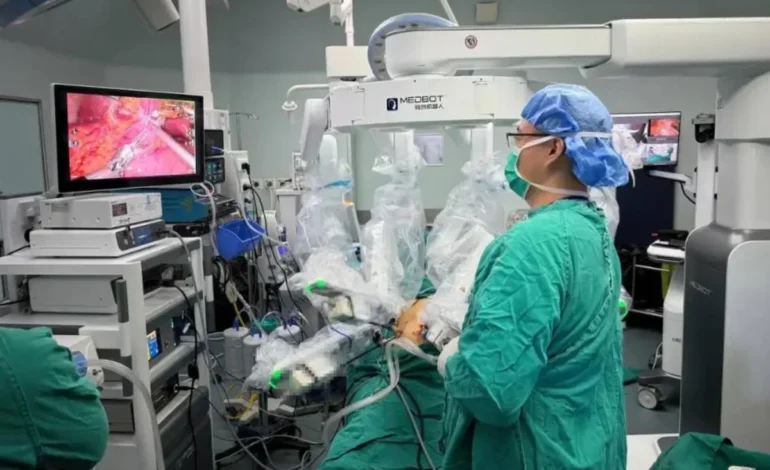
A surgical robot developed by a Chinese technology company has successfully carried out a complex biliary operation on a pig without direct human intervention, marking a notable step forward in the use of artificial intelligence in medical procedures. The experiment highlights how autonomous systems may one day support or even perform parts of surgery in clinical settings.
According to researchers involved in the project, the robot completed approximately 88 per cent of the surgical steps correctly on its first attempt. The remaining steps were achieved through real time adjustments, with the system identifying errors, correcting its approach, and completing the procedure autonomously. The operation was performed on a 30 kilogram pig, a standard model for testing surgical techniques due to anatomical similarities with humans.
The robot relied on an advanced AI model trained on a large dataset of surgical videos, anatomical images, and procedural data. Instead of following a rigid pre programmed sequence, the system was designed to perceive changes in the surgical environment and respond accordingly. Sensors and imaging tools allowed it to track tissue movement, adjust force levels, and reposition instruments during the operation.
Researchers say this ability to adapt in real time represents a key breakthrough. Traditional surgical robots require constant guidance from human surgeons, who control every movement through remote consoles. In contrast, the Chinese system was able to make decisions during the procedure, mimicking the judgment calls normally made by trained professionals.
The biliary surgery involved delicate tasks such as identifying ducts, making precise incisions, and avoiding surrounding tissue. These steps are considered challenging even for experienced surgeons, making the successful outcome particularly significant. While the test was conducted in a controlled laboratory environment, experts say it demonstrates the growing sophistication of AI driven medical technologies.
Despite the achievement, researchers caution that the technology is still far from being used on human patients. Extensive testing, regulatory approval, and ethical review would be required before autonomous surgical systems could enter hospitals. Safety remains a central concern, especially in unpredictable real world scenarios where complications can arise suddenly.
China has been investing heavily in medical AI as part of its broader push into advanced technologies. Autonomous surgery is seen as a potential solution to shortages of skilled surgeons, especially in rural and under resourced regions. Supporters argue that AI assisted systems could help standardize care, reduce human error, and improve access to complex procedures.
However, the development also raises questions about responsibility and trust. Medical professionals and policymakers continue to debate how much autonomy should be given to machines in life critical situations. Clear frameworks will be needed to define accountability if errors occur during AI led procedures.
For now, the successful animal surgery represents a research milestone rather than a clinical breakthrough. It signals the direction in which medical robotics is heading and underscores China’s ambition to become a global leader in the application of artificial intelligence across healthcare and other high value sectors.