Chinese biotech firm deploys AI chromosome testing to accelerate IVF procedures and tap rising fertility demand
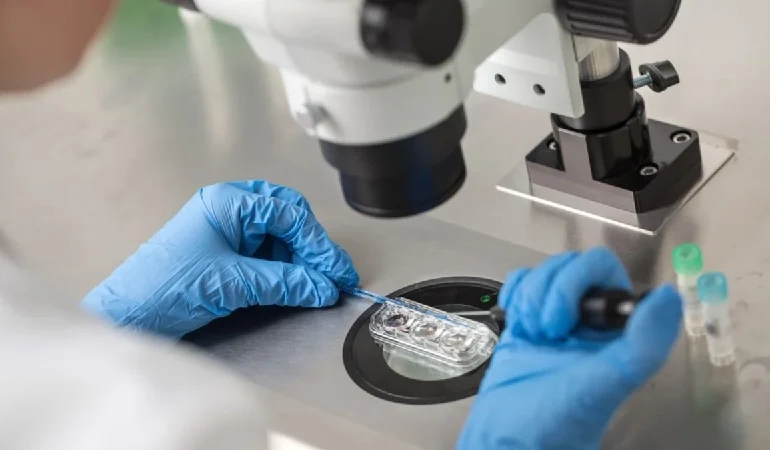
Chinese biotechnology company Hangzhou Diagens Biotechnology is expanding the use of artificial intelligence driven chromosome testing to improve efficiency in in vitro fertilisation and strengthen its commercial growth strategy. The initiative comes as China faces declining birth rates and increasing demand for assisted reproductive technologies. By integrating AI into genetic screening processes, the company aims to shorten testing timelines and enhance accuracy in embryo selection. This shift reflects a broader trend in China’s biotech sector where advanced computing is being applied to healthcare challenges with both clinical and economic implications.
The company is positioning its AI powered testing solutions as a way to handle rising patient volumes while maintaining precision in diagnostics. Chromosome screening is a critical step in IVF procedures, helping identify genetic abnormalities before embryo implantation. Traditional testing methods can be time intensive and resource heavy, but AI models are being trained to analyze genetic data more quickly and consistently. This allows clinics to process more cases within shorter timeframes, potentially improving success rates while also increasing operational efficiency across fertility centers.
Executives at the company have pointed to changing social trends as a major driver behind the adoption of such technologies. Founder Song Ning noted that many individuals in China are delaying marriage and childbirth, which often leads to fertility complications that require medical intervention. As a result, IVF procedures are becoming more common, creating sustained demand for advanced diagnostic tools. AI based chromosome testing is being positioned not only as a clinical enhancement but also as a scalable solution capable of meeting long term demographic challenges.
The application of artificial intelligence in genetic testing represents a significant development within the biotech industry, where precision and speed are essential. AI algorithms can identify patterns in complex genomic data that may be difficult for manual analysis, reducing the risk of errors and improving decision making during IVF cycles. Industry experts suggest that such technologies could lower costs over time while expanding access to reproductive treatments. The integration of AI into healthcare workflows is also aligned with China’s broader push to modernize its medical and research infrastructure.
China’s fertility rate has been declining for years, prompting both government attention and private sector innovation. Assisted reproduction has emerged as a key area of growth, supported by policy adjustments and increasing awareness among patients. Biotech companies are investing in research and development to create more effective solutions that address both medical needs and market opportunities. The rise of AI in this space highlights how digital technologies are becoming central to healthcare advancements across the country.
The company’s strategy also reflects a wider shift in China’s biotech ecosystem, where firms are leveraging AI to gain a competitive edge in specialized medical fields. From drug discovery to diagnostics, artificial intelligence is being integrated into multiple stages of the healthcare value chain. This convergence of biotechnology and AI is attracting investment and driving innovation, particularly in areas with strong demand such as fertility treatment and genetic testing.
As AI adoption continues to expand, regulatory oversight and clinical validation will remain important factors in determining how quickly such technologies can be deployed at scale. Companies like Hangzhou Diagens Biotechnology are navigating both technological and regulatory landscapes as they introduce new solutions into the market. With growing demand for IVF and increasing reliance on advanced diagnostics, AI powered chromosome testing is expected to play a larger role in shaping the future of reproductive healthcare in China.