Chinese Carmakers Turn to Idle Foreign Factories to Accelerate Global Expansion
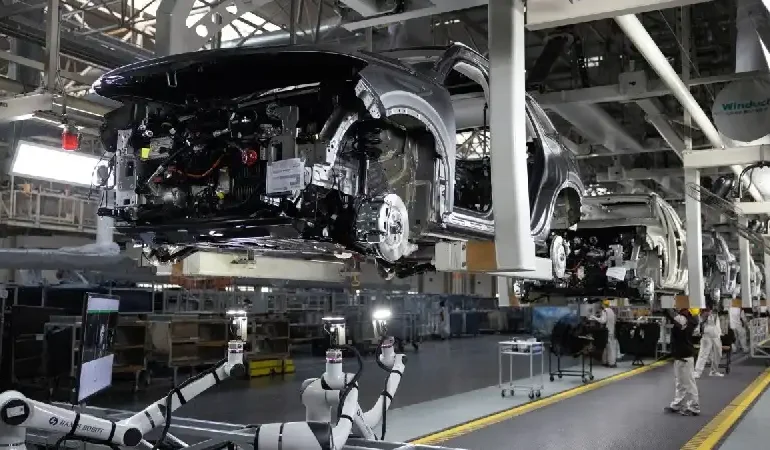
Chinese automotive manufacturers are increasingly using idle factories overseas as a cost effective way to expand their global presence, a strategy analysts say reflects both domestic industry pressures and changing international market dynamics. Companies including Geely Auto and Great Wall Motor are exploring partnerships that allow them to assemble vehicles in underused facilities previously operated by global car brands. The approach helps Chinese firms avoid the high capital costs of building new plants while gaining faster access to international markets. Industry observers say the trend could reshape how Chinese carmakers scale production abroad as competition intensifies in the electric vehicle sector.
Great Wall Motor is among the companies pursuing this strategy and has entered discussions with Mercedes Benz regarding the potential use of the German automaker’s assembly facility in East London, South Africa. The plant has experienced periods of underutilization as global manufacturers adjust their production footprints. By negotiating to share or repurpose such sites, Chinese carmakers can establish overseas manufacturing operations more quickly while keeping investment requirements relatively low. Analysts say these arrangements allow companies to test new markets and adapt to local demand without committing billions of dollars to new infrastructure.
The shift toward overseas production partnerships comes as Chinese automakers face growing challenges at home. Domestic vehicle demand has slowed in recent years while China’s automotive manufacturing capacity continues to expand. The imbalance has left many producers with excess capacity and increasing pressure to find new international markets for growth. Rather than constructing entirely new factories abroad, firms are looking at existing plants that global manufacturers have scaled back or closed. These facilities often already possess trained labor, supply chains and regulatory approvals, making them attractive options for companies seeking faster entry into foreign markets.
Industry analysts say the asset light model also helps Chinese carmakers manage geopolitical and operational risks. Building a new factory overseas requires significant financial commitments and long development timelines, often stretching several years before vehicles reach production. By contrast, using idle or partially used facilities allows companies to reduce upfront investment and remain flexible if market conditions change. This strategy has become particularly appealing as governments in Europe, Africa and Southeast Asia encourage local manufacturing while also reviewing trade policies affecting imported vehicles.
Chinese automakers have rapidly strengthened their position in global automotive markets over the past decade, driven by advancements in electric vehicle technology, battery manufacturing and supply chain efficiency. Brands from China are now exporting increasing numbers of vehicles to regions including Europe, the Middle East, Latin America and Africa. Overseas assembly partnerships can further support this expansion by helping companies avoid tariffs and reduce transportation costs. Producing vehicles closer to target markets can also improve delivery times and allow manufacturers to tailor models to local regulations and consumer preferences.
The trend is unfolding at a time when several international carmakers are reassessing their global manufacturing footprints. Some companies have reduced operations or left certain markets entirely due to shifting demand or strategic restructuring. These changes have created openings for Chinese automakers seeking production capacity abroad. Facilities that once served established Western or Japanese brands may now provide the infrastructure needed for Chinese firms to expand their manufacturing networks without building new plants from scratch.
As more Chinese companies explore similar partnerships, the strategy could play a growing role in the global automotive industry’s restructuring. By combining domestic technological capabilities with overseas production bases, Chinese manufacturers may be able to accelerate their international expansion while keeping investment risks under control. The use of idle foreign factories also highlights how shifting supply chains and evolving market conditions are reshaping global vehicle manufacturing strategies.